
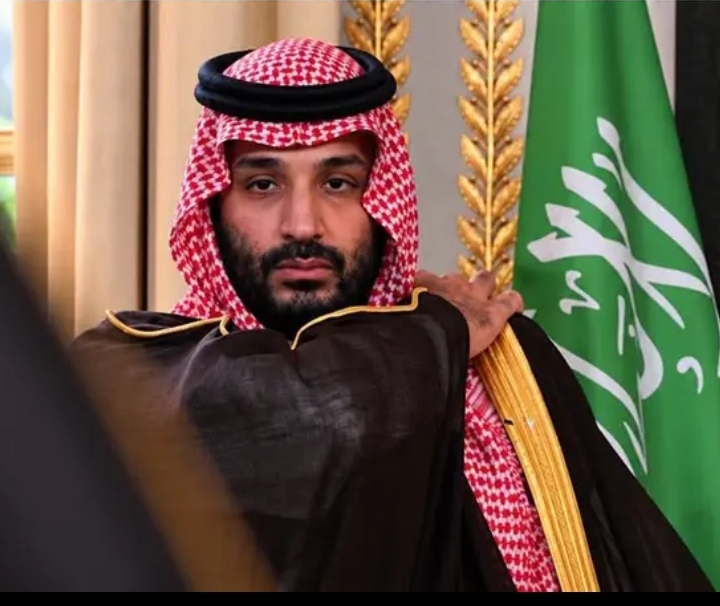
Saudi Crown Prince Mohammed bin Salman Reportedly Moved to Heavily Fortified Residence Amid Houthi Threats

Breaking News Zambia
NewsSaudi Crown Prince Mohammed bin Salman Reportedly Moved to Heavily Fortified Residence Amid Houthi Threats 🇸🇦🇵🇰🇹🇷 Saudi Arabia’s Crown Prince Mohammed bin Salman has reportedly tightened his security arrangements and relocated to a heavily fortified royal residence equipped with underground bunkers amid growing concerns over potential Houthi attacks, according to reports attributed to The Wall […]
Saudi Crown Prince Mohammed bin Salman Reportedly Moved to Heavily Fortified Residence Amid Houthi Threats
🇸🇦🇵🇰🇹🇷 Saudi Arabia’s Crown Prince Mohammed bin Salman has reportedly tightened his security arrangements and relocated to a heavily fortified royal residence equipped with underground bunkers amid growing concerns over potential Houthi attacks, according to reports attributed to The Wall Street Journal.
Reports indicate that the Saudi crown prince has reduced his public appearances and is operating under heightened security, with a handpicked security detail and movements between fortified residences reportedly forming part of measures designed to reduce the risk of a potential attack.
The reported security measures come amid escalating Houthi threats against Saudi Arabia and concerns over the kingdom’s ability to protect critical infrastructure from ballistic missiles and cruise missiles. Claims of attacks on King Khalid International Airport in Riyadh and the resulting damage and casualties require independent verification.
Saudi Arabia is also reportedly facing pressure on its missile-interceptor stockpiles, raising concerns about its ability to sustain air-defense operations during a prolonged campaign. If confirmed, the situation could force military planners to prioritize the protection of royal residences, major airports, oil facilities and other strategic infrastructure.
Questions Over Saudi Arabia’s Security Partnerships
The reported developments have also raised questions about Saudi Arabia’s security arrangements with Pakistan and Türkiye. Despite a reported Saudi-Pakistani-Turkish security partnership, the practical implementation of the agreement and the extent of any coordinated military assistance remain unclear.
A security agreement does not automatically translate into immediate military intervention, additional missile interceptors or the deployment of foreign forces. Its effectiveness depends on the specific commitments involved, operational coordination, intelligence sharing, available military resources and the willingness of each partner to respond to a particular threat.
Saudi Arabia’s challenges also highlight a broader limitation of military spending: even the most advanced air-defense systems can be strained by repeated attacks, large numbers of incoming projectiles and the high cost of intercepting relatively inexpensive weapons.
Can Saudi Arabia Protect Itself Despite Its Military Spending?
The kingdom has invested heavily in advanced defense systems, but protecting an entire country against sustained missile and drone attacks is a complex task. Air-defense coverage is not unlimited, interceptor stocks must be replenished, and defending every strategic location simultaneously can place significant pressure on military resources.
The situation raises a wider strategic question: if Saudi Arabia possesses substantial financial resources and access to advanced Western weapons, why does it continue to face serious security threats from the Houthis?
And if its reported partnership with Pakistan and Türkiye is intended to strengthen regional security, when will the practical details and military implications of that agreement become clear?
What is your assessment? Is Saudi Arabia facing a shortage of defensive capabilities, or does the situation demonstrate the limits of military technology and regional security alliances against persistent missile and drone threats?




Community Feedback