
Is growing rain-fed wheat a non-starter?

Breaking News Zambia
NewsLivingstone Cooperatives Union (LCU) has indicated that […]
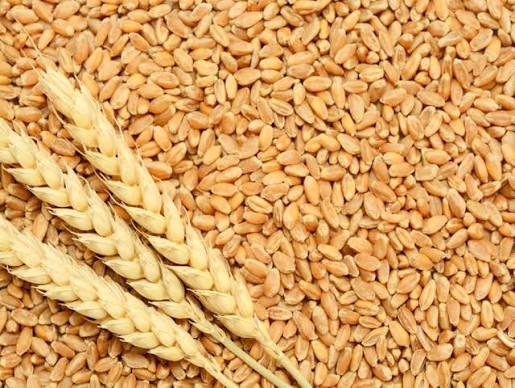
Livingstone Cooperatives Union (LCU) has indicated that rainfed wheat production could be a major challenge for smallholder farmers because the crop requires reliable water throughout its growing cycle, making irrigation critical for Zambia to significantly increase wheat production.
Speaking in an interview with Zambian Business Times-ZBT, LCU Chairperson, Rwinick Mapanza said smallholder farmers could participate in wheat production, but would struggle to rely on rainfall alone because the crop requires consistent water, particularly as it approaches maturity.
“Small-scale farmers can only do maybe rain-fed wheat, but looking at the way the rains are at times in Zambia, they are scanty and by the time wheat is about to start maturing, the rains disappear, so it becomes a challenge,” said Mapanza.
Meanwhile, a check on the latest government statistics on wheat revealed that Zambia’s wheat production is expected to decrease to 81 thousand metric tonnes in the 2025/2026 farming season from 171 thousand tonnes in the 2024/2025 farming season.
However, the Zambian government led by President Hakainde Hichilema wants to produce 1 million metric tonnes of wheat by 2031, raising questions about how much of the targeted production can realistically come from smallholder farmers under rain-fed conditions.
LCU Chairperson explained that wheat is technically more demanding than crops such as maize, cassava, sweet potatoes and groundnuts, meaning smallholder farmers would require specialised knowledge, equipment and close support from extension officers to enter the sector.
“Wheat requires a lot of water in terms of irrigation, and our small-scale farmers in their localities may not manage, unless they have big dams nearby, rivers, streams that do not dry up or they are in the dambos where they can take advantage of the available water,” he said.
Mapanza added that commercial farmers are likely to remain dominant in wheat production because they generally have access to irrigation infrastructure, suitable land and equipment, while most smallholder farmers still lack the implements required to manage the crop properly.
“Most of the people who are going to benefit much from wheat are the commercial farmers who have abundant water and good land, because wheat normally needs levelled ground so that when you irrigate, the water can soak nicely instead of running off,” he said.
Mapanza said Zambia can still bring smallholder farmers into wheat production by providing them with the necessary equipment, technical knowledge and supervision, particularly in areas with reliable water sources.
He said farmers also need to understand specialised practices such as fertigation, where fertiliser is dissolved into irrigation water, while wheat production required suitable soils with a pH generally between 6 and 7 and adequate watering throughout its growth cycle.
“If we empower the small-scale farmers with the necessary knowledge and implements, and put them under close supervision from extension officers, they will be able to participate just like the way we have become used to producing maize, but for now very few small-scale farmers understand how to grow wheat properly,” said Mapanza
Article by Phillip Sinkala




Community Feedback