

Zambia’s Power Capacity Hits 4,722MW, Nearly Double Peak Demand, As Hichilema Warns The Grid Is Lagging

Breaking News Zambia
Top StoriesZambia’s installed electricity generation capacity has climbed to 4,722.3 megawatts, up from 3,777MW in 2024 and now nearly twice the country’s peak demand. President Hakainde Hichilema warned, however, that the transmission and distribution network needed to deliver that power…
Zambia’s installed electricity generation capacity has climbed to 4,722.3 megawatts, up from 3,777MW in 2024 and now nearly twice the country’s peak demand. President Hakainde Hichilema warned, however, that the transmission and distribution network needed to deliver that power is falling behind.
Peak national demand stands at around 2,400MW, Ministry of Energy data show. The gap between what the country can generate and what its grid can carry has become the central test of the energy push under the Grow Zambia Agenda.
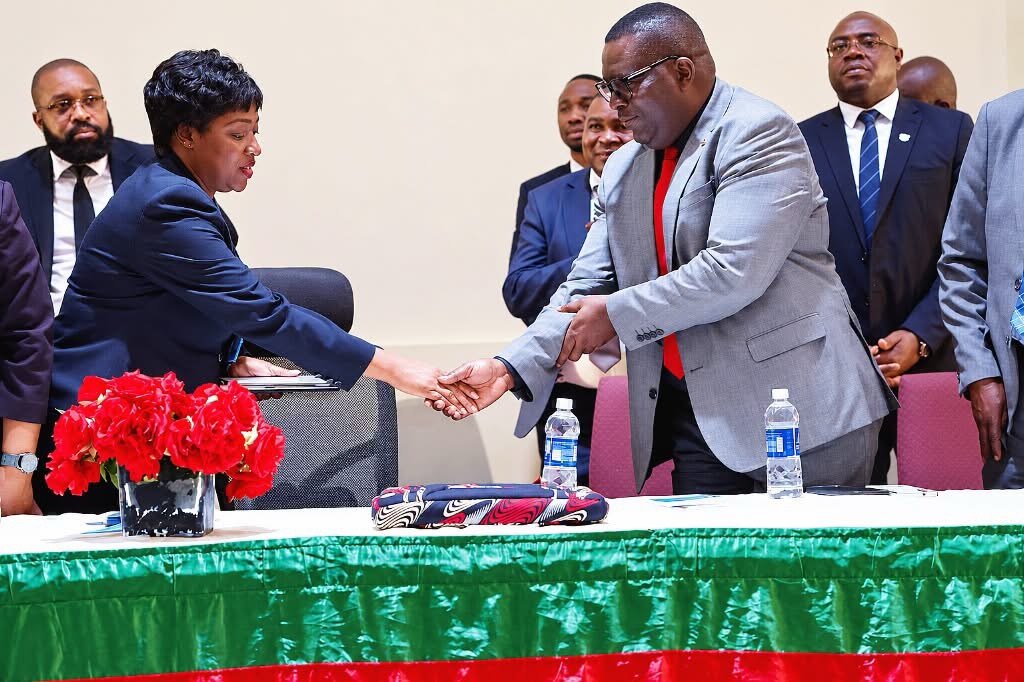
The President set out the figures in a speech read on his behalf by Vice-President Mutale Nalumango at the third edition of the Energy Forum for Africa in Lusaka. The forum ran under the theme “Driving a Borderless Energy Future for Africa”.
“I must emphasise that although we have recorded positive gains and investment in the generation space, transmission and distribution space is lagging behind,” he said.
The President said the rise in generation has been driven by efforts to diversify the energy mix, particularly through increased investment in solar, thermal generation and battery energy storage.
Solar has led the charge. Installed solar capacity has risen almost six-fold, from 178MW in 2024 to 1,027.5MW, overtaking the 2026 target of 1,000MW. Solar photovoltaic generation now accounts for about 21.76 per cent of installed capacity, up from roughly five per cent in 2024.
He said the growth shows what can be achieved when policy direction, private investment, project development, financing and implementation are brought together.
The increase comes as Government pursues a target of 10,000MW under the Grow Zambia Agenda. The President said that target should not be viewed as an isolated energy ambition, but as a platform for the country’s wider economic transformation.
Reliable, adequate and affordable electricity, he said, is needed across agriculture, mining, manufacturing, tourism, irrigation, agro-processing, transport and digital services. He tied the power drive directly to the country’s farming goals.
“If we are to produce 10 million tonnes of maize, we need electricity for irrigation, mechanisation, storage, milling and processing,” he said.
Mining faces the same dependence. Expanding copper production and mineral value addition, the President said, will require dependable electricity for mines, concentrators, smelters and manufacturing.
For that reason, he said, the energy strategy should be measured not only by the number of megawatts added to the grid, but by the economic activity the additional power makes possible.
To close the gap, the President urged cooperating partners, the private sector and other stakeholders to prioritise investment in transmission and distribution infrastructure. Strengthening the grid, he said, is necessary so that new power can be evacuated and delivered to households, businesses and productive sectors.
He also looked beyond Zambia’s borders. Stronger cooperation among African countries, he said, is critical to cross-border electricity trade, and a borderless energy future would allow countries to share power during shortages while supporting industrialisation and growth.
Private capital is already moving in that direction. Global commodities trader Trafigura Group and partners agreed to build a US$300 million high-voltage transmission line linking Zambia’s grid to the Copperbelt of the Democratic Republic of Congo (DRC).
The 200-kilometre Kalumbila–Kolwezi Interconnector Project will enable imports of up to 700MW to the DRC’s mining and industrial centres in Katanga and strengthen its connection to the Southern African Power Pool. The design allows capacity to be raised to more than a gigawatt. The project, approved on the Zambian side last year, will also link to a substation at First Quantum Minerals‘ Sentinel mine in Kalumbila.
The DRC’s Strategic Investment Fund, electricity trader EnPower and Gridworks Development Partners, part of British International Investment, plan to take equity, with Trafigura arranging a large share of the debt financing.
Gridworks chief executive officer Chris Flavin said both countries stand to benefit. “Zambia and the DRC both stand to benefit from closer interconnection, and this project will give the Copperbelt access to reliable, competitively priced power and lay the foundation for further cross-border transmission investment,” he said.
He added that the line would not serve the mines alone. “While the project is anchored by mining offtake, there is capacity on the line to serve the wider population.”
At the forum, Stanbic Bank Zambia chief executive officer Mwindwa Siakalima said financial institutions have a critical role in bridging the gap between energy ambition and actual project implementation.
“An integrated regional market can move power from areas of surplus to areas of deficit, strengthen energy security and unlock the investment needed to drive growth,” he said.
Energy Permanent Secretary for Electricity Arnold Simwaba called on investors holding signed implementation and power purchase agreements to move to the ground and begin their projects. Several projects are advancing towards implementation and financial close, he said, but commitments must translate into actual projects.
Regional projects could add more. Zambezi River Authority dam management services engineer Patrick Sipatela said regional cooperation could unlock more than 5,000MW of renewable energy. That includes the 2,400MW Batoka Gorge hydro-electric scheme, which has advanced to procurement preparedness, and the 1,000MW Kariba floating solar project, whose pre-feasibility studies have been completed.
Zimbabwe’s Minister of Energy and Power Development, July Moyo, told the forum that African countries must invest in inter-connectors so that power can move across borders.
With generation now well ahead of demand, Government’s next measure of progress is the grid. The President’s call to prioritise transmission and distribution now sits with cooperating partners, financiers and private investors.



Community Feedback