
Zambia’s $2.49bn Health Deal: Can a Donor-Dependent System Stand on Its Own?

Breaking News Zambia
News🇿🇲 INSIGHT | Zambia’s $2.49bn Health Deal: Can a Donor-Dependent System Stand on Its Own? When Zambia and the United States signed a $2.49 billion health agreement on Thursday, October 8, 2026, the promise was greater self-reliance. Washington plans to contribute approximately $1.52 billion over five years, while Lusaka has committed an additional $975 million […]
🇿🇲 INSIGHT | Zambia’s $2.49bn Health Deal: Can a Donor-Dependent System Stand on Its Own?
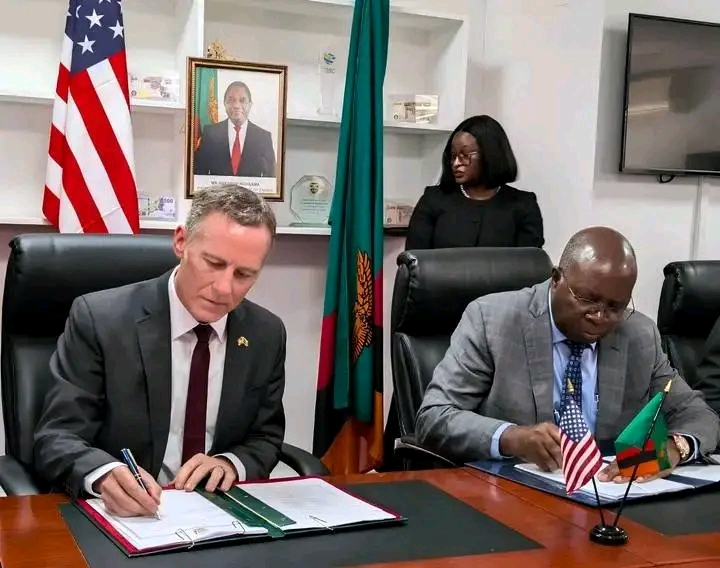
When Zambia and the United States signed a $2.49 billion health agreement on Thursday, October 8, 2026, the promise was greater self-reliance. Washington plans to contribute approximately $1.52 billion over five years, while Lusaka has committed an additional $975 million as American assistance declines. US Chargé d’Affaires Mich Coker called it “a transformative partnership”. Yet the agreement presents a contradiction: Zambia is seeking greater control over its health system while relying on foreign financing to achieve it.
The contradiction is visible in the country’s own accounts. Zambia’s National Health Accounts show that of K30.75 billion spent on current healthcare in 2024, international donors financed K14.14 billion (46%), government K13.03 billion (42%), and households and other sources K3.58 billion (12%). Government health spending averaged 8.5% of public expenditure between 2022 and 2024, below the 15% Abuja Declaration benchmark. These figures expose both limited fiscal capacity and difficult questions about budget priorities.
The consequences are particularly serious for approximately 1.4 million Zambians living with HIV. UNAIDS estimates published in 2025 indicated around 23,000 new infections annually. American assistance through PEPFAR has helped sustain treatment and testing, with $367 million committed for 2025, although that was not necessarily the amount disbursed. HIV treatment cannot simply be suspended when a donor changes policy. Patients require uninterrupted medication, making foreign dependence a long-term vulnerability rather than merely a budgetary inconvenience.
President Donald Trump’s foreign-aid overhaul demonstrated that vulnerability. His administration froze much of America’s assistance in January 2025 and subsequently dismantled USAID. Although lifesaving HIV treatment received exemptions and PEPFAR was not entirely abolished, programmes were disrupted. By May, UNAIDS reported that more than 11,000 HIV-related workers had been affected and 32 wellness centres serving over 20,000 people had closed.
Zambia also faced a separate $50 million annual reduction in medical assistance following American allegations of widespread theft of donated medicines. The lesson was uncomfortable: dependence exposes Zambia to decisions made abroad, while domestic accountability failures can further undermine external support.
Against this background, Zambia’s negotiating position deserves examination. Earlier proposals raised concerns over biological specimens, patient information and the relationship between health assistance and critical minerals. Health Minister Roma Chilengi said: “The Government will not be sharing any specimens with the United States because we removed all those aspects that raised concerns.”
Separating health negotiations from mineral discussions was significant. But a separate Data Sharing Agreement was still signed, and publication of both complete instruments would allow Zambians to judge the safeguards for themselves. Sovereignty requires transparency as much as negotiating concessions.
The financial challenge may prove harder than the diplomatic one. Chilengi says the agreement could support recruitment of up to 40,000 health workers over five years, including potentially absorbing existing donor-supported personnel. But salaries, medicines and laboratory services create obligations that continue beyond 2031. Zambia’s additional $975 million commitment averages $195 million annually, although actual allocations may differ.
Where will that money come from? And if domestic revenue falls short, will government cut other programmes, borrow more or leave health facilities struggling?
There is also a danger in treating self-reliance as simply replacing American dollars with Zambian kwacha. A country can increase health spending without improving healthcare if procurement weaknesses, medicine theft and delayed funding persist. Equally, donor assistance should not be dismissed: it has contributed substantially to Zambia’s progress against HIV.
The real objective should be to preserve those achievements while building institutions capable of financing and delivering services more independently.
Ultimately, this agreement is not proof that Zambia has achieved health sovereignty. It is an opportunity to demonstrate that sovereignty through sustainable financing, transparent commitments and accountable institutions.
Five years from now, the meaningful test will not be how much money was promised in Lusaka, but whether a patient living with HIV can still receive treatment without depending on another political decision in Washington.
INSIGHT | Beyond the headline. We examine the forces, choices and consequences shaping the story.
– The People’s Brief | Ollus R. Ndomu
October 9, 2026


Community Feedback