
THE $5 MILLION THAT VANISHED INTO SHOE PURCHASES: HOW G6’S FUNERAL BOMBSHELL EXPOSES THE REAL WICKNELL CHIVAYO

Breaking News Zambia
NewsTHE $5 MILLION THAT VANISHED INTO SHOE PURCHASES: HOW G6’S FUNERAL BOMBSHELL EXPOSES THE REAL WICKNELL CHIVAYO By Gabriel Manyati The air at Sahwira Glen Forest Memorial Park hung heavy with incense, hymns and the quiet shuffle of expensive shoes on Thursday as Zimbabwe buried Wicknell Chivayo and his wife Lucy “Lulu” Muteke. Provincial hero […]
THE $5 MILLION THAT VANISHED INTO SHOE PURCHASES: HOW G6’S FUNERAL BOMBSHELL EXPOSES THE REAL WICKNELL CHIVAYO
By Gabriel Manyati
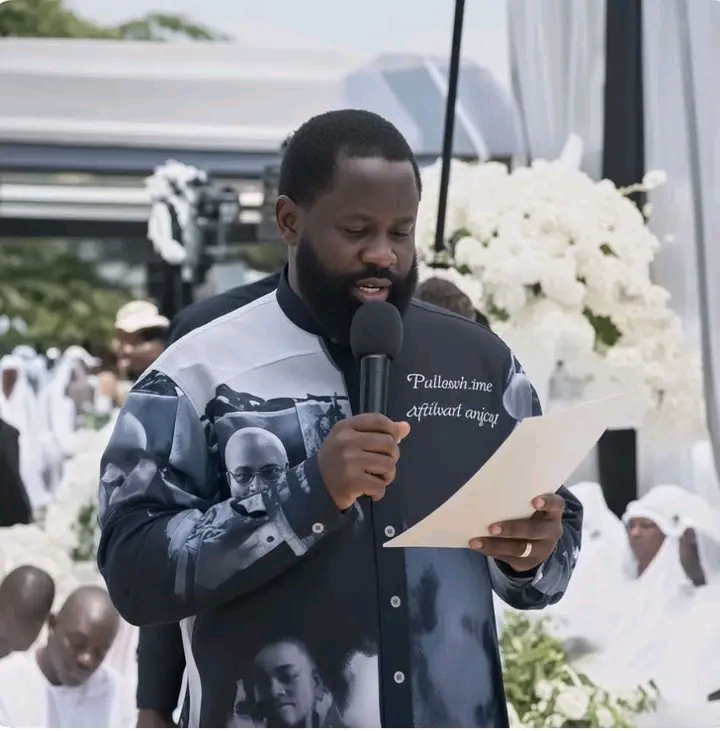
The air at Sahwira Glen Forest Memorial Park hung heavy with incense, hymns and the quiet shuffle of expensive shoes on Thursday as Zimbabwe buried Wicknell Chivayo and his wife Lucy “Lulu” Muteke. Provincial hero status had been conferred. The national flag draped the Rolls-Royce-grille casket. Ministers, prophets, musicians and a delegation from Eswatini’s King Mswati III had come to pay their respects. Yet it was a younger brother, standing among the mourners, who delivered the most lasting words of the day.
Joachim “GSix” or “G6” Chivayo rose and, in a moment of unsolicited candour, pulled back the curtain on the man the nation thought it knew. He told the gathering that he had sold the cars from his vehicle sales business and contributed US$220 000 to help finalise documentation for the long-delayed Gwanda solar project. In return, Wicknell had promised him US$1 million once Intratrek received its US$5 million advance from the Zimbabwe Power Company.
What followed, according to GSix, was pure theatre of the self. Wicknell flew to Dubai and spent roughly US$90,000 to US$100,000 on shoes. He then continued to the United States. For two weeks the younger brother could not reach him. Calls went unanswered. When contact was finally restored, he was told the money was gone. The offer on the table was a BMW X6 valued at about US$400,000.
“He wasn’t answering my calls until after two weeks, when he got back,” GSix said. “My brother became unreachable, and he wasn’t even picking up my phone calls. I was ghosted by this big man who’s sleeping here.”
The revelation landed like a stone in still water. It was not a critic speaking, not an opposition politician, not a rival tenderpreneur. It was blood. And it painted a picture many had long suspected but could never quite prove from the outside..
What Kind of Man Emerges from the Brother’s Testimony
The funeral tribute forces a hard look at the character of Wicknell Chivayo. Call it the Batimoid of the moment – the particular animal that appears when the masks of philanthropy, patriotism and provincial heroism are set aside. Here is a man who could look his own brother in the eye, accept hard-earned capital raised by liquidating a business, promise a seven-figure return, then vanish into luxury shopping while the project that justified the money remained a dusty, overgrown site in Matabeleland South.
The pattern is consistent. Flash first. Obligation later, if at all. The same man who posted luxury cars and cash giveaways with theatrical generosity could not, according to his own cousin, honour a simple promise made within the family. Communication broke down at the precise moment accountability was required. The money that was meant to move a national solar plant forward was instead converted into footwear and American spending.
Nobody won. The brother lost capital and trust. The nation lost a decade of potential power generation. And Wicknell himself, in the end, lost the chance to rewrite the narrative while still alive.
This is the man the public had already half-recognised in the endless cycle of big announcements and thin delivery. The brother’s unsolicited words simply removed the remaining benefit of the doubt.
The Long Shadow of Gwanda
The solar project itself is a study in stalled ambition. Intratrek Zimbabwe, the company closely associated with Chivayo, won the tender for the 100-megawatt plant around 2014–2015. The original engineering, procurement and construction value stood near US$172 million, later restated closer to US$132 million as global panel prices fell. An advance of approximately US$5 million to US$5.7 million (including VAT) was paid for pre-commencement works.
Meaningful construction never followed.
By 2018 the Zimbabwe Power Company moved to cancel the contract. Years of litigation followed. The High Court and later the Supreme Court kept the agreement alive. Chivayo was arrested and charged with fraud and related offences over the advance; he was eventually acquitted amid delays and the state’s failure to establish a prima facie case.
In September 2026, mere weeks before the fatal helicopter crash, ZPC issued a fresh Notice to Proceed giving Intratrek 24 months to complete the plant, with another mobilisation payment in view.
Throughout, Chivayo maintained a defiant public stance. On the Denny J Show he declared the project “the worst thing that has happened in my life” and insisted he was prepared to put his own money into it “even if the government doesn’t pay me.”
In earlier parliamentary appearances and later social-media defences he insisted the courts had vindicated Intratrek and that the company owed the state nothing. “The SUPREME COURT of Zimbabwe conclusively RULED that Intratrek Zimbabwe (Pvt) Ltd does NOT owe ZESA or the State a single cent,” he once wrote.
Yet the site remained largely undeveloped while Zimbabwe endured punishing load-shedding. The brother’s funeral account now supplies a personal, human-scale explanation for at least part of the delay: when the advance arrived, priority was given to shoes in Dubai and disappearance from family obligations.
The Brother Who Spoke – and the Legal Cloud He Carries
GSix’s willingness to speak so openly is itself remarkable given his own circumstances. Joachim Chivayo is wanted in South Africa by the Directorate for Priority Crime Investigation, the Hawks.
In November 2024 he and a co-accused, Ayanda Brian Gungwa, were arrested in Brakpan, Gauteng, during a Serious Organised Crime Investigation operation. Six bars of unwrought gold valued at approximately R15 million were seized, along with a Mercedes-Benz SUV. They were charged under the Precious Metals Act for unlawful possession of unwrought precious metals.
Granted R20,000 bail each by the Brakpan Magistrate’s Court, they were ordered to remain in Gauteng, not to leave South Africa, and to report weekly to Brakpan Police Station. They failed to appear. On 11 March 2025 the court issued J50 warrants of arrest.
GSix has since been seen living openly in Zimbabwe, where he holds the position of ZANU PF deputy secretary for information and publicity in Harare province. The warrants remain active. The man who stood at his brother’s funeral and described being ghosted over a family debt is himself a fugitive from South African justice in a high-value gold case.
Voices from the Record
The 2018 parliamentary grilling still echoes. Then committee chairman Temba Mliswa pressed Chivayo hard on the advance: “Just tell us how much you got and where the money went to. We had ZPC here and they said they gave you $7 million.” Chivayo replied that the figure was US$5 million and that he had received it without the required bank guarantee after seeking political intervention.
Mliswa’s questions about tender processes and unexplained disparities were never fully answered to the satisfaction of critics.
Other voices have been less restrained over the years. Critics have described Intratrek as a “briefcase company” and questioned how a man with an earlier fraud conviction could repeatedly secure large state-linked contracts.
Chivayo’s defenders pointed to court victories and his public philanthropy. The brother’s testimony now sits awkwardly between those two camps. It does not invent new legal liability; it simply describes a private failure of reliability that mirrors the public pattern many already believed existed.
What the Lie to the Brother Ultimately Reveals
A man who can extract capital from his own cousin, promise a transformative return, then vanish into luxury consumption while the national project stalls is revealing something fundamental about priorities. Spectacle over substance. Personal gratification over collective or even familial obligation. The ability to compartmentalise – to perform generosity on social media while leaving blood relatives unpaid and unreachable.
In the end, nobody won. The solar plant still stands incomplete. The brother who liquidated assets received neither the promised million nor, by his account, a fair substitute. Zimbabwe’s electricity deficit continued. And Wicknell Chivayo, for all the provincial hero drapery and the granite graves prepared side by side, leaves behind a final, unintended portrait painted by the one person who should have had least reason to expose him.
The funeral was meant to close a chapter. Instead, GSix’s unsolicited words opened an old wound and held it to the light. The US$5 million that vanished into shoe purchases may never be fully accounted for in a courtroom. But in the court of public memory, the brother’s testimony has already delivered its verdict.

Community Feedback