
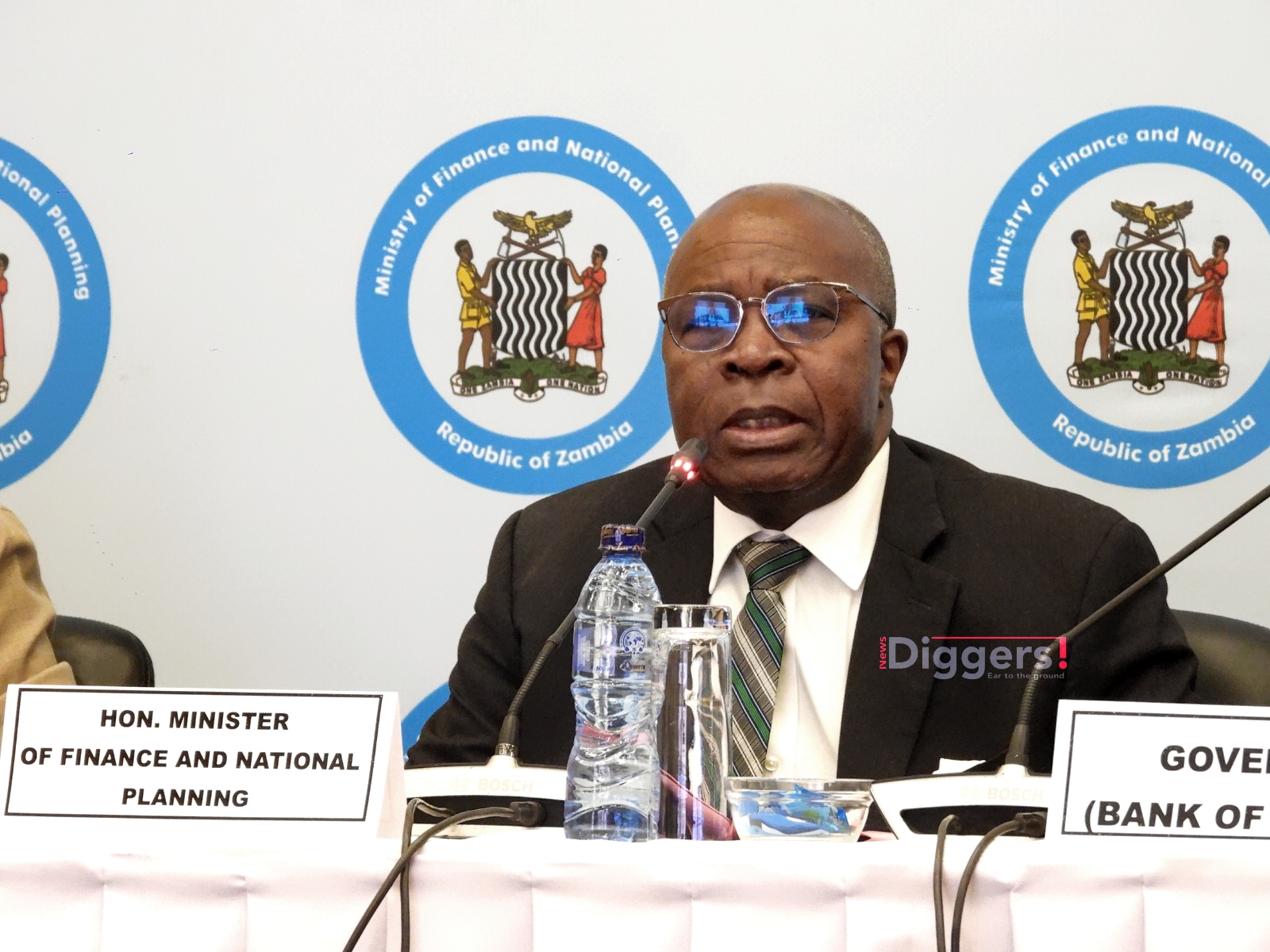
We’re spending ahead of time to prepare for drought – Musokotwane

Breaking News Zambia
NewsMINISTER of Finance and National Planning Dr Situmbeko Musokotwane says government is spending ahead of time in 2026 to limit food security expenses in 2027, following forecasts of a drought. Dr Musokotwane was speaking in the National Assembly, Tuesday, during the adoption of the Budget Committee’s report on the amended 2026 Annual Borrowing Plan. Recently, […]
MINISTER of Finance and National Planning Dr Situmbeko Musokotwane says government is spending ahead of time in 2026 to limit food security expenses in 2027, following forecasts of a drought.
Dr Musokotwane was speaking in the National Assembly, Tuesday, during the adoption of the Budget Committee’s report on the amended 2026 Annual Borrowing Plan.
Recently, Dr Musokotwane proposed a supplementary budget of about K19.9 billion, of which K14.7 billion would be used to settle debts owed to farmers who supplied grain to the Food Reserve Agency (FRA).
Speaking yesterday, Dr Musokotwane emphasised that very little would be spent on supporting the Food Reserve Agency in the 2027 National Budget.
“We need to recognise the key drivers of this. The first key driver is the fact that next year, we’ve been told that there’s going to be a drought. In fact, we must be happy, we must feel lucky that today there’s technology that tells you that this year you will be okay, next year you won’t be okay. In the absence of that technology, we would be groping in the dark. By now, we would have sold all the maize, thinking that next year we’ll have enough maize. But we haven’t done so because technology tells us that next year there’s a risk of a drought. So, what do you do? You prepare for the trouble. Another driver of this problem is the global problems, the wars that are raging on in this world, the war between Russia and Ukraine, the war between America and Iran,” he said.
“What has happened this year, in a sense, we can say we’re front-loading. Instead of just looking at 2026, we’ve gone beyond to look at 2027. So, this is front-loaded expenditure so that, come 2027, to gain food security, the job is done in 2026. So, Madam Speaker, as we present the 2027 budget, you will realise that from the Treasury, the amount to be put in next year’s budget will be moderate. Even though, of course, FRA will have all the money to enter the market. Why? Because this maize will be sold, and when it’s sold, FRA will have money to go back into the market to buy maize. But otherwise, from the taxes next year, very little will go towards supporting FRA. So, we’re spending ahead of time so that, come 2027, those expenses will be limited”.
He assured the House that government would not ask for a third supplementary budget, adding that it would manage to sustain the five new ministries.
“There will not be a third request for a supplementary budget. Yes, there’s a new Cabinet. Yes, they expanded ministries, but the only cost is for two months, November and December. After that, the year closes. Even after that, it’s only the cost for the ministers, their salaries and allowances. Otherwise, the civil servants are the same people. One department just moves from one ministry to another ministry. So, there’s no extra recruitment. These additional costs because of five new ministries, surely we can manage to sustain them somehow without a supplementary expenditure requirement. The committee talked about prioritising concessional borrowing. Concessional borrowing, yes, we do prioritise that because it’s the cheapest money you can get,” said Dr Musokotwane.
“The loans we get from the IMF, the interest rate is zero, the grace period is five years and the repayment period is three years. It’s the cheapest money, and indeed, we should go for it. But as usual, cheap things are always hard to find because everybody wants cheap things. So, we are exploiting that to the fullest, but cheap concessional loan sources are limited. This is why we’ve had to borrow locally for the expenses that I’ve already explained. But also, external financing may sometimes be cheap, but remember there’s a foreign exchange risk because if a currency depreciates, what appears to be cheap can end up being expensive”.


Community Feedback