
THE BILLIONAIRE IN THE CABINET: HOW MNANGAGWA IS RIGGING ZIMBABWE’S SUCCESSION GAME

Breaking News Zambia
NewsTHE BILLIONAIRE IN THE CABINET: HOW MNANGAGWA IS RIGGING ZIMBABWE’S SUCCESSION GAME By Gabriel Manyati In the shadowy ecosystem of ZANU PF, power has never merely resided in the polished mahogany of the Cabinet room or the rigid hierarchies of the parade ground. For decades, Zimbabwe’s ruling party has operated on a dual track, balancing […]
THE BILLIONAIRE IN THE CABINET: HOW MNANGAGWA IS RIGGING ZIMBABWE’S SUCCESSION GAME
By Gabriel Manyati
In the shadowy ecosystem of ZANU PF, power has never merely resided in the polished mahogany of the Cabinet room or the rigid hierarchies of the parade ground. For decades, Zimbabwe’s ruling party has operated on a dual track, balancing the formal architecture of the state against an informal, subterranean network of patronage, liberation credentials, and aggressive wealth accumulation.
But every authoritarian settlement eventually hits a wall where the question of succession can no longer be outsourced to the shadows. It forces the hidden wires into the open, crackling with voltage.
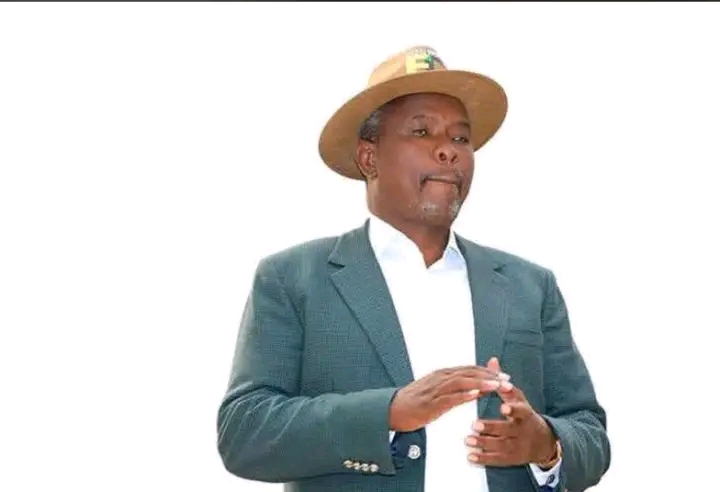
President Emmerson Mnangagwa has just thrown a live wire straight into the national grid. By elevating Kudakwashe Tagwirei – a billionaire tycoon whose commercial ascent has both turbocharged and fractured the regime – to the Cabinet as Minister of Economic Development and Investment Promotion, while moving Mthuli Ncube to a standalone Finance portfolio, Mnangagwa has done something far more radical than reshuffle a deck of cards.
Announced under Section 104 of the Constitution, this is a calculated, high-stakes intervention in the bitter war over who inherits the party and the state. It is a direct challenge to Vice President Constantino Chiwenga, testing the limits of military-backed institutional authority against the unyielding gravity of presidential patronage and big money.
To understand why this appointment has sent shockwaves through the elite corridors of Harare, one must look at how succession is actually waged. It is rarely fought through tidy, constitutional timelines. Instead, it is a street fight executed through the control of party structures, access to state resources, and the strategic elevation of loyalists.
Tagwirei’s transition from an influential financier operating behind a veil of corporate opacity to a sworn senator and now a Cabinet minister alters this calculus fundamentally. He is no longer just a wealthy benefactor with the president’s ear; he now occupies a formal, formidable state pulpit.
This portfolio endows him with an institutional lever to court domestic and international capital, weave alliances across provincial structures, and project influence deep into the machinery of government. In a political economy where financial muscle easily translates into political dominance, Tagwirei has just been handed permanent institutional architecture.
This ascent looks even more provocative when viewed against the backdrop of the factional bloodletting that preceded it. Throughout last year, Chiwenga emerged as a vocal, aggressive crusader against zvigananda – a biting vernacular term used to castigate individuals who amass colossal fortunes through opaque state connections and preferential procurement.
In fiery public addresses, Chiwenga warned that real businesses are built through hard work and discipline, darkly proclaiming that a day of reckoning is inevitable for those who undermine economic integrity through shadowy dealings.
Let us not romanticise Chiwenga’s rhetoric; this was never a dispassionate moral crusade against corruption. It was a targeted political assault on the commercial networks shielding Mnangagwa’s inner circle.
The friction boiled over into open warfare during the bitter battles over Tagwirei’s co-option into the ZANU PF Central Committee, where Chiwenga met fiercely resisted the move.
The sequence from local party resistance to supreme presidential empowerment tells a stark, unvarnished story. Chiwenga’s public denunciations failed to dislodge a constituency that has become structurally indispensable to the ruling class. When a figure subjected to such intense factional loathing is handed a premier economic ministry directly by the president, it sends an unmistakable message. The commercial-political complex surrounding Mnangagwa is not retreating. It is entrenching itself, daring rival factions to dismantle an economic architecture that underpins the regime’s survival.
Tagwirei’s appointment does not happen in a vacuum; it fits squarely into Mnangagwa’s aggressive, multi-layered blueprint to systematically dismantle the unwritten succession pact that promised power to Chiwenga. This strategy relies on structural self-preservation, most notably mirrored in the push to amend the constitution to elongate the presidential cycle to 2030, bypassing traditional term-limit hurdles.
Having already neutered internal party opposition through selective purges and legal manoeuvring, Mnangagwa is using state capital and legislative engineering to slam the door shut on any military-led succession. By institutionalising Tagwirei at the heart of economic governance, the president is not just hedging his bets – he is actively locking down an independent, billionaire-backed civilian fortress that makes an abrupt handover to the military elite virtually impossible.
Inevitably, this manoeuvre also activates the subterranean ethnic and regional currents that have haunted ZANU PF since before independence. Both Mnangagwa and Tagwirei hail from the Karanga-speaking grouping, a demographic current whose rise under the current administration disrupted the historical Zezuru dominance of the Mugabe era. Within ruling circles, Tagwirei’s promotion is viewed through this exact prism, feeding persistent whisper campaigns that Mnangagwa is determined not to return the presidential “kingdom” to Zezuru hands – the historical power base associated with Chiwenga.
To dismiss this as mere tribalism, however, is intellectually lazy. Ethnicity in ZANU PF does not operate as an immutable destiny; it functions as a potent political shorthand for factional loyalty, historical grievance, and ruling class trust.
The shared Karanga background of the president and his newly minted minister provides a common political legibility within the inner sanctum, intensifying the conviction among rivals that a durable, ethnically inflected commercial bloc is being institutionalised. Whether or not such a master plan exists on paper, the perception itself governs elite calculations, deepening the existential stakes for every faction in the party.
The institutional mechanics of this appointment are equally fascinating. By carving investment promotion out of the traditional Treasury brief while leaving Professor Mthuli Ncube in charge of macroeconomic policy and public finance, the administration has created a dual-engine economic management system. This institutional split invites competing centres of power. A minister of investment promotion who commands deep private commercial experience wields a formidable patronage instrument, capable of directing capital, rewarding provincial loyalties, and bypassing traditional Treasury oversight.
Yet this domestic consolidation collides violently with international reality. Tagwirei remains under comprehensive sanctions by both the United States and the United Kingdom over allegations of corruption and state resource misappropriation. Handing the portfolio responsible for wooing foreign direct investment to a figure barred from Western financial systems creates a staggering paradox. Multinational corporations and correspondent banks navigate rigorous anti-money laundering frameworks.
For mainstream Western capital, engaging with an investment gateway overseen by a sanctioned billionaire presents insurmountable compliance hurdles, practically guaranteeing that Zimbabwe will sink deeper into alternative, non-Western financial conduits.
Defenders of the regime will argue that desperation requires pragmatism. They will point to Tagwirei’s history in orchestrating large-scale agricultural and infrastructural interventions as proof of executive capacity, claiming that the country needs well-connected commercial actors who can cut through bureaucratic red tape to deliver tangible results.
But this argument stumbles over a chronic deficit of transparency. In a political economy where state patronage has historically blurred the line between public duty and private accumulation, this appointment demands rigorous asset declarations, strict recusals, and independent parliamentary oversight. Without these guardrails, economic policy ceases to be an instrument of national recovery and becomes an exercise in factional self-preservation.
Ultimately, Tagwirei’s elevation transcends the mundane parameters of a routine administrative reshuffle. It is a bold, disruptive chess move by a president navigating the twilight of his tenure, determined to shape the post-Mnangagwa landscape on his own terms. By placing a lightning rod of factional controversy at the heart of government, Mnangagwa has signaled that loyalty, commercial execution, and trusted personal networks outweigh the institutional objections of military-aligned rivals.
Whether this high-stakes gamble succeeds in cementing a durable civilian-commercial power base or merely accelerates the fracture of ZANU PF will be decided in the crucibles of provincial politics. What remains indisputable is that the succession equation has been fundamentally rewritten.
Chiwenga and his networks now face an entrenched economic powerhouse stationed permanently inside the gates of state power, daring them to make the next move.





Community Feedback