
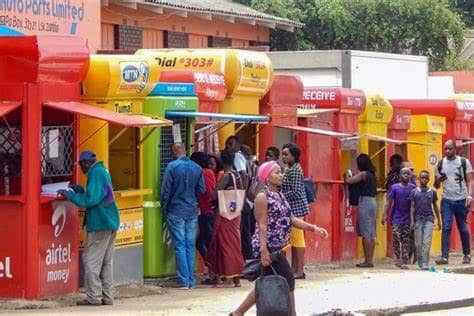
ZANAMACA protests displacement of Mobile Money Operators in Lusaka’s CBD

Breaking News Zambia
NewsThe ongoing removal of street vendors from […]
The ongoing removal of street vendors from Lusaka’s streets has brought renewed attention to the need for designated trading spaces for small businesses.
While the clean-up has been welcomed for improving the appearance and accessibility of the city, Zambia National Marketeers Credit Association (ZANAMACA) President Mupila Kameya says authorities must also consider businesses such as mobile money operators that have been left without suitable places to operate.
Speaking in an interview with Zambian Business Times-ZBT Kameya said mobile money operators should not be left without places to conduct business following the clean-up exercise, arguing that the operators are licensed and contribute to the local economy through the payment of relevant fees and licences.
He said the removal of makeshift tables used by some mobile money operators has made it difficult for members of the public to find places to access mobile money services. “Their business is an opportunity for the council to make money because if they are collecting from these mobile money operators, they can still make money,” Kameya said.
Kameya said the operators should therefore be supported to find alternative ways of branding and conducting their businesses within council requirements. commenting on the removal of street vendors from Lusaka’s streets, Kameya said the Lusaka City Council should consider establishing appropriate licensing arrangements or designated spaces where mobile money operators can legally operate without obstructing pedestrians and traffic.
He, however, urged the council to establish where the vendors removed from the streets have gone and whether they have been allocated alternative trading spaces. Kameya said there was a need for the council to work with nonstate actors when collecting data on street traders and determining the availability of market space.
He said this was particularly important because Zambia has different types of markets, including council-run, cooperative-run and privately operated markets. Kameya also expressed uncertainty over the council’s reported figure of more than 8,000 street traders and the claim that there are about 15,000 market stands, saying such figures should be verified through a collaborative data collection process.
He further warned that the street clean-up would require longterm measures to prevent traders from returning to the streets, particularly when the country approaches elections. Kameya called for continued engagement among councils, market leadership, traders and other stakeholders to ensure the cleanup exercise is sustained.
He also urged shop owners to keep the areas around their businesses clean and improve lighting, saying Lusaka needs to become cleaner and better illuminated, particularly at night.
He said residents and other stakeholders should take collective responsibility for maintaining clean surroundings and supporting the council’s efforts beyond the current enforcement exercise.
Article by Karen Ngulube



Community Feedback