
Zambia's Path To Democracy: Embracing Electronic Voting

Breaking News Zambia
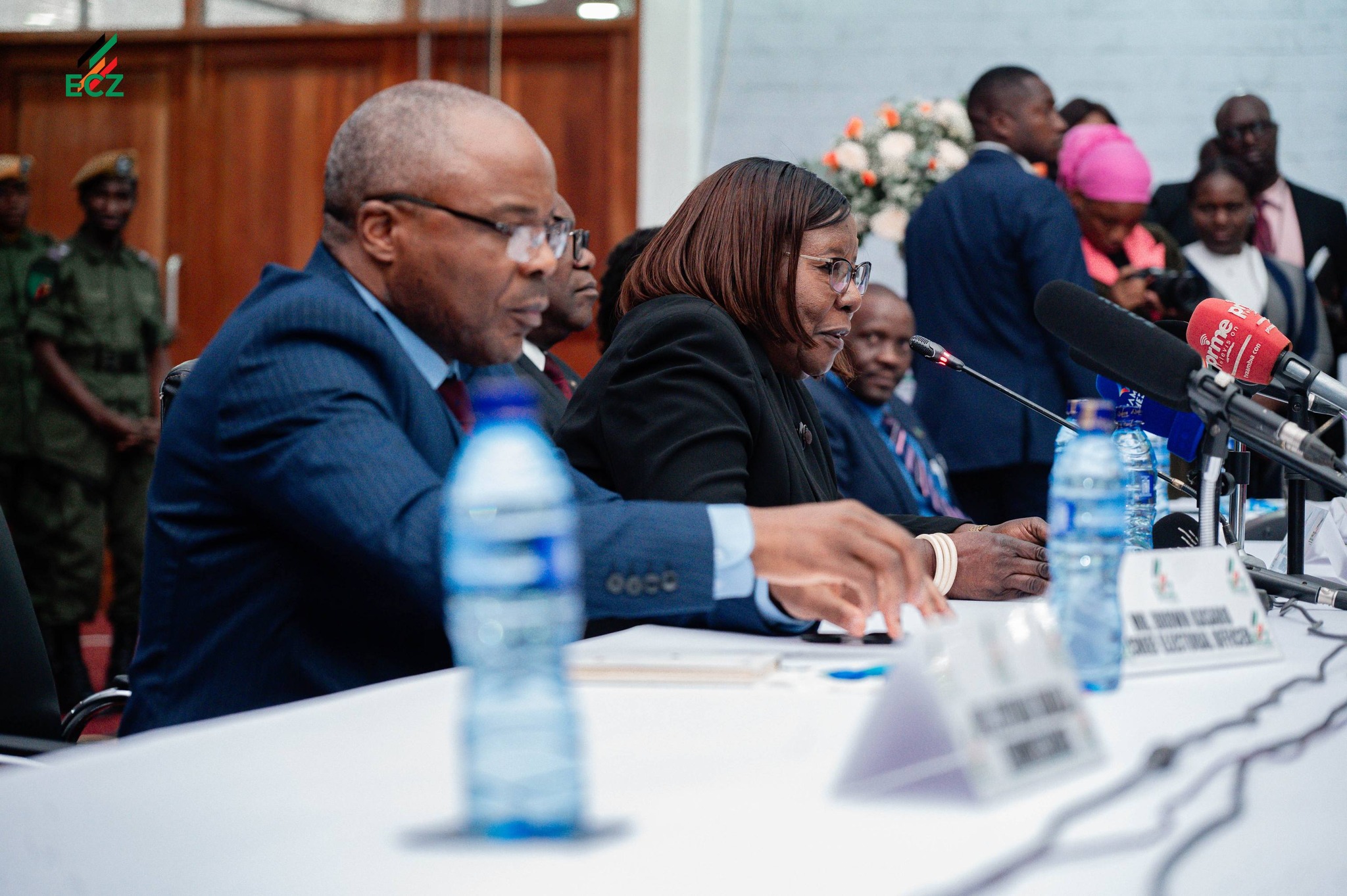
NewsLusaka - Zambia: Zambia's electoral process can benefit significantly from the implementation of electronic voting.
HeadlinesColumnsFeature Column 7 min.Read Electronic voting: Africa should take a leaf from Brazil By Moses Musokotwane October 5, 2026 FacebookTwitterPinterestWhatsAppAfrica counts its votes in days. Brazil counts 158 million in hours, and our governments should pay attention
Brazil counted the votes of more than 158 million people in less time than it takes a Lusaka minibus to crawl from town to Chilenje on a Friday evening. Zambia, with fewer than nine million registered voters, needed five days.
Zambia’s electoral process can benefit significantly from the implementation of electronic voting.
Money alone does not explain that gap. Design does. African governments should study it closely before the next disputed count, the next standoff outside a totalling centre and the next petition pushes another country to the edge.
A bigger country that finishes firstThe figures are stark. Brazil registered 158,745,463 voters for its October presidential election, while the Electoral Commission of Zambia (ECZ) certified 8,786,300 for our August general elections.
Brazil’s electorate is nearly 18 times larger than ours. Yet Brazilians usually know their winner within two to three hours of the polls closing, while Zambians waited until 18 August, five days after polling day, before President Hakainde Hichilema was declared winner. Every electoral commission on this continent should be asking how the bigger country manages to finish first.
How Brazil counts 158 million votesThe answer begins with a fully electronic voting system. Roughly 560,000 secure electronic voting machines, the urnas eletrônicas, are spread across a country that stretches from the Amazon to the southern plains.
A voter walks in, punches in the candidate’s number, confirms and leaves. There is no ballot paper to fold, no box to stuff and no pile of papers to sort by candidate under a weak light at two in the morning.
Voting closes at 5pm local time, and each machine then calculates its own totals and prints a physical results sheet, the boletim de urna. That sheet is the heart of the system. It is the polling station’s result, printed on paper, at the place where the votes were cast, the moment voting ends.
From there, the encrypted results travel over secure, isolated networks to the Superior Electoral Court (TSE) in Brasília. The machines are not connected to the internet while people vote, and transmission begins only once the count is locked.
Because the figures arrive already counted, the central computers in Brasília simply add them up. That is why Brazil regularly processes more than 95 per cent of the national vote, and projects a winner, before most families have finished their evening meal.
The dangerous gap after the polls closeSet that against the African experience. On our continent, the most dangerous stretch of any election is not the campaign. It is the gap between the last voter leaving the queue and the commission chairperson reading out the final figure.
Rumours thrive in that gap. WhatsApp voice notes announce winners nobody has declared, party agents circulate their own tallies and crowds gather outside totalling centres. Every hour of delay looks to someone like an hour of manipulation, whether or not anything is wrong.
Kenya learned this the hard way in 2017, when the Supreme Court of Kenya annulled a presidential election over irregularities in the transmission of results. The ballots were not the problem. The journey of the numbers from the polling station to the national tally was.
Brazil’s model works because it closes that gap almost completely. When a machine prints its result at the polling station door, every party agent can photograph it, and every candidate can then compare those photographs with what the national electoral court publishes. A doctored figure at headquarters would stand out against thousands of printed sheets already sitting in the phones of rival camps.
Speed alone does not calm a nation, but speed combined with verification does. A fast count that anyone can check leaves very little room for the suspicion that so often turns into violence.
Namibia’s warningNamibia offers the warning every African reformer should read before buying a single machine. In 2014, it became the first African country to use electronic voting machines in a national election, and it used them again in 2019. The machines carried one fatal flaw: they produced no voter-verified paper trail.
After the 2019 presidential vote, independent candidate Dr Panduleni Itula went to court. In February 2020, the Supreme Court of Namibia ruled that using the machines without a verifiable paper trail was unconstitutional. The court left the result standing, but the electronic experiment was over.
By the 2024 elections, Namibia had returned to paper ballots, and the return brought its own pain. Ballot shortages, long queues and an extension of voting followed, and the opposition Independent Patriots for Change refused to accept the outcome.
Namibia did not fail because technology fails. It failed because trust was never built into the machine, and a voter pressed a button and had to take it on faith that the button did what it promised. The lesson for Lusaka, Lilongwe, Harare and Kinshasa is therefore not to avoid electronic voting, but to never adopt it without paper.
Three locks on one doorAn African version of the Brazilian model should go one step further than Brazil itself. Every vote cast on a machine should print a small slip the voter can see before it drops into a sealed box, and every machine should print its station result at closing. Both should be auditable against the digital count.
That places three locks on one door: the digital record, the voter’s paper slip and the printed station result. Anyone wanting to rig the outcome would have to defeat all three, in public, in front of agents from every party.
Starlink and the end of the connectivity excuseFor years, connectivity has been the standard excuse. How do you send results from a school in Shang’ombo, an island polling station on Lake Bangweulu or a village in the Luangwa Valley where a phone signal is little more than a rumour?
Satellite internet has removed that excuse. Low-earth-orbit services such as Starlink, now licensed to operate in Zambia, can connect a polling station anywhere a terminal can see the sky. A dish on a classroom roof, powered by a solar panel, can deliver an encrypted station result to Lusaka as quickly as a fibre line in Rhodes Park.
No electoral commission, however, should rest a nation’s democracy on a single foreign private provider. The sensible design is layered, with satellite as the main route, local mobile networks as backup and the physical memory card and printed result sheet carried by road as the final fallback. If every electronic channel fails, the paper still exists and the count can be rebuilt.
How it would work in ZambiaThe first step is to start small. The ECZ could pilot machines at by-elections, where the stakes are lower and mistakes are cheaper, and every registered party should have access to independent audits of the machine software before a single vote is cast.
The second is to change the law. The Electoral Process Act would need to provide for the paper slip, the printed station result, the posting of that result at the polling station door and the right of every agent to photograph it.
The third is to publish everything. A public ECZ portal should display the result of every polling station, stream by stream, the moment it arrives, alongside a scanned copy of the printed sheet. A citizen in Kasama should be able to check her own polling station’s figure on her phone before she goes to bed.
None of this happens in one electoral cycle. Brazil introduced its machines in 1996 and spent years expanding them before the whole country voted electronically, and trust took decades to build. Africa need not wait that long, because it can learn from both Brazil’s success and Namibia’s stumble.
The cost of doing nothingSome will say the money would be better spent elsewhere. They should count the cost of the alternative: tense nights, security deployments around totalling centres, months of court petitions and governments beginning their terms under a cloud of doubt. A fast, verifiable count is not a luxury for a young democracy. It is a guarantee of peace.
Zambia’s next general election is five years away, which is enough time to pilot, legislate, audit and train. The machines, the satellites and the model already exist, and what is missing is a decision.
Brazil showed this month that a nation of 158 million can know its president before dinner goes cold. Zambia, with fewer than nine million voters, has no reason to keep waiting five days.
Loading read count...LEAVE A REPLY Cancel reply
Hot this week
Feature PoliticsKasempa electoral officer calls for peace during nominations October 5, 2026 0 Kasempa District Electoral Officer Beston Kajoba has urged residents... Economy
President Hichilema highlights Lobito corridor’s role in accelerating AfCFTA October 5, 2026 0 President Hakainde Hichilema has emphasised the importance of the... Economy
Musokotwane reiterates significance of Lobito Corridor in fostering productivity October 5, 2026 0 Minister of Finance and National Planning Situmbeko Musokotwane has... General News
ZUPED commends Government for free education policy October 5, 2026 0 The Zambia Union of Professional Educators (ZUPED) has commended... General News
Climate expert calls for groundwater management education October 5, 2026 0 Climate-Smart Agriculture and Climate Resilience Expert Oliver Bulaya says...
Topics
Feature PoliticsKasempa electoral officer calls for peace during nominations 0 Kasempa District Electoral Officer Beston Kajoba has urged residents... Economy
President Hichilema highlights Lobito corridor’s role in accelerating AfCFTA 0 President Hakainde Hichilema has emphasised the importance of the... Economy
Musokotwane reiterates significance of Lobito Corridor in fostering productivity 0 Minister of Finance and National Planning Situmbeko Musokotwane has... General News
ZUPED commends Government for free education policy 0 The Zambia Union of Professional Educators (ZUPED) has commended... General News
Climate expert calls for groundwater management education 0 Climate-Smart Agriculture and Climate Resilience Expert Oliver Bulaya says... Economy
Nkulukusa stresses proper utilisation of public funds 0 Secretary to the Treasury Felix Nkulukusu has stressed the... Rural News
Chama farmer dies after Insecticide ingestion 0 A 54-year-old peasant farmer of Chisani Village in Chama District... Feature Politics
Mpika electoral officer calls for by-election compliance 0 Mpika District Electoral Officer Samuel Musenge has urged aspiring candidates,...
Related Articles
Tayali’s Witness Gives Two Conflicting Account of Chibolele Polling Station Disturbance
Headlines October 5, 2026“Healing Must Start With Us Leaders”: Silumbe Calls for National Indaba and Urges Hichilema To Embrace Dialogue Headlines October 5, 2026
Hichilema Tells Chiefs To Keep Enough Maize for Homes as Drought Warning Stands
Headlines October 5, 2026Sympathy Abroad, Deafening Silence Home: Why Sishuwa Sishuwa is Not Getting Support from Zambian Academics
Columns October 5, 2026Mundubile And Zulu Taken To Solwezi For Sedition Plea As Mpundu Challenges Militia Evidence
Headlines October 4, 2026Popular Categories
HeadlinesGeneral NewsSportsEconomyRural NewsColumnsFeature Politics Previous articleKasempa electoral officer calls for peace during nominations

Community Feedback