
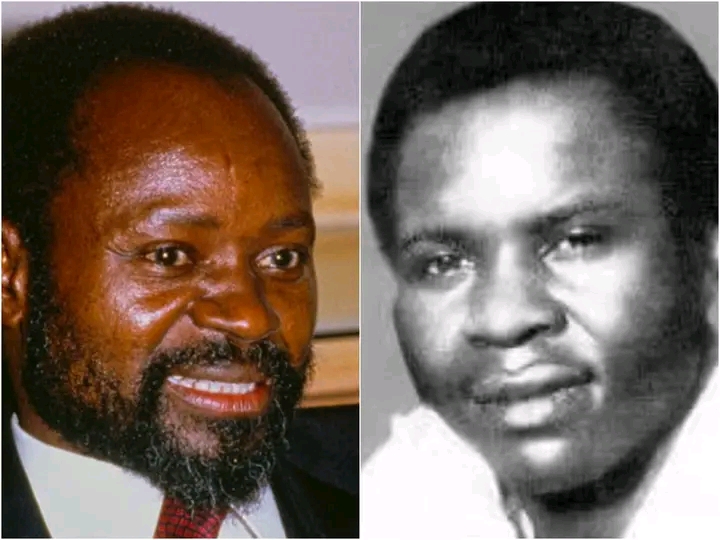
SAMORA MACHEL BELIEVED THAT THE DEATH OF ANDRÉ MATSANGAISSA MEANT THE END OF RENAMO. BUT HISTORY TAKES ANOTHER TURN!

Breaking News Zambia
NewsSAMORA MACHEL BELIEVED THAT THE DEATH OF ANDRÉ MATSANGAISSA MEANT THE END OF RENAMO. BUT HISTORY TAKES ANOTHER TURN! October 17, 1979 | THE DEATH OF ANDRÉ MATSANGAISSA AND THE BEGINNING OF A NEW PHASE OF THE MOZAMBICAN CIVIL WAR. When André Matsangaissa died on October 17, 1979, the FRELIMO leadership saw that event as […]
SAMORA MACHEL BELIEVED THAT THE DEATH OF ANDRÉ MATSANGAISSA MEANT THE END OF RENAMO. BUT HISTORY TAKES ANOTHER TURN!
October 17, 1979 | THE DEATH OF ANDRÉ MATSANGAISSA AND THE BEGINNING OF A NEW PHASE OF THE MOZAMBICAN CIVIL WAR.
When André Matsangaissa died on October 17, 1979, the FRELIMO leadership saw that event as an opportunity to announce a possible defeat of RENAMO. Samora Machel went on to convey a message to the Nation, in which he expressed confidence that the fighters remaining in the Gorongosa forests would eventually surrender.
At the time, the death of Matsangaissa was presented as an important military victory for FRELIMO. The expectation was that, without his main commander, RENAMO would lose the ability to continue the fight and thus disappear.
But subsequent events demonstrated that the war was far from over.
THE DEATH OF MATSANGAISSA DID NOT END RENAMO.
After the death of his first leader, RENAMO reorganized and chose Afonso Dhlakama to take over leadership. Under his command, the movement expanded its military operations and thus became an even greater challenge for the FRELIMO Government.
Several factors contributed to this expansion:
- EXTERNAL SUPPORT
With the independence of Zimbabwe in 1980, RENAMO lost the support it had received from the former Rhodesia. Subsequently, South Africa, under the Apartheid regime, became one of its main supporters, providing military assistance, weapons, training, and other resources
- THE CHANGE IN MILITARY STRATEGY
During Matsangaissa’s leadership, RENAMO’s operations were more focused in certain regions of the central part of the country. With Dhlakama, the war gained a much broader territorial dimension, reaching different provinces of Mozambique.
- THE GROWTH OF RECRUITMENT
The popular discontent with certain Government policies, including re-education camps, collectivization, and economic difficulties, became part of the context in which RENAMO managed to expand its influence and recruit new fighters.
- THE INTERNATIONAL PROJECT OF DHLAKAMA
Afonso Dhlakama came to represent RENAMO politically abroad, seeking to gain international support and present the movement as a force opposing the one-party political system that prevailed in Mozambique.
FROM A MOVEMENT FOCUSED ON THE CENTER OF THE COUNTRY TO A NATIONAL-SCALE MILITARY FORCE
Between 1982 and 1988, RENAMO significantly expanded its territorial presence, going on to operate in practically all regions of the country.
What many believed to be the end of the movement, after the death of André Matsangaissa, turned into a prolonged war that profoundly marked Mozambique’s history.
FROM COMRADES IN THE STRUGGLE FOR INDEPENDENCE TO ENEMIES IN THE CIVIL WAR
There is also an important chapter in this story: André Matsangaissa and Samora Machel were linked to FRELIMO during the fight against Portuguese colonialism.
Matsangaissa was part of FRELIMO’s ranks and participated in the fight for independence. Samora Machel, in turn, became one of the main figures of the organization and, in 1975, took over the Presidency of the Republic of Mozambique.
The rupture occurred when Matsangaissa was removed from government forces and sent to a re-education camp in Gorongosa. In 1977, he was liberated during an operation by Rhodesian forces.
Subsequently, he became one of the main figures of RENAMO, a movement that went on to militarily fight against the Government led by the former comrades of the liberation struggle.
Thus, two men who were linked to the same struggle against colonialism ended up on opposite sides in one of the most devastating wars in Mozambican history.
A QUESTION THAT HISTORY LEAVES:
Did Samora Machel imagine that, after the death of André Matsangaissa, RENAMO would not only continue to exist but also become a military force capable of challenging its Government for so many years?
Mozambique’s history deserves to be told in all its dimensions, without erasing the events that marked the past.
OPEN VOICE 1965 | Mozambique, history and memory.

Community Feedback