

Govt maintains mining budget allocation at K1.2bn despite 3m copper growth target

Breaking News Zambia
NewsThe Government has maintained the budget allocation […]
The Government has maintained the budget allocation to the mining sector at K1.2 billion out of over K284 billion in the 2027 National Budget, the same amount allocated in 2026, even as Zambia aims to increase annual copper production to three million metric tonnes by 2031 under the Grow Zambia agenda.
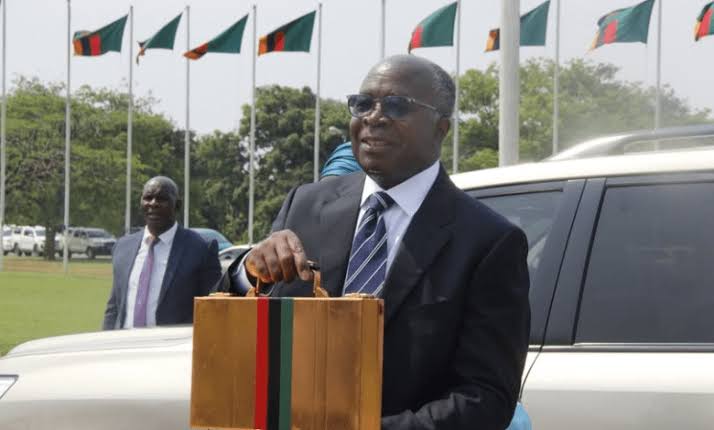
In his 2027 Budget speech, the Minister of Finance and National Planning proposed allocating K1.2 billion to support mining-related activities. This includes K450.7 million for training and certification, the procurement of equipment for artisanal and small-scale miners, and the roll-out of the Mining Management Information System.
A further K171.7 million is allocated to mining standards and mineral regulation, up from K75.9 million in the 2026 Budget. However, a review by the Zambian Business Times (ZBT) found that the overall allocation for mining-related activities remains unchanged at K1.2 billion.
The unchanged allocation raises questions about whether current funding will be sufficient to support small-scale and local miners, who could contribute to the country’s copper production ambitions. It also comes as illegal mining remains a concern, with stakeholders citing limited access to financial and other support among several factors behind the problem.
In an exclusive interview with ZBT about her pre-budget expectations, Namakau Kaingu, president of the Association of Zambian Women in Mining (AZWIM), stressed the importance of artisanal and small-scale miners in helping Zambia meet its copper production targets. She expected greater financial and equipment support, saying access to both remains difficult for many local operators.
Kaingu points out that small-scale miners face significant barriers, including lack of equipment, limited access to working capital, and minimal technical support. Despite holding valid licenses, many local miners struggle to scale up, leaving them at risk of reverting to informal or illegal mining practices to sustain their livelihoods.
She argued that, given the appropriate support in the form of equipment and working capital, small-scale and artisanal miners could significantly contribute to, and perhaps exceed, the government’s targets. Without such support, however, licensed small-scale miners may revert to illegal mining practices to sustain their livelihoods.
“If small-scale miners are empowered, they can play a pivotal role in meeting and surpassing the 3-million-ton target for 2031,” Kaingu stated. “The challenge they face is a lack of equipment and working capital. Large-scale operators have access to international funding and quickly begin operations, but local miners need government backing to thrive.”
Kaingu acknowledged government efforts to develop the sector but expressed concern about a gap between policy and implementation. She called for practical realization of the supportive measures outlined in mining legislation, emphasizing that real progress depends on effective, on-the-ground action.
As Zambia pursues its copper production goals, the path forward may well depend on how inclusively the sector grows. For the 3 million-tonne target to become a shared national success, stakeholders agree that practical support for small-scale miners, through equipment, financing, and training, must be prioritized, turning policy promises into tangible progress on the ground.
However, whether the 2027 allocation will provide enough support for small-scale miners to expand their contribution and help address illegal mining remains an open question.
Meanwhile, Musokotwani said the Grow Zambia Agenda aims to raise copper production to three million metric tonnes by 2031. Zambia’s copper output, however, in 2026, Musokotwani said, is projected to reach 930,000 metric tonnes, a record level, but below the one million tonnes forecast in the 2026 Budget speech. He said progress towards the 2031 target was solid.


Community Feedback