
PRIVATE SECTOR CONVERGES TO TRANSFORM AFRICA’S MINING LANDSCAPE AT 2026 INSAKA

Breaking News Zambia
News…AS LUNZUA POWER COMPANY CALLS FOR INCREASED […]
…AS LUNZUA POWER COMPANY CALLS FOR INCREASED DOMESTIC POWER SUPPLY
AS the push for a borderless energy future across African markets takes shape, mining companies are looking to significantly increase their production capacity for more mineral output, create more jobs and contribute towards economic growth.
But as large-scale mining companies across the continent seek to expand productive capacity, bottlenecks to unlock new investments to encourage further mineral exploration persist. In Zambia, one challenge is that mining licences remain idle, even for as long as 25 years, with no action. No movement on the ground. Just dust gathering on documents on a shelf. Another challenge is securing dependable power, locally, to sustain operations, particularly during prolonged drought seasons where water levels in dam reservoirs decline below their ability to support hydropower production.
But there is a glimmer of hope on the horizon, as policymakers, power traders, utilities and mining and energy experts heard at the just-ended Zambia Mining and Investment Insaka 2026 in Lusaka that the Government, through the Ministry of Mines and Minerals Development, is concluding the Countrywide High-Resolution Aerial Geophysical Survey (CHRAGS), a project that aims to significantly advance Zambia’s mineral exploration efforts and strengthen the foundations of the mining sector. Executed by Xcalibur Smart Mapping under a US $100 million contract, this initiative to survey the entire 752,000 square kilometres of the country to provide mapped data aims to de-risk exploration for copper, cobalt, nickel, lithium, gold, and underground water resources for irrigation and drought mitigation, thereby, helping to encourage more investment in mineral exploration.
Setting the stage to transform Africa’s mining landscape
Officially opening this year’s Insaka at the Mulungushi International Conference Centre under the theme: Transforming Africa’s Mining Landscape: Regional Value Chains, Shared Prosperity & Empowering Communities, President Hakainde Hichilema expressed concern at the slow pace of mineral exploration to build new greenfield mines and issued a clarion call, urging all licence holders to “use it or lose it.” “You cannot sit on your licence. I’ve had to resolve a problem now, where one of the guys in this room, has been sitting on a licence for 25 years, long before I took up office. And every government that came before me, they took the licence, then they negotiated their way, they went to court, and the licence was restored. And I said to these fellows, ‘this is the last time, you’re lucky that we have a different attitude towards licences. Use it.’ How can you sit on a licence for 25, 26 years?” President Hichilema wondered. “We need to agree that tenements must be explored, prospected, to make the work of the investors easy.”
With mining being a hugely capital-intensive venture, there was a palpable sense of urgency in the atmosphere at this year’s Insaka, as policymakers, financiers, power traders and foreign investors are increasingly eager to deal with – and overcome – the hurdles that still constrain the mining sector. Zambia’s Copperbelt area sits at the heart of rich mineral resources that are still largely untapped, almost a century after commercial mining began. So, the mapping exercise is an extremely significant and strategically important initiative that is certain to unlock further deposits. As the Head of State repeatedly said during his opening address, local and foreign investors should desist from speculative licence holding and turn mineral wealth into job creation to improve the quality of life for the citizenry. And there is need for investors to regularly dialogue with Government to address any obstacles that may be hindering progress towards further mineral exploration. “So, don’t sit on licences, my dear friends, on tenements. Why should we be spending less on exploration here than in some regions of the world? Why? Is it about the mentality of opportunism or what? So, where we are now, we are looking at this concept of use it or lose it,” the Head of State added.
As policy guidance at the highest level has been provided, steps to transform Zambia’s mining landscape must be taken. And the stage to incentivise further investment into the sector is set. All that is required, now, is for private sector players to understand the scale of the opportunities that exist, domestically, and tap into the prospects that are available, regionally, to maximise on financial returns, while leveraging Zambia’s land-linked geographic, strategic positioning.
Avoiding power supply outages amidst hydropower constraints
To illustrate the pace at which copper mining is growing in Zambia, one only has to look at the largest copper miner in the country: First Quantum Minerals Limited, which owns the Solwezi-based Kansanshi Mining Plc and the Sentinel Copper Mine in Kalumbila District. Kansanshi is on track to process about 27 million metric tonnes of ore this year, exceeding its design capacity by 8% and supporting a stronger production outlook. Kansanshi’s US$1.2 billion S3 Expansion Project, which was commissioned in August 2025, is expected to double its copper output to about 277,000 metric tonnes annually.
But rapid growth on this large scale will require stable and available domestic power supply sufficient enough to support the country’s mining sector production to hit the target of 3 million metric tonnes envisaged by 2031. This is where Independent Power Producers (IPPs) and traders work to invest and provide the transmission infrastructure needed to facilitate this growth, as well as satisfy the country’s growing consumer demand.
Speaking during a high-level panel discussion on Powering Growth: Energy, Road and Rail Infrastructure and Local Participation, Lunzua Power Company, Head Renewables, Eng. Joel Manda Mwale, addressed how IPPs could secure dependable power when several supplying countries simultaneously faced shortages. “In terms of power shortages in the region in the recent past, one of the things that we think could help is that we need to focus more on developing domestic power supplies. And the diversity that comes with developing local supplies also helps to manage shortages across the region,” Eng. Mwale said. “If you look at what really affected Zambia, it was more of a hydrological problem in that most of our hydro was significantly affected. But a diversity of sources, namely solar and thermal, have, to a large extent, helped. So, regional trading is part of the equation. But in itself, it may not be the one that gives us that sort of long-term dependability and long-term visibility. But having said that, it has a role to play, a critical role, because, then, it can also help to diversify the supply sources.”
Investment in interconnecting infrastructure to enhance regional connectivity remains a crucial point of reference for IPPs and financiers. “We saw a year or two years ago, where Tanzania had to shut down part of its generating facilities, primarily because there was excess. Meanwhile, at the same time, there were power shortages in other areas. So, we see that there’s still a need to invest in grid resilience, interconnecting facilities, which, to a greater extent, give the region a little bit more flexibility,” Eng. Mwale added. “We understand the local needs of the mining customers. So, it’s imperative that our focus must be to accelerate the local or the domestic power generation, as we also consider strengthening the interconnection. We are participating in that market. Under the Exergy Group, there is a company called Lusitu Transmission and Distribution Company. That company is also playing its part in helping with the grid resilience in terms of strengthening the transmission networks and also interconnectors. So, are we playing a part? Yes, we are playing our part.”
The session explored the energy, infrastructure and supplier foundations that mining-led growth depends on, and how reliable power, enabling infrastructure and competitive local suppliers can be delivered together.
Insights from the region: Botswana
Botswana’s Minister of Minerals and Energy, Bogolo Joy Kenewendo, who was one of the keynote speakers at the Insaka, stressed the importance of Africa moving beyond being a source of raw materials to becoming a centre of mineral processing of advanced manufacturing, innovation and global industrial competitiveness. “Botswana’s development story demonstrates what responsible mineral stewardship can achieve. Our diamond industry has helped to transform our nation, financing critical infrastructure, education, healthcare and economic opportunity. Today, we are building on that foundation to develop the next generation of our mining economy. We are expanding our ambitions beyond diamonds, with the growing opportunities that we see in copper, base metals and critical minerals, essential to the industrialisation of the future,” she said. “Our vision is clear: To position Botswana as a leading global mining investment destination and a competitive hub for mineral exploration and beneficiation, technology supply and value chain.”
To foster further growth in the mining sector, regional collaboration was a recurring theme at this year’s Insaka. And the visiting minister observed that her country’s economic growth was also dependent on Zambia’s success. “Our ambition extends well beyond what we can achieve within our borders. We recognise that the next frontier of African mining competitiveness lies in regional integration. Botswana and Zambia are natural partners in this endeavour. The Kazungula Bridge stands as a powerful example of what our two nations can accomplish together: it has transformed the border crossing into a strategic trade corridor. So are Zambia and the DRC. Therefore, we are all natural partners,” said Ms. Kenewendo.
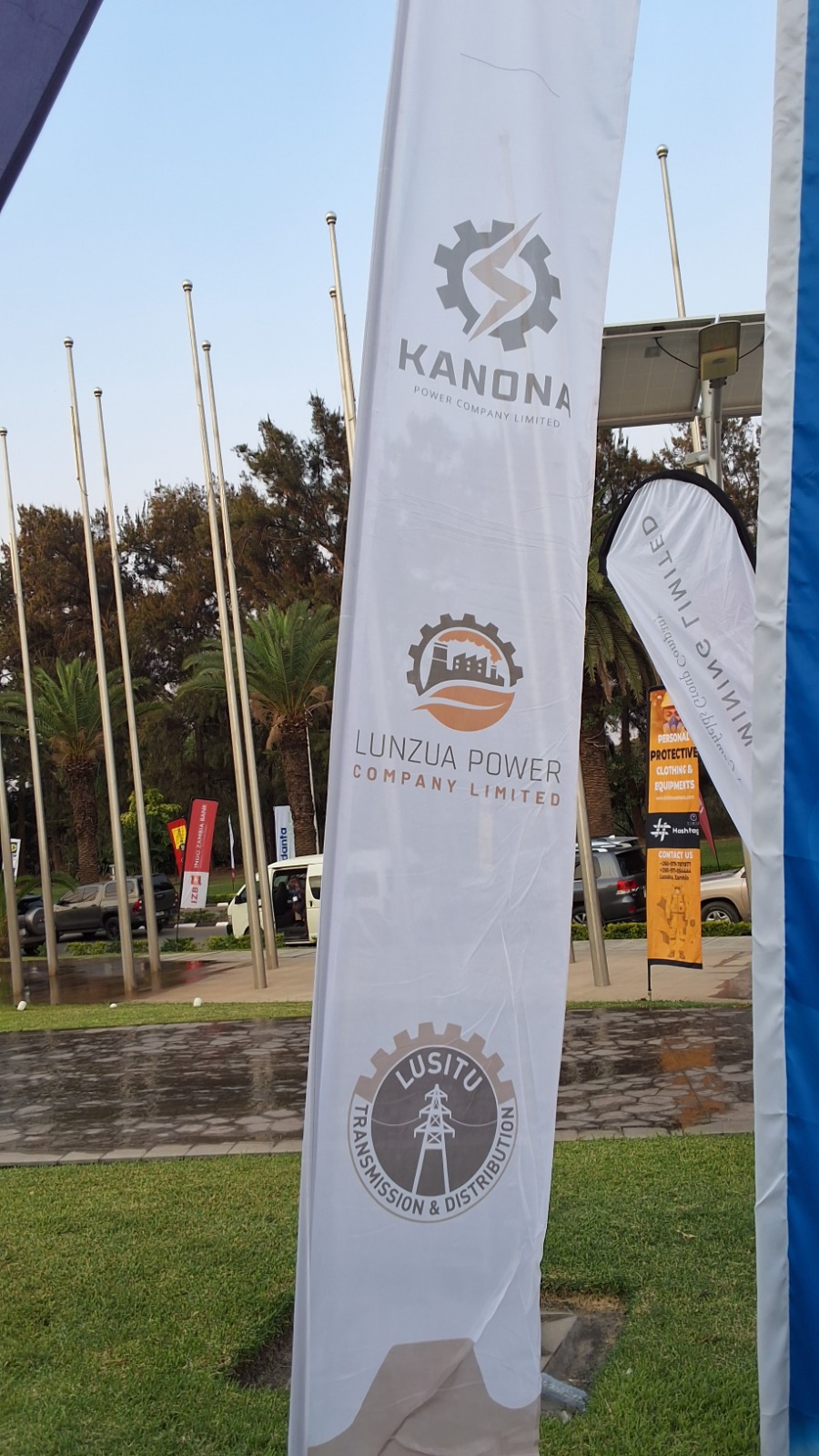
Kanona Power Company and Lunzua Power Company were among the major private sector players, who participated at this year’s week-long Insaka, which concluded on October 23.
Article Sponsored by Kanona Energy




Community Feedback