
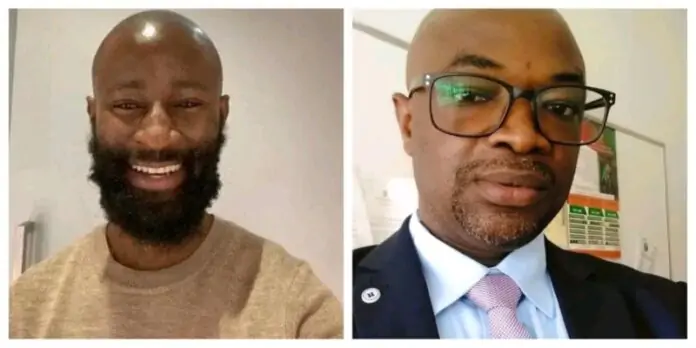
A Delve Into Dr O’Brien Kaaba’s Rebuke Of Dr Sishuwa Sishuwa

Breaking News Zambia
NewsDr O’Brien Kaaba’s submission, “Sympathy Abroad, Deafening Silence Home,” delivers a bold and thought-provoking examination of why Zambian academics have remained strikingly silent in the wake of the government’s revocation of Dr Sishuwa Sishuwa’s passport. Dr Kaaba attributes this silence not to fear or complicity within the local academic community, but to a nuanced understanding […]
Dr O’Brien Kaaba’s submission, “Sympathy Abroad, Deafening Silence Home,” delivers a bold and thought-provoking examination of why Zambian academics have remained strikingly silent in the wake of the government’s revocation of Dr Sishuwa Sishuwa’s passport.
Dr Kaaba attributes this silence not to fear or complicity within the local academic community, but to a nuanced understanding of Dr Sishuwa’s conduct – arguing that his alleged excesses in public commentary have eroded the legitimacy of his claims to academic freedom.
While Dr Kaaba’s submission is forcefully articulated, it is necessary to interrogate both the evidentiary foundation and the broader political context, particularly considering Zambia’s increasingly repressive climate for dissent under President Hakainde Hichilema’s administration.
Dr Kaaba’s dichotomization of “foreign sympathy” and “local silence” oversimplifies the motivations and pressures faced by Zambian academics.
In the current context in Zambia where critical voices are routinely subjected to state harassment, intimidation, or career jeopardy, silence does not signify agreement with the government’s actions or disavowal of Dr Sishuwa’s cause, but rather the rational self-preservation of scholars operating under threat.
Dr Kaaba fails to meaningfully address the chilling effects of Hichilema’s state repression, and he overlooks the troubling precedents set by government crackdowns on dissent – not just within academia, but throughout all sectors of society.
Besides, Dr Kaaba’s critique of Dr Sishuwa’s activism is couched in accusations of conspiracy-mongering, misinformation, and personal attacks.
However, his claims are asserted rather than systematically substantiated.
While he cites selective examples- such as the “market burning” allegation – Dr Kaaba does not rigorously address the broader corpus of Dr Sishuwa’s work, much of which has been celebrated internationally precisely for its analytical rigor and commitment to public accountability.
Dr Kaaba’s invocation of historical analogies to convicted war criminals is rhetorically incendiary and conflates academic misconduct with crimes against humanity, a leap that undermines the submission’s analytical seriousness.
Moreover, Dr Kaaba’s invocation of academic freedom is selectively instrumentalized.
While rightly insisting on the responsibilities that accompany academic liberties, he appears to set an unduly restrictive threshold for legitimate dissent.
In highly polarized and repressive political environments, the line between critical scholarship and activism is often blurred by necessity. To demand “dispassionate objectivity” is to risk depoliticizing intellectual work in contexts where neutrality itself is a political stance, often complicit with the status quo.
In addition, Dr Kaaba neglects to grapple with the broader implications of setting dangerous precedents for state interference in academic life.
The revocation of a scholar’s passport for critical commentary, regardless of tone or content, constitutes a serious encroachment upon fundamental freedoms and signals to the academic community that dissent will be punished, not debated.
The foreign academics’ outcry, then, is less a function of naiveté than an acute awareness of how such actions threaten the very possibility of critical inquiry – the heart of academia.
While Dr Kaaba’s jab at Dr Sishuwa raises important questions about the ethics and boundaries of academic freedom, it does so in a manner that underestimates the impact of political repression in Zambia under President Hichilema and overstates the case against Dr Sishuwa.
Dr Kaaba’s submission would have been more robust and contextually sensitive if it was foreground in the current realities of Zambia’s increasingly illiberal climate, recognize the complexities of academic activism, and defend the principle that the answer to controversial speech is not state sanction, but open debate.
I challenge Dr Kaaba to undertake rigorous scientific research into the reasons behind local academics’ silence in institutions of higher learning in Zambia, to test whether his assumptions truly align with the actual motivations and pressures experienced by Zambian scholars and share his findings.
By Given Mutinta
Community Feedback