
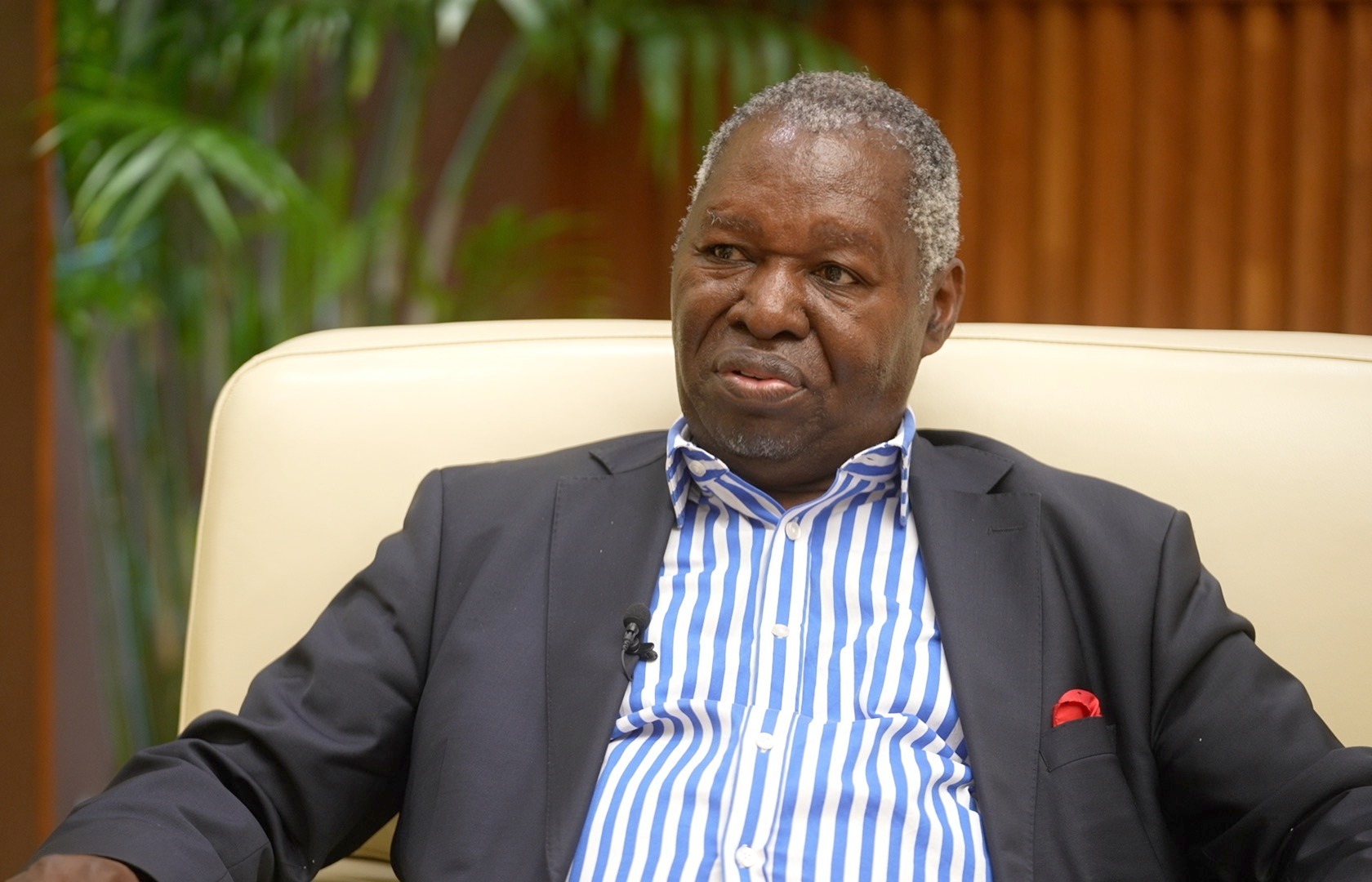
STATEMENT OF GOVERNANCE GRIEVANCES AND NATIONAL CONCERNS: For consideration as part of a National Reconciliation Initiative- Mbita Chitala PhD

Breaking News Zambia
NewsSTATEMENT OF GOVERNANCE GRIEVANCES AND NATIONAL CONCERNS For consideration as part of a National Reconciliation Initiative By. Mbita Chitala PhD Director: The Zambia Research Foundation (ZRF) ________________________________________ 1. PURPOSE OF THIS STATEMENT This Statement sets out the principal governance, constitutional, political, human-rights and electoral concerns that have been raised by opposition political parties, civil-society organisations, […]
STATEMENT OF GOVERNANCE GRIEVANCES AND NATIONAL CONCERNS
For consideration as part of a National Reconciliation Initiative
By. Mbita Chitala PhD
Director: The Zambia Research Foundation (ZRF)
________________________________________
1. PURPOSE OF THIS STATEMENT
This Statement sets out the principal governance, constitutional, political, human-rights and electoral concerns that have been raised by opposition political parties, civil-society organisations, professional bodies, religious organisations and other citizens during the administration of President Hakainde Hichilema from 2021 to 2026.
The purpose is not to prejudge any individual, political party or institution. Rather, the purpose is to establish a factual framework within which the Patriots of our country can promote: national dialogue; truth and accountability; restoration of public confidence; protection of constitutional rights; peaceful resolution of political disputes; institutional reform; and national reconciliation.
We have distinguished between: A. Established or independently documented facts; B. Allegations made by opposition parties or other actors; C. Government explanations or denials; and D. Matters requiring independent investigation or judicial determination.
We are further encouraged by the cry of Bishop Lungu of the Chipata Diocese who in his Pastoral Letter published today on Facebook has prayed and lamented that there must be reconciliation among our political actors to sustain a peaceful developmental conditions in Zambia.
We are adult citizens of the Republic of Zambia and registered voters and therefore competent to depose to this write up. We duly participated as a voter in the election to the office of President of the Republic of Zambia at the general elections held on 13 August 2026 and voted at State Lodge Primary School Polling Station.
We are Co-founders of the Movement for Multi-Party Democracy in 1990 that compelled the Republic of Zambia to revert from One Party State form of government to Multi-Party Democratic dispensation in 1991.
We bring this opinion to support the challenge for national peace and reconciliation that many people of good will have been calling for and to challenge the validity of the presidential election that occurred in August, 2026 and the declaration of President Hakainde Hichilema as President.
We have identified the issues that appear to divide our country and we have endeavoured to identify them and suggest ways and means of advancing the reconciliation challenge in the country.
3. ARRESTS AND PROSECUTION OF POLITICAL OPPONENTS
Opposition parties have been complaining of selective application of rule of law and justice and have argued that this injustice has come to be part of Zambia’s political life resulting that criminal law has increasingly been used against political opponents.
One particularly important example was the conviction in 2024 of Patriotic Front Secretary General Raphael Nakacinda for defaming the President. While Human Rights Watch noted it was a progressive initiative by the UPND administration that the offence of criminal defamation of the President was repealed in 2022, the case of Hon. Nakacinda where he was nevertheless convicted is clearly ultra vires and unlawful.
This raises a broader question concerning: prosecutorial discretion; consistency of application of the rule of law particularly criminal law; political speech; judicial interpretation of repealed provisions; and protection of legitimate political criticism and persecution of political opponents.
4. MURDER OF HON. MUTOTWE KAFWAYA
It is evident that Hon. Mutotwe Kafwaya was assassinated. This is a sad chapter in our political discourse. There is need for an independent Commission of Inquiry to look into the killing of the Hon. Mutowe Kafwaya as demanded by the family, the opposition and the International Community. There cannot be genuine national healing without accountability.
5. ARRESTS AND POLITICAL TENSIONS AFTER THE ELECTION
The post-election period has also produced allegations of politically motivated arrests. President Brian Mundubile and his running mate Makebi Zulu and eighteen others and charged with the serious crime of sedition and treason while the government parading a narrative of a militia that planned to overthrow the government unconstitutionally.
Since 2021, there are many other opposition persons who have been charged and/or convicted of crimes under cyber laws, hate speech laws, defamation, seditious practices and abuse of office and treason. These charges are considered by many patriots including observers outside as concocted and politically motivated.
Many people of good will have been advocating for their release and compensation for wrongful arrest and detention as well as their access to lawyers; judicial oversight; prompt presentation before a competent court; humane treatment; disclosure of charges; presumption of innocence; and no political interference with prosecution decisions.
6. THE 13 AUGUST 2026 GENERAL
ELECTION
The 13 August, 2026 election represents a substantially serious category of divisive concern because the opposition has challenged the integrity of the electoral process. President Brian Mundubile of the NRPUP publicly stated that his campaign had documented what he described as serious irregularities and inconsistencies concerning the conduct, counting, transmission and declaration of results.
All the observers both national and international identified several anomalies. These allegations cannot be dismissed.
They must be examined before any reconciliation can be attempted. We have identified the following twelve issues which must be addressed.
i. Declaration of the election result
There is need to explain and account for the unconstitutional blackout on results where the ECZ abruptly halted country-wide the counting and announcement of results for six hours and chased all observers.
There is need to account for the stolen ballot papers announced by the ECZ such as occurred in Mandevu as well as the tear gas that was fired into some counting centres such as Kabwe. Following the presidential election, the ECZ announced on 17th August, 2026 that President Hakainde had obtained the required majority of votes and declared him duly elected as President of the Republic of Zambia. Many citizens have disputed the validity of that declaration.
They verily believe that the election was not conducted in accordance with the Constitution, the Electoral Process Act and other applicable electoral laws and regulations. They believe that the irregularities and unlawful conduct complained of were sufficiently serious and substantial to affect the integrity and result of the election.
ii. Electoral fraud and manipulation of results
In a number of polling stations and constituencies, the results announced at constituency and national level were materially different from the results recorded on the official polling-station result forms. We have obtained copies of polling-station result forms from various polling stations which demonstrate discrepancies between the votes recorded at polling stations and the figures subsequently announced or transmitted.
At each polling station, each voter was served with four ballot papers to cast for the President, Member of Parliament, Mayor of Council or Chairperson and Counsellor. At the end of voting, the ECZ counted all the votes cast and totalled in each category the votes cast for each candidate together with spoiled ballots which were all witnessed by observers.
The total votes cast were recorded on GEN 20 forms and signed by observers. The total votes cast including spoiled for all the categories of voting namely, presidential, parliamentary, mayor/Chairman and counsellor totalled the same.
The CCMG Independent Assessment of the accuracy of the Official Results for the 2026 Presidential Election dated 20 August, 2026 which can be proved by the authors of the document Fr. Francis Mukosa, Fr. James Phiri and Rev. Allan Kasungami found glaring anomalies that compromised the integrity of the vote.
We believe that if there is an independent audit or a court conducted an investigation of all polling station results for all the 13, 529 polling stations countrywide, the results announced by the ECZ after tallying would show a total variance or irregularity of more than 800,000 votes cast for President Hakainde Hichilema.
The Results of Sampled Polling Stations by the CCMG as Announced at Polling Stations and compared to those Reported by ECZ at Tally Centres are that out of the 226 Constituencies countrywide, they conducted a verification exercise on 37 constituencies together with what another did for six constituencies and found that the presidential votes given and announced by the ECZ for President Hakainde Hichilema exceeded the total parliamentary votes cast at the majority of polling stations by 248,670 votes
An example is that of Solwezi which in 2026 had 63,772 registered voters before delimitation. After delimitation and the creation of two constituencies, Solwezi Central recorded 54,207 votes for Hichilema and Solwezi North had 39,662 votes for Hichilema totalling 93,869 for Hichilema instead of the 63,772. Similar discrepancies were observed in several constituencies country-wide.
Furthermore, for Solwezi Central Parliamentary Constituency, the ECZ say the total registered voters was 27,532, voter turnout was 34,213 and Total votes cast was 54,763. And that there was zero rejected ballots. On the other hand the CCMG PVT recorded the total from all polling stations in this constituency as being 25,359 votes that had been cast by the voters in this constitutency instead of the fake figure reported by the ECZ which they announced on Form GEN 20a to be 54,207 votes cast for President Kakainde.
The discrepancy or variance for just one constituency Solwezi is therefore 28,848 votes. Similar pattern of discrepancies was observed in 43 other constituencies. We verily believe that these discrepancies require investigation and reconciliation by an independent audit or the Court.
iii. Alleged alteration and falsification of electoral documents
In certain polling stations, result forms appear to have been altered after completion and/or signatures appear to have been placed on documents containing figures different from those announced subsequently.
Some of the documents relied upon by the ECZ contain discrepancies in handwriting, figures, signatures, serial numbers and/or other identifying particulars. There were also allegations and/or evidence of multiple voting, voting by persons whose names did not lawfully appear on the register, and/or other irregular voting practices at various polling stations which all need auditing. We verily believe that these matters require examination by an independent audit or Court and, where appropriate, forensic examination.
iv. Intimidation and violence
There is also allegations of violence and widespread intimidation where some opposition cadres were assaulted, killed or chased away from polling stations. During the electoral period and on polling day, incidents of intimidation, threats and violence occurred in Kalabo Constitutency, Mongu Constitutency, Chawama Constituency, Chama Constituency, Mandevu Constituency, Magoye Constituency, Kaputa, Mpolokoso etc Persons supporting the candidature of Brian Mundubile and Makebi Zulu were prevented, intimidated or discouraged from freely participating in electoral activities.
In Magoye, Kaputa, Matero, etc a person was killied. That the incident was reported to the Zambia Police Service and ECZ. We verily believe that the incidents were not isolated but formed part of a pattern of conduct affecting the ability of voters and/or agents to participate freely in the electoral process.
v. Interference with polling agents
In several polling stations, the duly appointed polling agents of Brian Mundubile and Makebi Zulu were denied access, removed from polling stations, prevented from observing the counting process and/or prevented from obtaining copies of the official result forms.
The conduct complained of materially impaired the ability of the agents of Brian Mundubile and Makebi Zulu to observe and verify the electoral process.
vi. Irregular counting and transmission of results. There were instances where results were allegedly transmitted or announced without the required verification and reconciliation procedures being properly followed. The figures announced at certain Tallying centres did not correspond with figures contained in original polling-station result forms.
We verily believe that the discrepancies were material and ought to be investigated by an independent audit or a Court. A reconciliation of the original polling-station results against the constituency, and national tallying records will demonstrate the extent of the discrepancies.
vii. Abuse of State Resources
President Kakainde Hichilema using government resources, held rallies in all provinces presented as working visits or community engagements. He used government platforms to campaign such as the Civil Service July,2026 announcement of employing 2,600 Health workers.
He used 98% of time of the government owned ZNBC TV to campaign without paying. He abused the Zambia Daily Mail and the Times of Zambia for the electoral campaign without paying. He announced at 28 of his rallies that he had given instructions to employ all volunteer nurses, teachers that were present at his rallies and instructed for their names to be recorded by his handlers.
In his 18 campaign speeches observed by the EU monitoring team, he promised the continuity and expansion of the social cash transfer along the side the cash-for work scheme and instructed his handlers to take names of eligible persons who were not yet enrolled to be recorded in Masaiti and Lufwanyama districts rallies.
He announced on 1st August, 2026 an immediate increase of UNZA student allowances from K3,900 to K5,850. On 4th August, 2026 during a rally in Chambishi, he ordered ZESCO to connect 16,000 households in Kwa Baso to the electricity grid, lower their charges and promised to personally cover the connection fees.
We believe that the afore said voter inducements and use of government resources for campaign purposes is explicitly prohibited by law.
viii. Irregularities affecting the result
The matters complained of above were not merely technical or insignificant irregularities. Taken individually and/or cumulatively, the irregularities affected the credibility, transparency and integrity of the electoral process.
The number of votes affected by the alleged irregularities is capable of materially altering the declared result. The margin between the declared winner Hakainde Hichilema and Brian Mundubile was 1,100,000 votes.
The votes affected by the irregularities identified in our study and investigation amount to approximately 800,000 votes, subject to further reconciliation and evidence. We verily believe that, had the election been conducted in accordance with the law, the declared result would have been different and the outcome of the election could reasonably have been affected. Furthermore, this discrepancy affected the allocation of proportional seats to the party on whom Brian Mundubile contested as the votes allegedly given to President Hichilema were incorrect and false.
ix. Constitutional and statutory violations
The electoral process was conducted in an environment that limits fundamental freedoms with late legal changes, legal uncertainty and unequal campaign conditions. We verily believe that the conduct complained of is inconsistent with the constitutional requirements governing democratic elections and the applicable electoral legislation.
The electoral process is required to be conducted in a manner consistent with constitutional principles including democracy, transparency, accountability, equality and the free exercise of the right to vote.
x. THE ROLE OF THE MILITARY AND SECURITY SERVICES
Opposition actors have raised concerns concerning the presence and role of security personnel in the electoral process. Because this is a highly sensitive allegation, the Council shall not declare that the military interfered with election results without an independent factual investigation. The appropriate question shall be: Were members of the defence or security forces deployed in a manner that was consistent with Zambia’s Constitution, electoral law and democratic civilian control of the security services?
There is allegation that the Army stormed ECZ totalling centres, helped alter election results, raided the home of President Brian Mundubile and killed Hon. Mutotwe Kafwaya the former Cabinet Minister, seized K2.5 million for party elections and helped seal all courts in Zambia to prevent any citizen from filing any petition. If evidence establishes inappropriate interference, those responsible should be dealt with according to law.
If the evidence establishes that deployments were lawful and necessary, that finding should also be accepted. The principle must be evidence before accusation and accountability without political discrimination.
xi. CLOSURE OF THE COURTS ON 24 AUGUST 2026
This is perhaps the most urgent constitutional issue arising from the 2026 election. The Electoral Commission declared President Hichilema the winner on 18 August 2026. Article 103 provides that a losing presidential candidate may petition the Constitutional Court within seven days of the declaration.
The courts were suddenly closed on 24 August 2026, but one Linda Kasonde and Brebner Changala filed a presidential election petition electronically through the Chief Justice Mumba Malila who acknowledged the filing.
The Zambia Police Service described the closure of all the courts country-wide as an intelligence-led preventive measure, while a judiciary notice referred to security reasons. The government subsequently announced wrongly that the seven-day petition period had expired without the Judiciary receiving a petition and that the President-elect would therefore be sworn in on 1 September. We are of the view that the unresolved constitutional question of the filing of the petition together with the closure of the courts deserves independent legal
consideration. The question concerns access to constitutional justice.
xii. THE PETITION SUBMITTED TO THE CHIEF JUSTICE
Reports following the closure of the courts stated that Chief Justice Mumba Malila had received a petition through his private email address, which he described as highly irregular but nevertheless referred to the Constitutional Court for consideration. This creates another question for constitutional lawyers: Can exceptional circumstances affecting access to the courts justify alternative methods of filing where a constitutional deadline is running? We are comforted that Chapter One Foundation which is an NGO has commenced an action asking the Constitutional Court to provide authoritative clarification.
7. POLITICAL SPACE AND FREEDOM OF OPPOSITION
Opposition parties have repeatedly complained that the political space available to them was restricted by the UPND administration. Human Rights Watch reported that during 2024 authorities continued to restrict opposition activity and that provisions of the Public Order Act were used to prevent or disrupt opposition gatherings.
The UN Rapporteur Gina Romero in her warning dated 2 September,2016 that there was unfair suppression of dissent. The major opposition party the Patriotic Front (PF) was subverted to the extent that it simply ceased to exist and its leader then former President Edgah Chagwa Lungu went into exile where he died and has never been buried. For the whole period, opposition political parties were denied the right to hold rallies or processions.
Freedom House similarly documented arrests of opposition leaders and supporters and restrictions on opposition rallies. The Citizens First Party and the Socialist Party reported denial of more than 100 applications to hold rallies. Other parties reported similar numbers. On the other hand, President Hichilema and his UPND party were allowed by the Zambia Police Service anytime and anywhere to hold rallies.
The government has maintained that Public Order Act was intended to protect public safety and that restrictions on opposition political parties holding rallies or processions should be understood as such meetings or rallies would offend the law.
In Parliament in 2025, the Minister of Justice stated that the government accepted the need to address concerns surrounding the Public Order Act, but disputed the finding of the UN Special Rapporteur who had found that the UPND administration selectively denied the opposition the right to assemble, speak and conduct politics equitably pursuant to the Act.
The fundamental issue for reconciliation is therefore that the opposition or opponents should have unrestricted freedom to hold gatherings subject to the same legal standards applied consistently to government supporters and opponents.
8. FREEDOM OF THE PRESS AND EXPRESSION
There have been documented concerns regarding the treatment of journalists and media organisations. Human Rights Watch reported arrests, harassment and restrictions involving journalists covering opposition activities during the period of the UPND administration. Freedom House likewise reported harassment and intimidation of journalists and restrictions affecting political expression.
It was also observed that the opposition were also denied from being covered by the National Television and the National Newspapers and only covered the UPND leadership. The reconciliation question is that a democratic government must protect both legitimate criticism of government; and legitimate protection of individuals and institutions against genuine criminal conduct and the government media must cover all without discrimination.
9. INDEPENDENCE OF THE JUDICIARY AND THE ELECTORAL COMMISSION
This is one of the most important institutional questions. Human Rights Watch reported that three Constitutional Court judges were suspended in September 2024 shortly before they were expected to hear a significant case concerning former President Edgar Lungu’s eligibility to contest the 2026 election. The Law Association of Zambia expressed concern that the action affected judicial independence.
The opposition complained that the Electoral Commission of Zambia was partisan and not independent and professional as all Commissioners were appointed by the President from a background where they were known to be UPND cadres. We believe that regardless of which political party benefits from a particular judicial decision, the judiciary must be protected from political interference.
10. THE CENTRAL GOVERNANCE QUESTION
Taken together, these concerns point to a broader issue than any individual political dispute. The central question is: Can Zambia maintain democratic legitimacy when substantial sections of the political community lack confidence in the neutrality of the institutions responsible for elections, policing, prosecution and adjudication? The answer cannot be supplied by either the government or opposition alone. It requires independent institutional verification.
11. PROPOSED NATIONAL RECONCILIATION FRAMEWORK
We therefore propose a National Reconciliation and Constitutional Restoration Process consisting of eight components.
Pillar 1 — Political Dialogue: We recommend bringing together in an indaba President Hichilema; opposition parties; former presidents; traditional leaders; churches; civil society; the Law Association of Zambia; youth representatives; women’s organisations; and recognised national elders.
The dialogue should operate under agreed rules preventing intimidation, retaliation and political exclusion.
We recommend a Media and Freedom of Expression Charter negotiated among: government; opposition parties; media organisations; civil society; the Law Association of Zambia; religious organisations; and professional journalists.
We further recommend the establishment of an independent review of the operation of the Public Order Act and its application to political parties as well as the cyber laws. Over and above the doctrine of neutrality of public officers in politics ought to be enforced and maintained in the public service
Pillar 2 — Political Prisoners and Politically Sensitive Cases: We recommend the establishment of an independent legal review panel to examine persons imprisoned or prosecuted in connection with political expression, demonstrations or political activity since 2021.
The panel should classify cases according to evidence and law. Where a conviction is demonstrably unsafe, unlawful or based on a repealed provision, appropriate legal remedies should follow. We recommend that a national reconciliation process should be undertaken to review politically sensitive prosecutions since 2021 and classify them according to: legitimate criminal conduct; ordinary political speech; disputed cases; cases where due process may have been compromised; and cases requiring review by an independent legal panel.
The Zambia Human Rights Commission reported that about 84 while the opposition indicate numbers in excess of 300 persons. Many citizens have rightly been advocating for the immediate acquittal of every opposition figure convicted of political crimes such as seditious practices, hate speech and lately treason. I agree with these demands to establish a reconciliatory environment.
Pillar 3 — 2026 Electoral Fact-Finding: Establish an independent commission with authority to examine the complete electoral record. Its findings should be published. The Commission should have representation from: constitutional lawyers; electoral specialists; civil society; churches; political parties; statisticians/data specialists; and internationally recognised electoral experts.
Pillar 4 — Constitutional Justice: Commission an independent review of the circumstances surrounding the closure of the courts during the presidential petition period. The review should determine: who authorised the closure; the legal basis for the decision; whether alternatives were considered; whether the decision affected access to constitutional justice; whether the judiciary acted independently; and what safeguards should prevent recurrence.
We recommend an independent constitutional review be appointed to recommend on the appointment and removal of judges; disciplinary procedures; presidential powers concerning judicial officers; security of tenure; protection of judicial independence; and procedures for dealing with allegations against judges.
We further recommend that the review leads to the repeal of the 1973 One Party Constitution and the enactment of a constitution for the 3rd Republic.
We further recommend that all citizens whose passports have been cancelled unlawfully should have their passports returned to enable them enjoy their human rights as provided by our constitution.
Pillar 5 — Security-Sector Neutrality: Reaffirm that the defence and security services belong to the Republic of Zambia and not to any political party. The Council recommends a binding protocol governing the role of security forces during: elections; political demonstrations; counting centres; court proceedings; transitions of government; and political emergencies.
Pillar 6 — Electoral Reform: We recommend reforms covering: composition of electoral commission; transparent results transmission; publication of polling-station results; audit trails; access of political agents to results; electronic results verification; independent election observation; rapid dispute-resolution mechanisms; protection of polling agents; security-force neutrality; and secure emergency filing procedures for election petitions.
We recommend the establishment of an independent Electoral Fact-Finding Commission whose mandate should include examination of: polling-station results; constituency results; transmission records; national tallying; results announced at constituency level; party-agent copies of results forms; electronic transmission records; rejected and disputed ballots; complaints lodged with the Electoral Commission; conduct of security personnel; conduct of electoral officials; treatment of opposition polling agents; and discrepancies alleged by candidates.
The Commission should have access to the original documentary and electronic evidence.
Pillar 7 — National Compact: We recommend that all major political actors to sign the following compact commitments: The Government must undertake to: protect opposition political activity; respect judicial independence; protect freedom of expression and assembly; refrain from using state institutions for partisan purposes; guarantee access to courts; maintain security-force neutrality; and cooperate with independent investigations; Opposition parties must undertake to: pursue disputes through constitutional means; reject political violence; respect lawful institutions; discourage inflammatory rhetoric; cooperate with investigations; respect lawful judicial decisions; and accept independently established facts; The security services must undertake to: remain politically neutral; protect all citizens equally; obey constitutional civilian authority; avoid partisan political activity; protect peaceful demonstrations; and maintain transparent chains of command; The Judiciary must undertake to: maintain institutional independence; provide equal access to justice; ensure timely hearing of constitutional disputes; protect constitutional rights; and develop emergency procedures for election petitions and other constitutional deadlines.
Pillar 8 — Government of National Unity: The challenges our country faces require that our leaders advance towards embracing the idea of a Government of national Unity (GNU). This has happened in other sister jurisdictions such as Zimbabwe and the Republic of South Africa when circumstances such as have occurred in Zambia confront a sovereign country.
15. NATIONAL RECONCILIATION SHOULD NOT MEAN IMPUNITY
A genuine reconciliation process should not be understood as: “Forget everything and move on.” Nor should it mean: “Punish everyone who belongs to the other political camp.” The proper principle should be: TRUTH → JUSTICE → RECONCILIATION → REFORM
Where violations are established, there must be accountability. Where allegations are disproved, there must be acceptance of the evidence. Where institutions have weaknesses, they must be reformed. Where political opponents have legitimate grievances, they must have a peaceful avenue for redress.
16. FINAL PRINCIPLE
The objective in this write up is to make clear that patriots do not exist to determine which political party is right. Their responsibility is higher: To protect the Republic itself. Zambia’s democratic stability ultimately depends upon citizens believing that: elections can be trusted; courts can be accessed; judges can act independently; opposition parties can organise; journalists can report; security forces remain politically neutral; government can be criticised without fear; citizens can seek constitutional remedies; and political disagreements can be resolved without violence.
We call upon all political actors to agree that no electoral victory, political defeat, governmental power or opposition campaign is more important than the constitutional integrity and peace of the Republic of Zambia.
Community Feedback