
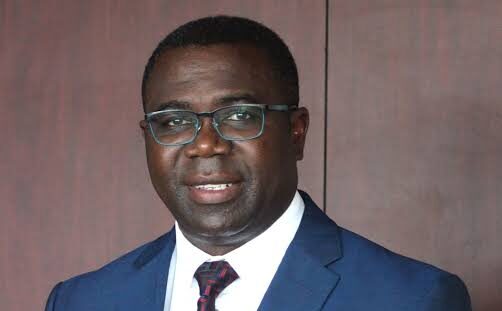
Zambia : Zambia Ready To Sign US$1.5 Billion US Health Deal After Specimen-Sharing Clause Is Dropped

Breaking News Zambia
NewsLusaka - Zambia: Zambia is set to sign a five-year, US$1.5 billion health agreement with the United States this week. Minister of Health Prof Roma Chilengi
Headlines 5 min.Read Zambia Ready To Sign US$1.5 Billion US Health Deal After Specimen-Sharing Clause Is Dropped By Moses Musokotwane October 6, 2026 FacebookTwitterPinterestWhatsAppZambia is set to sign a five-year, US$1.5 billion health agreement with the United States this week. Minister of Health Prof Roma Chilengi said negotiators removed a clause that would have required the country to send specimens from its disease surveillance system to America.
Prof Chilengi said the revised Memorandum of Understanding (MoU) now addressed the concerns Zambia had raised over health data, specimen sharing, intellectual property and benefit sharing.
“As we speak now we are completely aligned,” he said. “We are completely comfortable with the MOU that has been finalised now. We are hoping that it can be signed this week.”
Government suspended the signing earlier this year to allow further diplomatic and technical discussions on provisions it considered unsuitable for Zambia. Prof Chilengi said the original document was a standard framework drawn up for several beneficiary countries in the region, and some of its terms did not sit well with Lusaka.
The Minister was frank about how the first draft was received at home.
“The MOU itself was broadly unpopular because it had clauses that were uncomfortable to ourselves,” he said. “And so for our part as Zambia we engaged and we had many, many meetings to discuss technical details of the contents of the MOU and it was a back and forth activity.”
The talks did not run to schedule.
“Many deadlines didn’t work out because we couldn’t agree on a number of things, but as we went on we kept agreeing and agreeing,” Prof Chilengi said.
Zambia’s biggest gain came on specimens. The original agreement required the country to share certain specimens collected through its disease surveillance system with the United States. Prof Chilengi said Zambia had negotiated the removal of that requirement, which means no specimens will leave the country under the agreement.
Beyond specimens, Zambia asked for clarity on intellectual property and benefit sharing in cases where research using its specimens or other health resources leads to new medicines or vaccines. It also pushed for capacity building and skills exchange between Zambian and American scientists, so that the partnership benefits both countries.
Under the agreement, the United States will provide US$1.5 billion over five years, with the annual allocation falling each year. In turn, Zambia will raise its own spending on health so that the gains made with American support are sustained after the funding tapers off.
The Health Minister stressed that the hard bargaining had not changed the relationship.
“We need to be clear here that the US Government are our biggest supporter to the health sector and they are a very cherished partner to the health sector in this country,” he said.
The Zambian deal belongs to a new generation of bilateral pacts under Washington’s America First Global Health Strategy. The strategy replaced traditional grants from the United States Agency for International Development (USAID) and the President’s Emergency Plan for AIDS Relief (PEPFAR) with five-year MoUs worth roughly US$11 billion to US$14 billion. Older aid often flowed through multilateral organisations. The new deals instead tie funding to specific national policy commitments.
Those commitments have met resistance across the continent. Some draft compacts required countries to share biological resources, virus samples and epidemiological data for up to 25 years, with no guarantee that they would receive the vaccines or medicines developed from them. Others barred national regulators from inspecting imported medical products. Several demanded high levels of domestic co-investment, and some sought alignment with wider geopolitical or mineral-access goals.
Zimbabwe halted talks on a US$350 million deal over concerns about control of its health data and eventually walked away. Washington then moved to phase out its core HIV and infectious disease funding there.
At home, the opposition wants to see the final text before any pen touches paper. Democratic Progressive Party (DPP) president Mr Antonio Mwanza said an earlier draft reportedly made the health agreement conditional on a separate Bilateral Compact. He said Zambians had objected to linking health assistance with negotiations over critical minerals.
“If that is the case, publish the final agreement before signing it,” Mr Mwanza said. “Zambians have the right to know every condition, obligation, performance requirement, financing arrangement, data provision and commitment attached to this money.”
“Let the public see the revised text and verify that for itself.”
The DPP leader said the deal raised a deeper question. He asked why a country with copper, cobalt, nickel, gold and emeralds still depends so heavily on outside financing for essential services. He cited estimates from the Financial Intelligence Centre of illicit financial flows of K9.93 billion in 2022, K51.25 billion in 2023 and K85 billion in 2024, a combined K146.18 billion, with tax evasion identified as the main underlying offence.
“We should welcome support without surrendering transparency, national interests or economic sovereignty. But Zambia must also build the capacity to finance its own development,” he said.
Mr Mwanza said Government should close tax loopholes, fight tax evasion and illicit financial flows, strengthen revenue collection and make sure Zambians receive a fair return from their natural resources.
Meanwhile, Ghana has taken the opposite road. President Mr John Dramani Mahama said his cabinet rejected a proposed US$109 million US health compact, calling its terms humiliating and a threat to national sovereignty.
“Ghana is a sovereign nation. And we have our processes, we’re a democratic country,” Mr Mahama said.
He said Ghana’s Health Ministry studied the compact and brought it to cabinet, which flagged several provisions. One required Ghana to hand over its pathogen profile, meaning a record of the diseases endemic in the country. Another demanded its medical records.
“I mean, who takes another country’s medical records?” the Ghanaian leader said.
The compact also required Ghana to put its own money into the programme. It would have denied the country’s Food and Drugs Administration any right to inspect medicines and medical products brought into Ghana.
“I mean, it was humiliating,” Mr Mahama said.
He said cabinet threw the compact out faster than any document he had seen. It then instructed the health minister to tell the US ambassador that Ghana did not need it.
“We’ll manage ourselves,” he said. “And we’re doing fine.”
Loading read count...LEAVE A REPLY Cancel reply
Hot this week
HeadlinesMundubile, Makebi Want Sedition Trial Moved To Lusaka, Say Solwezi Venue Blocks Their Witnesses October 6, 2026 0 Mundubile, Makebi Want Sedition Trial Moved To Lusaka, Say... General News
Kasenengwa CDF projects progressing well October 6, 2026 0 The implementation of projects under the 2026 Constituency Development... Rural News
Mkushi child rights committees trained on abuse cases October 6, 2026 0 Lifeline Childline Zambia in partnership with Strategic Youth Organization... General News
Corruption hinders Zambia’s development agenda- AAC October 6, 2026 0 Alliance Against Corruption (AAC) Executive Director Noel Chisebe says... General News
Nyimba Teachers’ union calls for boy child retention programme October 6, 2026 0 Nyimba District Teachers’ Union Representative, Wilson Kombani has called...
Topics
HeadlinesMundubile, Makebi Want Sedition Trial Moved To Lusaka, Say Solwezi Venue Blocks Their Witnesses 0 Mundubile, Makebi Want Sedition Trial Moved To Lusaka, Say... General News
Kasenengwa CDF projects progressing well 0 The implementation of projects under the 2026 Constituency Development... Rural News
Mkushi child rights committees trained on abuse cases 0 Lifeline Childline Zambia in partnership with Strategic Youth Organization... General News
Corruption hinders Zambia’s development agenda- AAC 0 Alliance Against Corruption (AAC) Executive Director Noel Chisebe says... General News
Nyimba Teachers’ union calls for boy child retention programme 0 Nyimba District Teachers’ Union Representative, Wilson Kombani has called... General News
Zambia open for Investment in Timber 0 The government has underscored the need to unlock Zambia's... General News
ZANEC lobbies for improved teacher welfare 0 The Zambia National Education Coalition (ZANEC) has called for... General News
Completion of Ablution construction elates Lavushimanda DC 0 Lavushimanda Town Council Secretary, Jonas Mwendakawa has disclosed that...
Related Articles
Mundubile, Makebi Want Sedition Trial Moved To Lusaka, Say Solwezi Venue Blocks Their Witnesses
Headlines October 6, 2026Electronic voting: Africa should take a leaf from Brazil Headlines October 5, 2026
Tayali’s Witness Gives Two Conflicting Account of Chibolele Polling Station Disturbance
Headlines October 5, 2026“Healing Must Start With Us Leaders”: Silumbe Calls for National Indaba and Urges Hichilema To Embrace Dialogue
Headlines October 5, 2026Hichilema Tells Chiefs To Keep Enough Maize for Homes as Drought Warning Stands
Headlines October 5, 2026Popular Categories
HeadlinesGeneral NewsSportsEconomyRural NewsColumnsFeature Politics Previous articleMundubile, Makebi Want Sedition Trial Moved To Lusaka, Say Solwezi Venue Blocks Their Witnesses
Community Feedback