
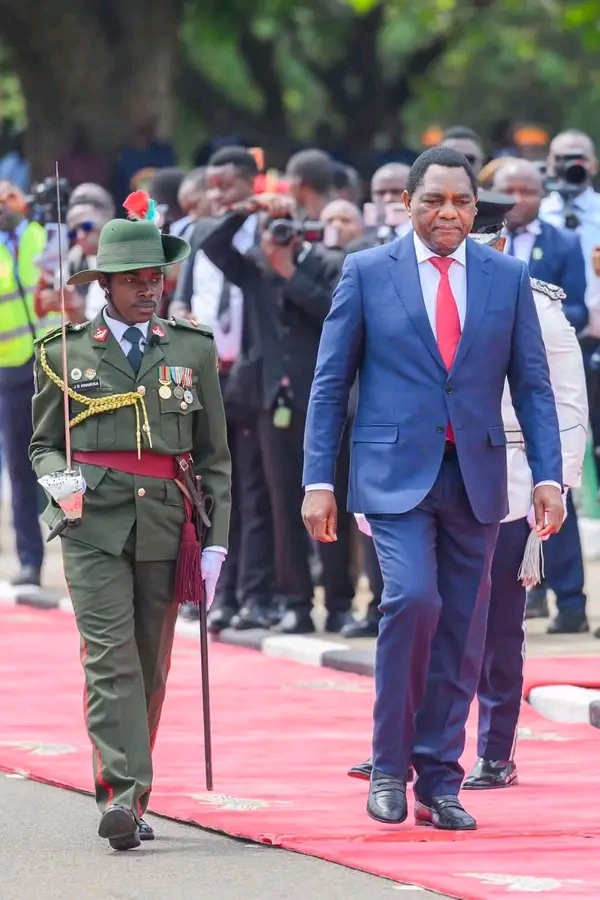
Zambia Secures Highest Vote at UN Human Rights Council Elections, Leading 15 Nations With 177 Votes

Breaking News Zambia
News“Zambia receiving the highest votes of all countries in the world selected for the UN seats defeats the opposition entire argument on human rights in Zambia. ” George Mtonga INTERNATIONAL NEWS | 13 OCTOBER 2026 Zambia Secures Highest Vote at UN Human Rights Council Elections, Leading 15 Nations With 177 Votes Zambia’s election to the […]
“Zambia receiving the highest votes of all countries in the world selected for the UN seats defeats the opposition entire argument on human rights in Zambia. ” George Mtonga
INTERNATIONAL NEWS | 13 OCTOBER 2026
Zambia Secures Highest Vote at UN Human Rights Council Elections, Leading 15 Nations With 177 Votes
Zambia’s election to the United Nations Human Rights Council for the 2027–2029 term marks a significant diplomatic milestone, placing the country at the forefront of voting across five regional groups.
LUSAKA/NEW YORK — Zambia has recorded a major diplomatic achievement after securing 177 votes in the United Nations General Assembly elections for the Human Rights Council, the highest tally among the 15 countries elected on Tuesday, 13 October 2026.
The result places Zambia ahead of the vote totals recorded by established international players, including Germany, Japan, Brazil, Ireland and Ukraine.
Zambia received more votes than any other elected country, with Ghana and Kuwait and Nepal following on 173 votes each, according to the announced results. The Zambian Ministry of Information and Media has also highlighted the country’s 177-vote performance.
The election gives Zambia a three-year seat on the 47-member Human Rights Council, beginning on 1 January 2027 and ending on 31 December 2029.
A Strong Display of International Diplomatic Support
Zambia’s 177 votes represent approximately 91.7% of the United Nations’ 193-member states, demonstrating broad support for the country’s candidature across the international community.
The African results were particularly notable, with Zambia receiving 177 votes, followed by Ghana with 173, Nigeria with 172 and Burundi with 160.
Across the other regional groups, no elected country received more than 173 votes.
Although countries were elected to seats allocated to their respective geographic groups rather than competing directly against all 14 other nations, Zambia’s overall vote tally was the highest.
The election presents an important opportunity for Zambia to expand its diplomatic engagement, contribute to international human rights discussions and strengthen its relationships with countries across Africa, Europe, Asia and the Americas.
What This Means for Zambia’s International Standing
The vote comes at a time when Zambia is seeking to deepen its diplomatic relationships and strengthen its participation in international institutions.
Foreign Affairs and International Cooperation Minister Mulambo Haimbe described the election as an opportunity for Zambia to advance human dignity, equality, justice, democracy and the rule of law.
He also pointed to domestic policy changes, including the abolition of the death penalty, expanded access to education and stronger protections for vulnerable groups, as part of Zambia’s human rights commitments.
Membership will allow Zambia to participate directly in Council deliberations on global human rights challenges, including civil liberties, discrimination, accountability, access to justice and the protection of vulnerable populations.
For President Hakainde Hichilema’s administration, the outcome represents a significant diplomatic development and an opportunity to demonstrate how domestic governance reforms connect with international commitments.
However, the election was conducted through uncontested regional candidate lists, and the vote should be understood as broad diplomatic support rather than a formal assessment of any country’s human rights record.
Zambia’s next responsibility will be to translate its international support into meaningful contributions to the Council’s work while continuing to strengthen the protection of rights at home.
With 177 votes, Zambia enters its 2027–2029 term with a substantial diplomatic mandate and an opportunity to contribute to the international human rights agenda.


Community Feedback