
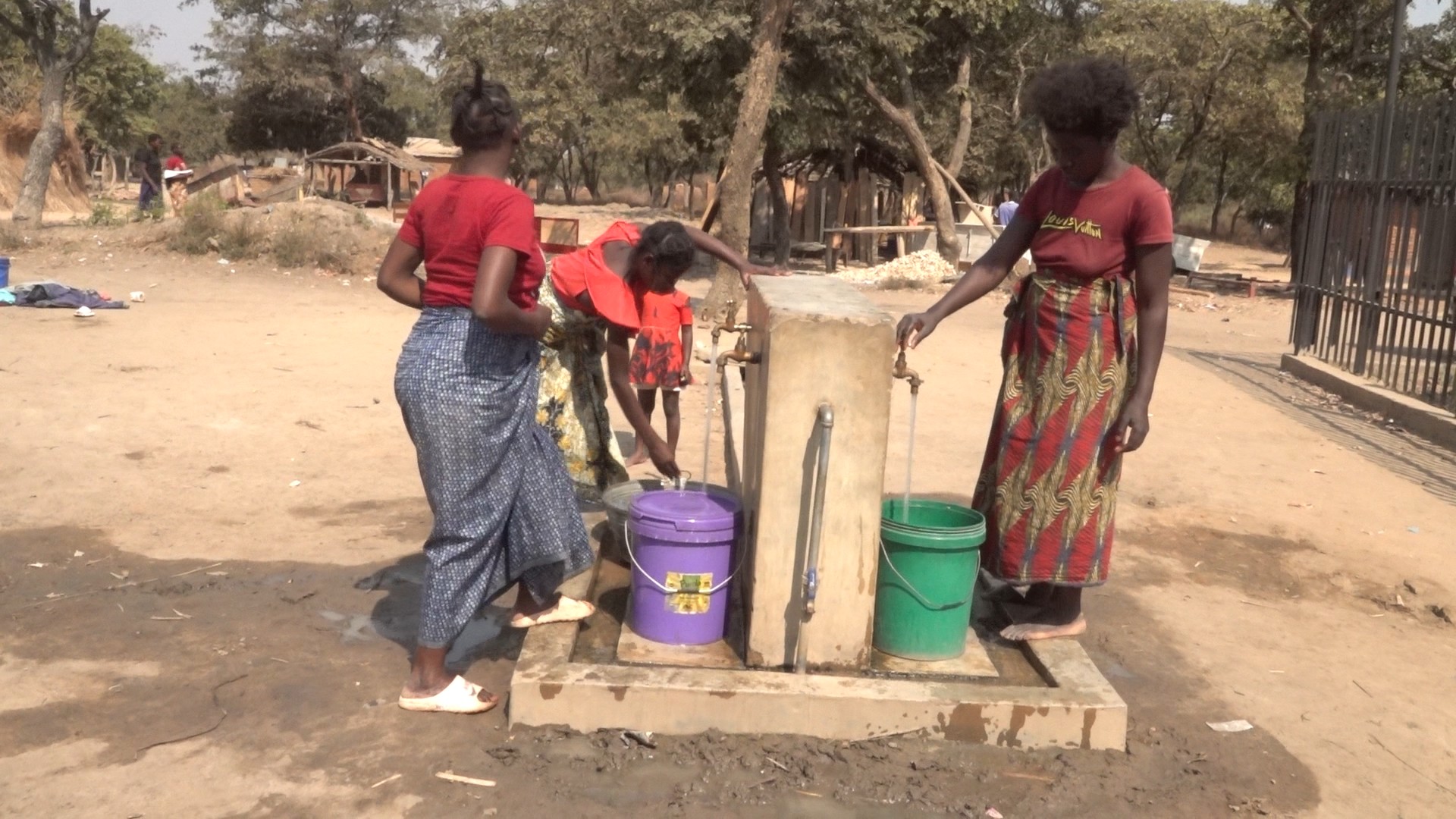
Vubwi communities begin to access clean water closer to homes

Breaking News Zambia
NewsBy Sylvester Chishimba Despite Zambia being endowed with several surface water sources such as lakes, rivers and man-made dams, a number of citizens have for a long time been struggling to access the commodity for both domestic use and agricultural purposes. Many people have been constantly trapped in the cycle of deprivation, […]
By Sylvester Chishimba
Despite Zambia being endowed with several surface water sources such as lakes, rivers and man-made dams, a number of citizens have for a long time been struggling to access the commodity for both domestic use and agricultural purposes.
Many people have been constantly trapped in the cycle of deprivation, walking long distances in search of the water.
When Zambia faced a climate-induced drought in the 2023-2024 rain season, water levels in most dams and rivers went down significantly, making it even more difficult for people and their livestock to have easy access to the commodity.
The effects of the drought demonstrated the importance of having reliable water sources for communities, particularly in rural areas where people depend heavily on natural water sources for their daily needs.
For many households, access to water is closely linked to health, sanitation, food production and general household welfare. Where water is readily available, communities are better able to maintain hygiene and sanitation, while women and children can spend less time walking long distances in search of the commodity.
However, the situation is now changing, especially after the government prioritised citizens’ access to water across the country through the construction of over 600 dams in the country to increase water supply to communities for irrigation and domestic consumption.
There have been drastic improvements in most communities, reducing people’s dependence on rain-fed agriculture, which is also not reliable due to rain variability.
Government has been working round the clock to ensure citizens have access to water by constructing boreholes and dams across the country using the Constituency Development Fund (CDF), among other financing initiatives.
Some of the communities that are benefiting from the government initiative are the Kachamba and Chimuendo communities in Vubwi district in Eastern Province.
For many years, residents in these two villages walked long distances in search of water, a daily struggle that particularly affected women and children.
The situation has however, begun to change following the construction of a 20,000 litre water scheme under the Constituency Development Fund (CDF).
The scheme, which was constructed at a cost of over K469,400, comprises a tank stand, steel fence, water kiosk and 12 taps, is serving about 912 people in the two villages and surrounding communities.
The provision of 12 taps has also helped to reduce pressure on a single water point, giving residents several places from which to access the commodity.
For a community that previously had to depend on distant and sometimes unreliable sources, the development has brought about a sense of relief and renewed hope.
A Kachamba resident, Betina Banda, said inhabitants of that village previously faced serious challenges accessing water, with some households forced to share water sources with domestic animals.
Ms Banda said the situation contributed to diarrhoeal diseases in the area, noting that the availability of the water source had eased some of the challenges which residents had been facing over the years.
Another resident, Hendrina Banda, said the water project had improved the sanitation and reduced the distance residents had to walk in search of water.
Ms Banda noted that access to water within the community was making it easier for households to maintain cleanliness and observe good sanitation practices.
Vubwi Town Council Public Relations Officer, Elida Sakala, said the project had particularly eased the burden on women who previously spent many hours walking and queuing for water.
Ms Sakala explained that the availability of multiple water points had reduced congestion and enabled residents to access water within a shorter period.
She added that access to clean and safe water was an important component of improving the health and welfare of communities.
Ms Sakala revealed that the water scheme would continue to play an important role in supporting households in Kachamba and Chimuendo and surrounding areas.
Meanwhile, Vubwi Town Council Secretary, Moses Mutyoka, said the district has constructed 21 water schemes over the past three years, while the Ministry of Water Development and Sanitation had drilled 21 boreholes this year.
Professor Mutyoka said the investments demonstrated the importance which government and other stakeholders attached to improving access to clean and safe water in Vubwi district.
He observed that the interventions were aimed at ensuring that more people could access reliable water sources closer to their homes.
Prof. Mutyoka disclosed that Vubwi district was targeting 90 percent access to clean and safe water by the end of 2026 as it works towards universal water access by 2030.
He said achieving the target would require continued investment in water infrastructure and collaboration among government, local authorities, communities and other stakeholders.
About K13.65 million had also been invested in water schemes through the enhanced CDF in recent years.
The investment has enabled the district to respond to some of the water challenges faced by communities and expand infrastructure in areas that previously had limited access to reliable water sources.
The interventions in Vubwi are also important in the context of climate change and the increasing unpredictability of rainfall patterns.
For communities that depend on rain-fed sources, prolonged dry spells can quickly translate into water shortages. Reliable water infrastructure therefore provides an important buffer against the effects of climate variability and drought.
The construction of water schemes and drilling of boreholes also has the potential to contribute to improved agricultural activities, livestock management and household livelihoods, as communities can have better access to water for various productive purposes.
At household level, the availability of water means residents can devote more time to farming, small businesses and other income-generating activities instead of spending several hours looking for water.
Women and children, in particular, stand to benefit from the reduction in the amount of time spent fetching water. For children, easier access to water can mean more time for school work and education. For women, it can create more time to concentrate on household responsibilities, farming and other productive activities.
The benefits of the water scheme therefore go beyond simply providing water for drinking.
It is also contributing to improved sanitation and hygiene and helping communities build resilience against water shortages.
However, the sustainability of the facility will also depend on proper maintenance and responsible use of the infrastructure by the community.
The Kachamba and Chimuendo water scheme demonstrates how investment in basic infrastructure can make a direct difference in the lives of ordinary people.
The project also shows the importance of responding to community needs through locally driven development initiatives such as CDF.
As Vubwi District continues working towards its target of 90 percent access to clean and safe water by the end of 2026 and universal access by 2030, communities such as Kachamba and Chimuendo are beginning to experience the benefits of these interventions.


Community Feedback