
DAPP aids Isoka communities to combat GBV, Child marriage

Breaking News Zambia
NewsBy Angel Hoare For some girls and women in Isoka District of Muchinga Province, Gender-Based Violence (GBV) is not simply a subject discussed during awareness campaigns. It is a reality that leaves physical injuries, psychological scars and consequences that continue long after the violence itself has ended. And for some girls, the vulnerability begins even […]
By Angel Hoare
For some girls and women in Isoka District of Muchinga Province, Gender-Based Violence (GBV) is not simply a subject discussed during awareness campaigns. It is a reality that leaves physical injuries, psychological scars and consequences that continue long after the violence itself has ended.
And for some girls, the vulnerability begins even earlier, when childhood gives way to marriage before they are physically, emotionally or economically ready for the responsibilities of adulthood.
In Isoka, GBV, child marriage and teenage pregnancies remains a big concern for communities due to their harmful social norms while limited access to GBV services adds to another layer to the problem.
Leo Kabali a Clinical Care Officer at the Isoka District Health Office says the effects of GBV can range from immediate physical injuries to long-term psychological consequences.
Mr Kabali explains that pregnancy can present complications at any age, but young girls are more vulnerable to some serious complications because their bodies may not be fully mature.
He cites some of the possible complications as anaemia, miscarriage and stillbirth, while difficult or prolonged labour can result in serious injuries.
“A young girl may experience prolonged labour because her body is not yet fully developed to accommodate childbirth. This can result in birth injuries, including fistula, and it can have consequences for her health long after she has given birth.” He said
However, Mr Kabali stresses that these complications are not unique to young girls but stated that younger girls face a higher risk of certain complications compared with women whose bodies have fully matured.
“We need to sensitize communities on the dangers of child marriage and early pregnancy and encourage girls to remain in school. Education gives a girl an opportunity to mature physically and psychologically and to be in a better position to make decisions about her health and future.”
The consequences of child marriage and harmful practices are not merely theoretical in Isoka but real. Isoka District GBV Focal Point Person, Edna Chanda, recalls a recent case involving a 13-year-old girl and a 21-year-old man.
The girl’s father reported the matter to the Child Protection Unit (CPU) and when the pair was located, the girl was taken to the One Stop Centre for counselling and necessary medical interventions.
The girl was eventually placed in safe care and arrangements were made for her to return to school, while the man was charged with defilement and his case was referred to the High Court.
“She is currently in school and happy, and that is what we want to see, a child getting another opportunity to continue with her education and build her future,” said Ms Chanda
Ms Chanda believes that harmful traditional practices such as ‘ukusemya’ among the Namwanga people, where a man elope’s with a girl, significantly contributes to GBV and Child marriage in the area.
The practice is exposing girls into various forms of abuse including sexual violence, early pregnancy, and force them to drop out of school.
However, the One Stop Centre forms part of the network of stakeholders who are working together to respond to GBV in Isoka. It provides coordinated support to survivors, bringing together services such as medical care, counselling and other forms of assistance so that survivors do not have to navigate every service separately.
It is against this background that the Development Aid from People to People (DAPP) Zambia is implementing the Spotlight Initiative 2.0 under the Child Aid Muchinga Project, with funding from the International Organisation for Migration (IOM)
The programme runs from June 2026 to December 2027 and is being implemented in Kasoka and Kalungu wards of Isoka District.
DAPP Project Lead Alex Mwenzala says the area was prioritised because communities face challenges including GBV, child marriage, teenage pregnancies, harmful social norms and limited access to GBV services.
“Isoka was prioritized because communities are facing a number of challenges. There is limited access to GBV services in some underserved communities, so we felt there was a need to work directly with people at community level.” He said
Mr Mwenzala said the programme is taking a community-centred approach, by working with community members and stakeholders to identify solutions to the challenges affecting women and girls.
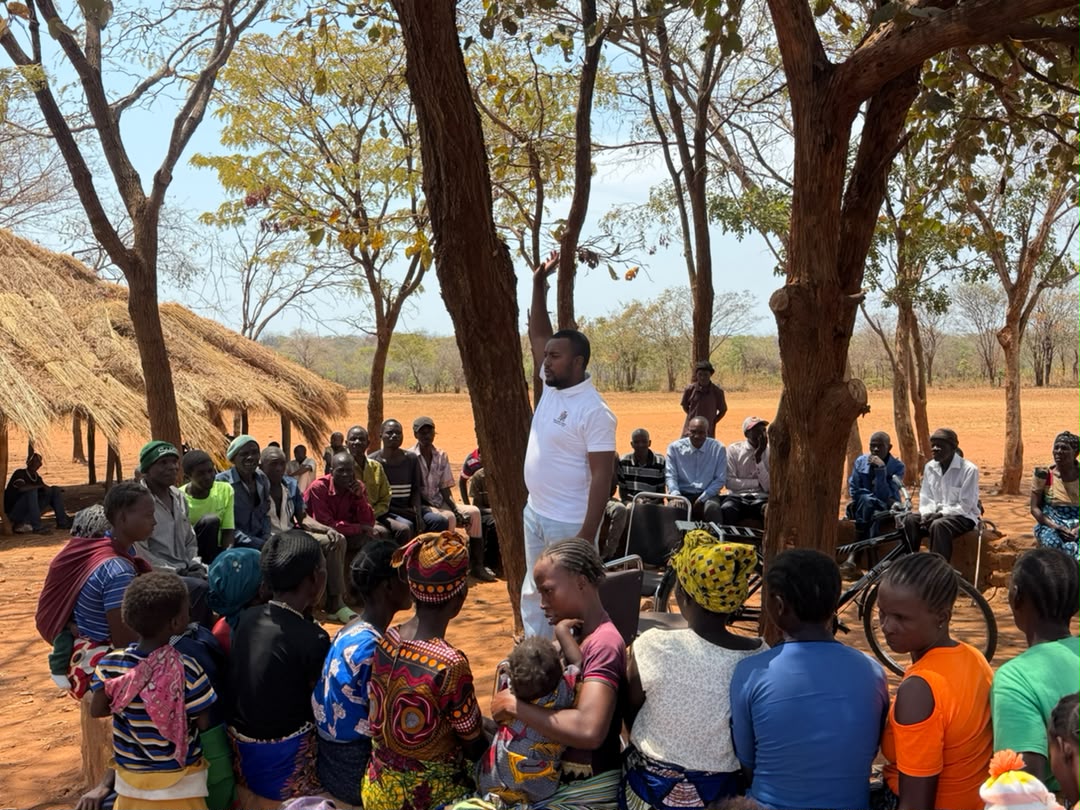
DAPP is conducting monthly activities such as community dialogue sessions and school outreach activities, where the community and children are being sensitised on GBV, the importance of remaining in school and the dangers associated with child marriage.
The programme is also engaging traditional and faith-based leaders, community actors, service providers and the media to strengthen awareness, prevention and referral pathways for survivors.
Since June, 2026, DAPP conducted a mapping exercise, and identified and engaged 28 service providers to respond to GBV , including emerging forms of abuse such as technology-facilitated and online GBV.
The programme has also engaged 50 community actors and media personnel, who undertake awareness messages into communities and contribute to identifying locally driven solutions to respond and combat GBV..
“We are not coming into the community to simply tell people what to do. We want to work with the people on the ground because they understand the challenges they are facing. Through the community dialogues, we are able to discuss GBV, child marriage and harmful social norms and find solutions together.”
The emphasis on changing harmful social norms is important because child marriage in Zambia is influenced by a range of social and economic factors.
According to the 2025 UNICEF Zambia Assessment of Gendered Social Norms and Their Relationship to Child Marriage and Adolescent Pregnancy in Zambia, poverty, gender roles and expectations around girls’ transition into adulthood contribute to an environment in which child marriage and adolescent pregnancy can persist. The assessment was based on interviews with nearly 1,600 adolescents, caregivers and community leaders.
The 2024 Global Programme on Ending Child Marriage in Zambia Report, published in October 2025, further revealed that 29 percent of young women aged 20 to 24 had been married before reaching the age of 18.
While some cases show the damage that child marriages can cause, community interventions are also beginning to reveal what can happen when girls are given another opportunity.
In Chipokoso area, a community actor recently engaged a 17-year-old girl who had dropped out of school after entering an early marriage. The girl already has two children. She has expressed a desire to return to school and continue her education, with the hope of creating better opportunities for herself and her children.
Though not yet a completed success story, it is a second chance because the fight against child marriages is not only about rescuing girls from situations that have already occurred; It is also about ensuring that girls who have dropped out of school, and have become pregnant or entered marriage are not written off as having lost their opportunity for education.
For Isoka, the challenge is therefore not simply responding to GBV cases after they occur. It is preventing the next case. It means communities recognizing that violence against women and girls is not a private family matter. And it means ensuring that when a girl is identified as being at risk, there are services capable of responding quickly.
The experience of the 13-year-old girl demonstrates what coordinated intervention can achieve when police, health workers, social welfare and community structures work together.
While the story of the 17-year-old in Chipokoso, shows that even after a girl has left school and entered an early marriage, the door to education does not necessarily have to remain closed.
“We need the community to understand the dangers of early marriages and encourage girls to get an education and mature enough to handle the responsibilities that come with adulthood. Prevention is better than waiting for these complications to happen and then trying to manage them,” Mr Kabali said.
“The goal is to see communities taking ownership of the fight against gender-based violence and child marriage. We want people to be able to identify these issues, talk about them openly, know where survivors can get help and, most importantly, work together to prevent them,” adds Mr Mwenzala.
And perhaps that is where the story of GBV and child marriage in Isoka ultimately begins; not with the number of cases recorded, but with whether communities are prepared to recognize the warning signs before another girl loses her childhood.
Because when childhood ends too soon, the consequences can follow a girl into pregnancy, motherhood, illness, trauma and adulthood.
But when a community intervenes early, a different story remains possible. A girl can return to school. A child can be protected. A survivor can receive care.
And a future that once seemed to have been taken away can, sometimes, begin again….the newsroom


Community Feedback