
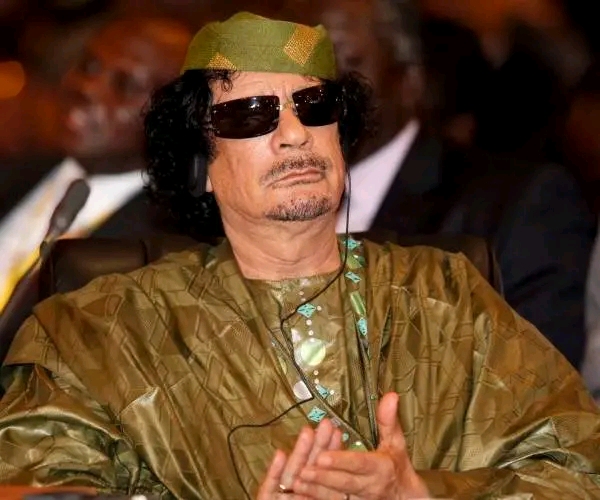
TODAY IN HISTORY: OCTOBER 20, 2011 –15 YEARS SINCE THE KILLING OF LIBYAN LEADER MUAMMAR GADDAFI

Breaking News Zambia
NewsTODAY IN HISTORY: OCTOBER 20, 2011 –15 YEARS SINCE THE KILLING OF LIBYAN LEADER MUAMMAR GADDAFI On this day, October 20, 2011, Libya’s former leader, Colonel Muammar Gaddafi, was captured and killed near his hometown of Sirte, bringing a dramatic end to his 42-year rule. Gaddafi, who was 69 years old, had ruled Libya since […]
TODAY IN HISTORY: OCTOBER 20, 2011 –
15 YEARS SINCE THE KILLING OF LIBYAN LEADER MUAMMAR GADDAFI
On this day, October 20, 2011, Libya’s former leader, Colonel Muammar Gaddafi, was captured and killed near his hometown of Sirte, bringing a dramatic end to his 42-year rule.
Gaddafi, who was 69 years old, had ruled Libya since September 1, 1969, when he seized power in a military coup that overthrew King Idris.
His death came during the Libyan civil war, which erupted amid the Arab Spring uprisings that swept across North Africa and the Middle East. Opposition forces, backed by NATO air operations, had seized much of the country, forcing Gaddafi to flee the capital, Tripoli.
On October 20, 2011, NATO aircraft attacked a convoy attempting to escape Sirte. Gaddafi subsequently sought refuge near drainage pipes, where he was discovered and captured by opposition fighters.
Video footage later emerged showing him alive after his capture, raising serious questions about the circumstances surrounding his death.
During his four decades in power, Gaddafi transformed Libya through investments in infrastructure, education, healthcare and oil-funded development programmes. He also became a prominent advocate of African unity and played a significant role in the establishment of the African Union.
However, his leadership was also marked by political repression, restrictions on civil liberties, human rights abuses and confrontations with Western powers.
His death marked a turning point in Libya’s history, ending one of Africa’s longest political reigns and ushering in a period of political uncertainty.
Rather than achieving lasting stability, Libya subsequently experienced years of armed conflict, rival administrations and deep political divisions.
Fifteen years after his death, Muammar Gaddafi remains one of Africa’s most widely debated historical figures, with his legacy continuing to generate discussions about leadership, sovereignty, foreign intervention and the future of the continent.



Community Feedback