

Term limits are a deadline, and deadlines reveal who did the work

Breaking News Zambia
Top StoriesFrom our earliest days in the classroom, we are taught to deliver within a given time frame. Every school term has a start and an end, and the work must be completed before the bell. A pupil who has to repeat a year has not been punished by the calendar; he has simply shown…
From our earliest days in the classroom, we are taught to deliver within a given time frame. Every school term has a start and an end, and the work must be completed before the bell. A pupil who has to repeat a year has not been punished by the calendar; he has simply shown that he was not adequately prepared.
Even the examinations that certify our competence are timed, because the ability to deliver under a deadline is part of what is being tested. Nobody walks into an examination hall and asks for the clock to be stopped because they need a few more years.
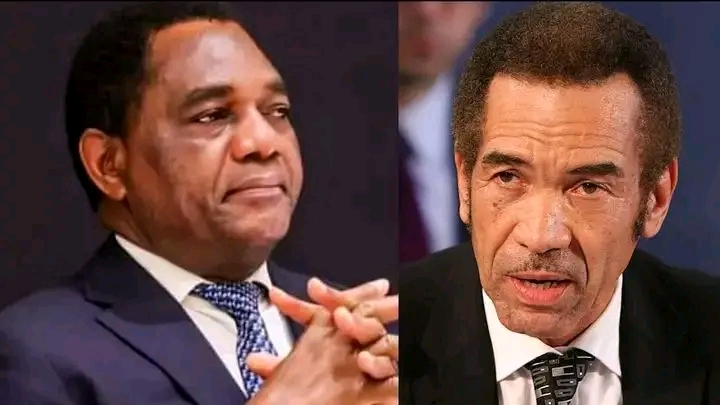
That simple lesson sits at the heart of the debate now gathering pace over whether the Constitution should be amended to allow President Hakainde Hichilema to contest the 2031 general election. Veteran politician Wynter Kabimba, a former Patriotic Front (PF) secretary general and Minister of Justice, has warned that some of the mistakes that led to the collapse of the PF are beginning to emerge in the UPND. He has argued that removing term limits would be a bad idea and that power should be tied to institutions, not individuals. On that point he is right, and the argument deserves to be taken further. A constitution cannot be timed to suit one person.
“Immediately you start tying power to an individual, then you’re headed for trouble; then you’re headed for calamity,” Kabimba said.
Consider what a term limit actually measures. A leader is given a fixed period, set out in law, to deliver on what he promised the people. If he cannot deliver within that time, the honest conclusion is that he has failed, not that the clock was too short. A constitution that extends the deadline for a leader who has not delivered would, in effect, be a constitution that rewards failure. No serious nation should write that into its supreme law.
A good political leader does not govern from his own personal vision alone. He works within the framework of a party whose intentions to uplift the people are set out from the day that party is formed. Its leadership puts together a manifesto, and that manifesto is a programme designed to be delivered within a defined period. It does not belong to one person, and it never should. When a leader begins to treat the party’s programme as his personal property, he has crossed from leadership into ownership, and that is the mark of a bad leader.
Leadership is a collective responsibility. A party worth voting for is one in which, if one person steps aside, someone else is ready to pick up the torch and carry it forward. If a ruling party cannot produce that next leader from within its own ranks, it has exposed a weakness that the electorate is entitled to punish. The answer to a shortage of successors is not to keep the incumbent in office indefinitely. It is for the party to build depth, or for voters to choose someone else.
There is also a practical lesson in how governments spend their time. Five years is not long, and a government that spends its term fending off the opposition rather than delivering will wake up to find that valuable time has been wasted.
The temptation then is to ask for more time, dressed up as continuity. But continuity, given how competitive our recent elections have been, is a matter for the people to decide through the ballot within the rules as they stand.
Zambia is not short of leadership, and it never has been.
Kabimba reminded the nation of what happened when Frederick Chiluba sought to extend his rule, and how Zambians, acting through the Oasis Forum, stopped him in his tracks. He was careful to say that his concern was not a charge against the current President.
“And the fears of the Chiluba era should be the fears today, not because HH is corrupt; but because we want to safeguard the democracy of this country.”
That distinction matters, because term limits are not written for good leaders. They are written for the leader who comes after, whose character nobody can guarantee in advance. History across the continent shows where the absence of limits can lead. Rulers who refuse to leave have used the armed forces to suppress the will of the people, producing an endless leadership imposed on citizens rather than chosen by them. Any attempt to seize or hold power by force against the will of the people is unconstitutional, and it should never be tolerated in Zambia.
None of this requires us to assume bad faith on anyone’s part today. It simply asks that we hold every administration to the same standard. As Kabimba put it, what was wrong for the country under one government must remain wrong under another, unless the underlying factors have fundamentally changed. The clock on a presidency is not an obstacle to good governance. It is the very test of it.




Community Feedback