
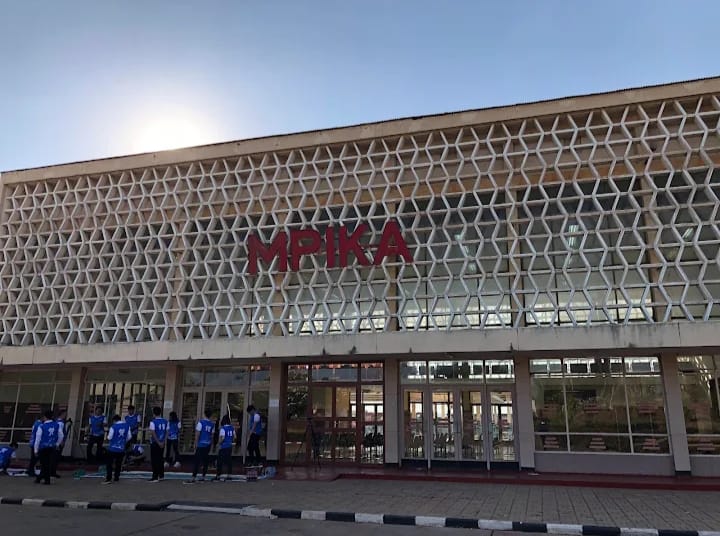
TAZARA: Uhuru transportation miracle

Breaking News Zambia
NewsBy Sandra Mwansa Zambia’s attainment of independence on 24 October 1964 marked the beginning of a new chapter in the country’s political, social and economic development. However, the newly independent nation faced significant transportation challenges, particularly in accessing international markets and moving imports and exports. The situation was further complicated in 1965 […]
By Sandra Mwansa
Zambia’s attainment of independence on 24 October 1964 marked the beginning of a new chapter in the country’s political, social and economic development.
However, the newly independent nation faced significant transportation challenges, particularly in accessing international markets and moving imports and exports.
The situation was further complicated in 1965 when Ian Smith’s government in the then Rhodesia (now Zimbabwe) unilaterally declared independence. This created difficulties for Zambia’s reliance on southern transportation routes.
With limited alternatives for international trade, Zambia was compelled to seek a reliable route that would enable it to transport its goods to overseas markets without depending heavily on routes through the south.
It was against this historical background that Zambia and Tanzania joined forces with China to establish the Tanzania-Zambia Railway Authority (TAZARA), a strategic infrastructure project that would become an important part of Zambia’s post-independence development. The idea for the railway project was conceived in 1967, with construction beginning in 1970 and completed in 1975
Mpika District Commissioner David Siame says the establishment of TAZARA was a significant milestone in the country’s economic history, as it provided an alternative route for trade access to the sea port and strengthened transportation links with the rest of the world.
The railway was officially commissioned on 14th July 1976 by Zambia’s First President, Dr Kenneth Kaunda, and Tanzania’s President, Julius Nyerere.
The railway connected New Kapiri Mposhi in Zambia to the port of Dar es Salaam in Tanzania, giving the landlocked country access to the Indian Ocean and an alternative route for transporting goods and for its imports and exports.
Beyond its national economic significance, TAZARA has also played an important role in shaping the development of Mpika District, which hosts a regional headquarters of the railway authority.
Mr Siame says Mpika has grown from a small colonial outpost into a developing town, with the railway contributing to its economic and transportation development.
He indicated that the presence of TAZARA has strengthened the district’s connection to other parts of the country and beyond, while supporting economic activities associated with railway operations and the movement of goods and people.
The railway also stands as an example of how regional cooperation helped Zambia address the challenges it faced in the years following independence.
Through collaboration with Tanzania and China, Zambia secured an important transport link at a time when access to reliable trade routes was essential to its economic survival.
For Zambia, TAZARA represents more than a railway line; a strategic investment in economic independence, designed to reduce vulnerability to disruptions along southern transportation routes and improve access to international markets.
Maria Chanda, a 60-year-old resident of the TAZARA community of Mpika District, has described the Tanzania-Zambia Railway Authority (TAZARA) as a significant source of employment and improved livelihoods for families since its establishment.
Ms Chanda said she has witnessed generations of families benefit from employment opportunities at the railway authority, particularly at its workshops, where many fathers, uncles and neighbours secured jobs that enabled them to provide for their families.
“We saw our fathers, uncles and neighbours secure jobs at the TAZARA workshops and provide us with a decent standard of living,” she said.
She noted that TAZARA’s contribution to employment had continued over the years, with young people also securing jobs at the institution and, in some cases, being transferred to Tanzania to undertake their duties.
Ms Chanda further observed that TAZARA has contributed to the welfare of its employees by constructing houses for workers, providing them with accommodation and helping to establish residential communities around its operations.
She said the railway authority’s legacy extended beyond transportation, but also housing infrastructure development.
As the country commemorates 62 years of independence, the history of TAZARA provides an opportunity to reflect on the role infrastructure has played in shaping national development.
In Mpika, the railway remains an important part of the district’s historical and economic identity, symbolising the connection between Zambia’s independence aspirations and the infrastructure investments made to support them.
From the transportation challenges of the early independence years to the establishment of a railway linking Zambia to the Tanzanian coast.
TAZARA remains a lasting reminder of the importance of regional cooperation, strategic planning and investment in infrastructure in advancing economic development





Community Feedback