
#post_titleZambia-US Health MoU: What Changed and Why Ghana Rejected Its Deal Zambia’s US health deal: What changed, why Zambia hesitated and why Ghana said no

Breaking News Zambia
NewsLUSAKA – Zambia is now set to sign a new five-year health agreement with the United States, bringing to an end months of negotiations over an arrangement that initially raised questions about health data, biological specimens, intellectual property and even whether US health assistance could become linked to Zambia’s wider strategic interests. Health Minister Professor LUSAKA – Zambia is now set to sign a new five-year health agreement with the United States, bringing to an end months of negotiations over an arrangement that initially raised questions about health data, biological specimens, intellectual property and even whether US health assistance could become linked to Zambia’s wider strategic interests. Health Minister Professor Zambia will sign a revised US health MoU worth US$3.6bn, with US$1.5bn from Washington. Here is what changed, why Zambia hesitated and why Ghana rejected its deal.
LUSAKA – Zambia is now set to sign a new five-year health agreement with the United States, bringing to an end months of negotiations over an arrangement that initially raised questions about health data, biological specimens, intellectual property and even whether US health assistance could become linked to Zambia’s wider strategic interests.
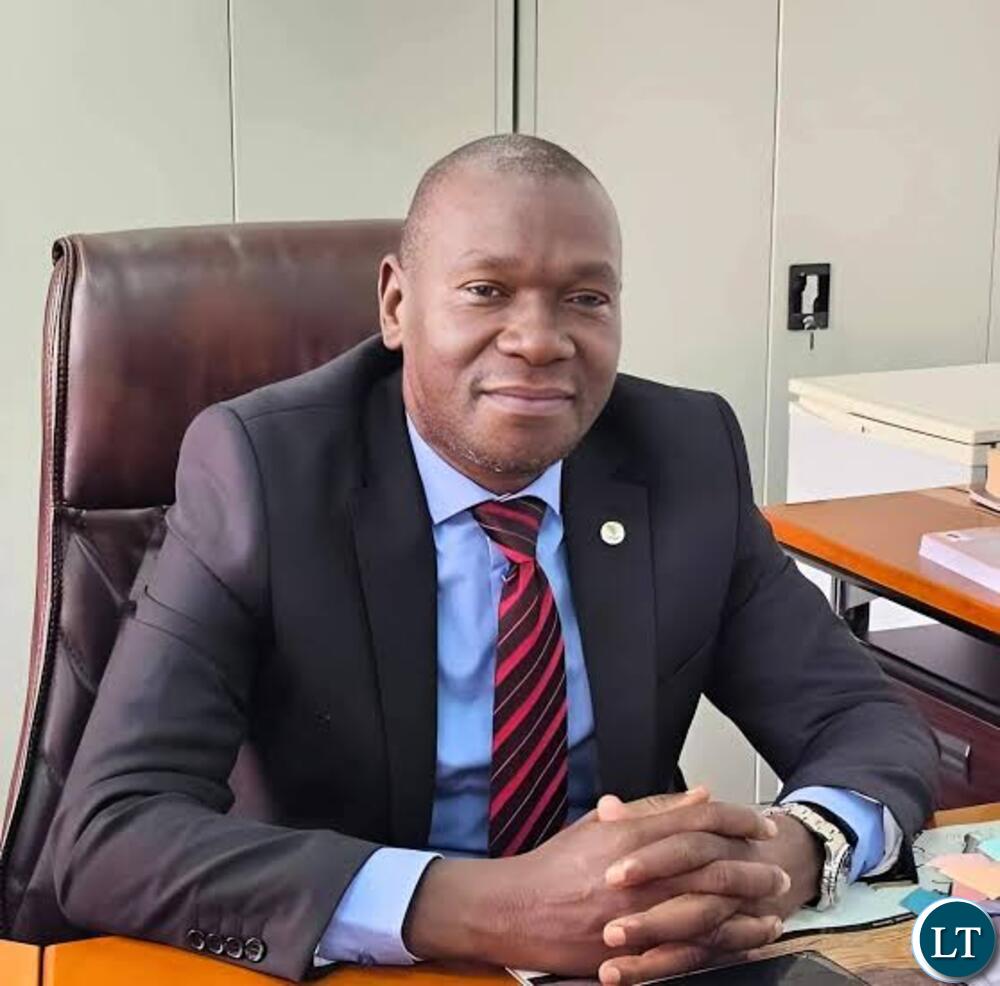
Health Minister Professor Roma Chilengi announced on Tuesday that the agreement will be signed on Thursday, October 8, at the Ministry of Finance, with the United States committing US$1.5 billion to Zambia’s health sector over five years.
Together, the two countries are expected to mobilise about US$3.6 billion, with Zambia contributing the balance of roughly US$2.1 billion.
But the number attached to the agreement tells only part of the story.
The more important question is: what exactly was Zambia negotiating for months before agreeing to sign?
And why did Ghana, unlike Zambia, ultimately walk away from its proposed agreement with Washington?
This is not simply a funding agreement
The proposed arrangement is part of Washington’s new approach to global health assistance under the Trump administration’s “America First Global Health Strategy”.
That represents a significant change from the model many African countries became accustomed to under US programmes, particularly through USAID and PEPFAR.
The new approach is built around a transition from long-term dependence on American assistance towards greater domestic financing by recipient countries.
Zambia’s own Ministry of Health described the proposed agreement earlier this year as a performance-based, co-financed partnership designed to move the country towards greater self-reliance by 2030.
The areas covered go well beyond writing cheques for medicines.
They include HIV, tuberculosis and malaria programmes, maternal and child health, disease surveillance, laboratory systems, medicines and medical supply chains, health workers and digital health systems.
The original government description also envisaged Zambia progressively taking full ownership of functions such as supply chains, health workforce management and digital systems by 2030.
In other words, the agreement is also about who finances Zambia’s health system, who controls important health infrastructure and data, and how responsibility shifts between Lusaka and Washington over the next five years.
That is where the controversy began.
The data question
One of Zambia’s biggest concerns was health data.
Modern health systems generate enormous amounts of information: patient records, disease surveillance information, laboratory results, epidemiological data and information about outbreaks.
The original US agreements being negotiated with African governments included provisions that raised concerns over access to health information and, in some cases, biological specimens collected through national surveillance systems.
For Zambia, the issue was not whether health data should be used to improve public health.
The question was who would have access to it, under what conditions, for how long, and what safeguards would apply.
Reuters reported earlier this year that Zambia had pushed back against provisions concerning data sharing and that a draft under discussion included a 10-year data-sharing provision.
Human Rights Watch subsequently raised concerns about the transparency of the negotiations and said the leaked draft contained provisions that could have made the health agreement conditional on a separate bilateral compact.
Zambia therefore did not simply reject American health assistance.
It negotiated.
And that distinction is important.
The specimens issue was even more sensitive
The latest negotiations reveal another major sticking point: biological specimens.
Disease surveillance often involves collecting blood, tissue or other biological material from patients and populations.
Such specimens can be extremely valuable for research, including the development of diagnostics, vaccines and treatments.
According to Professor Chilengi, the original agreement contained a requirement for Zambia to share certain specimens collected through its disease surveillance system with the United States.
That provision has now been removed.
The Health Minister says no specimens will leave Zambia under the final agreement.
This is arguably one of the most significant changes between the agreement Zambia initially hesitated over and the version now heading for signature.
Then there was the critical minerals question
This is where the story became even more complicated.
Earlier this year, Zambia publicly objected to attempts to link the health negotiations with a separate proposed agreement concerning critical minerals.
Reuters reported in May that Foreign Minister Mulambo Haimbe said Zambia opposed coupling the proposed health and critical-minerals agreements, insisting that the two should be considered separately.
That controversy mattered because Zambia is a major copper and cobalt producer, and Washington has been seeking deeper access to critical mineral supply chains.
The existence of a separate minerals discussion therefore created a question that went beyond healthcare:
Could health assistance become part of a broader strategic bargain?
The Zambian Government’s position was that the two agreements should stand on their own merits.
Today, however, Chilengi says the Health Ministry did not see any critical-minerals provision in the health MoU and that the negotiations that directly concerned his ministry were about specimens, data, intellectual property and the duration of the agreement.
That distinction should remain clear.
There was a documented dispute over whether the health agreement and the minerals discussions were being linked. But the Government is now saying that the final health agreement contains no critical-minerals condition.
What Zambia says it won at the negotiating table
The final version, according to the Health Minister, has removed the specimen-sharing requirement.
The provisions requiring individual health-data sharing have also been removed, according to AP’s report of Chilengi’s announcement.
The negotiations also addressed intellectual property and benefit-sharing questions.
According to reporting on Chilengi’s latest explanation, Zambia sought greater clarity on what would happen if research involving Zambian specimens or health resources resulted in new medicines, vaccines or other products.
Zambia also pushed for capacity building and skills exchange between Zambian and American scientists.
This is an important part of the story because it changes the question from simply:
“How much money is America giving Zambia?”
to:
“What does Zambia get to retain, control and build from the partnership?”
Why Ghana said no
Ghana provides perhaps the clearest explanation of why these agreements became controversial across Africa.
Ghana negotiated its own proposed US health agreement but ultimately rejected it.
Reuters reported in April that the proposed Ghana agreement would have provided about US$109 million in US health assistance over five years, while requiring greater responsibility from Ghana itself for financing its health programmes.
But the biggest problem was data.
Ghanaian officials raised concerns about the proposed access to sensitive health information.
Ghana’s Data Protection Commission said the proposed access went beyond what would normally be required and raised questions about foreign access to health datasets, metadata, dashboards, reporting tools, data models and data dictionaries.
The concerns were not simply about whether data could be shared.
They were about governance: who could access it, whether Ghana would have prior approval over its use and whether the country would retain meaningful oversight.
The commission’s executive director said the proposal could effectively amount to outsourcing part of Ghana’s health-data architecture to a foreign entity.
Then came another concern.
Ghanaian President John Mahama said the proposed arrangement raised questions about Ghana’s ability to inspect medical products coming into the country through its own regulatory system.
That meant the disagreement was no longer merely about money.
It touched on national regulatory authority.
According to Mahama’s later explanation, Ghana’s Cabinet reviewed the proposal and rejected it.
So was Ghana rejecting American health assistance?
Not exactly.
Ghana rejected the terms of the proposed agreement.
That distinction is important.
The country has continued to engage with the United States on health matters, while seeking a different arrangement.
The same broader pattern has appeared elsewhere.
Zimbabwe rejected a proposed US health agreement after objecting to data and specimen-sharing provisions, while Kenya’s agreement faced legal challenges over data privacy.
This suggests that the debate across Africa is not simply about whether countries want American money.
It is about the conditions attached to that money.
Why Zambia chose negotiation instead
Zambia took a different route.
Rather than rejecting the agreement altogether, Lusaka suspended the signing and continued negotiating.
That decision reflected a difficult calculation.
The United States has been one of Zambia’s major health partners for more than two decades, particularly in HIV, malaria, tuberculosis and public-health programmes.
The proposed agreement therefore involves programmes on which millions of people could ultimately depend.
At the same time, Zambia had to consider what it was being asked to surrender or commit in exchange.
The Government’s own February description of the agreement envisaged Zambia increasing its health expenditure from approximately US$628 million in 2026 to more than US$1 billion by 2030, while progressively taking ownership of systems supported by external funding.
That means Zambia is not simply accepting US$1.5 billion.
It is also committing substantially more of its own resources.
According to today’s figures, Zambia’s contribution over five years will be about US$2.1 billion.
The bigger shift: from aid to co-investment
Perhaps the most important thing to understand about the new agreement is that it reflects a changing relationship between Washington and African health systems.
For years, the model was largely donor-supported programmes.
The new model is explicitly moving towards co-financing and eventual self-reliance.
The United States puts money into the system, but that contribution is expected to decline over the five-year period.
Zambia is expected to increase its own contribution.
The ultimate objective is that the health programmes and systems built during the agreement should continue after American support reduces.
That could be viewed as an opportunity for Zambia to strengthen domestic health financing.
But it also creates a major responsibility for Government.
If US funding falls while Zambia’s domestic financing does not rise as promised, programmes could face another funding gap.
The question Zambia still has not answered publicly
There is one important issue that remains.
The Government has said the final agreement will not contain the controversial specimen-sharing and individual data-sharing requirements.
But the MoU itself has not been made public before signing.
Chilengi has said it has not been Government practice to publish such MoUs before they are signed and that the agreement has gone through the Attorney General and Cabinet processes.
That leaves civil society, health professionals and the public with a legitimate question:
What exactly will Zambia sign on Thursday?
The Government says the contentious clauses have been removed and that both sides are comfortable with the final document.
But transparency will ultimately depend on what happens after the signing and whether the final agreement is made available for public scrutiny.
What the US gets out of it
It is also important not to view the arrangement as charity alone.
The new American global-health strategy explicitly places US national interests at the centre of foreign health assistance.
The objective is to fight infectious diseases and strengthen health security, but also to reduce long-term American financial commitments and make partner countries assume greater responsibility for their own health systems.
There is also a global-health-security argument.
Better disease surveillance, laboratories and outbreak detection in Zambia can help protect not only Zambians but populations beyond Zambia’s borders.
That is why the US has an interest in supporting these systems.
The question is how that mutual interest is structured.
What Thursday’s signing really means
For Zambia, Thursday’s signing is therefore more than another donor agreement.
It is the culmination of a negotiation in which Lusaka initially refused to simply accept the original terms.
The Government says it succeeded in removing specimen-sharing and individual data-sharing requirements and resolving other concerns.
The US will provide US$1.5 billion over five years.
Zambia will provide about US$2.1 billion.
The partnership will cover HIV, malaria, tuberculosis, maternal and child health, laboratories, surveillance, medicines, health workers and digital systems.
But the real test will come after the ceremony.
Can Zambia use the five-year window to build a health system that is increasingly financed and controlled domestically?
Can the country protect the health data of its citizens while still participating in international disease surveillance?
Can Zambia ensure that research involving its people and biological resources produces benefits that are shared fairly?
And, perhaps most importantly, can the Government make the final agreement transparent enough for Zambians to understand exactly what their country has agreed to?
Zambian Eye will be watching what is actually signed on Thursday — because the US$1.5 billion is only one part of the story.
No related posts.


Community Feedback