
MAINZA MATHIAS CHONA—ZAMBIA’S FIRST REPUBLICAN PRESIDENT THAT COULD HAVE BEEN!

Breaking News Zambia
NewsMAINZA MATHIAS CHONA—ZAMBIA’S FIRST REPUBLICAN PRESIDENT THAT COULD HAVE BEEN! In Zambian politics, where some politicians would rather have their parties collapse than surrender the presidency, Chona did something almost unimaginable: he became UNIP’s first president and voluntarily stepped aside for Kenneth Kaunda! Born Sikaye Chingula Namukamba on 21 January 1930 at Nampeyo, near Monze, […]
MAINZA MATHIAS CHONA—ZAMBIA’S FIRST REPUBLICAN PRESIDENT THAT COULD HAVE BEEN!
In Zambian politics, where some politicians would rather have their parties collapse than surrender the presidency, Chona did something almost unimaginable: he became UNIP’s first president and voluntarily stepped aside for Kenneth Kaunda!
Born Sikaye Chingula Namukamba on 21 January 1930 at Nampeyo, near Monze, Chona was a lawyer, nationalist, politician and one of the key figures in Zambia’s struggle for independence.
He received his early education at Chona School and Chikuni before proceeding to Munali Secondary School, where he completed his secondary education in 1951.
He later worked as an interpreter at the High Court in Livingstone, but his ambitions went beyond interpreting other people’s legal troubles. He wanted to become a lawyer himself.
In 1955, he travelled to London on a scholarship to study law at Gray’s Inn and was called to the bar in 1958. While in Britain, he interacted with fellow nationalists, including Harry Mwaanga Nkumbula and Kenneth Kaunda, as well as white supporters of the independence struggle, such as Simon Zukas and Doris Lessing. It was also during this period that he adopted the name Mathias Mainza Chona by deed poll.
Upon returning to Northern Rhodesia in December 1958, Chona joined the increasingly turbulent struggle for independence. Following the split between Nkumbula and Kaunda, and the banning of the Zambia African National Congress (ZANC) in 1959, Chona and other nationalists broke away from the African National Congress.
In October 1959, Chona became the first president of the United National Independence Party (UNIP), the party that would eventually lead Zambia to independence in 1964.
Now, this is where Chona’s political story deserves a special place in the archives.
When Kaunda was released from detention in January 1960, Chona stepped down from the presidency and allowed him to take over the leadership of UNIP.
Imagine founding a political party, becoming its first president, and then voluntarily surrendering the position to another man! In today’s politics, that kind of decision could require a medical examination, a family meeting and an emergency convention.
Chona became Kaunda’s deputy and remained one of his most trusted lieutenants. Rather than fight to retain the top position, he chose to work alongside the man who would become Zambia’s first Republican President.
History could have taken a different turn had Chona chosen to hold on to the UNIP presidency. But he stepped aside, and Kaunda went on to occupy State House when Zambia became a republic in 1964.
Chona’s political journey was not without its share of drama. While in Britain, he established UNIP’s London office and served as the party’s overseas representative. His stay abroad also helped him avoid arrest by the colonial authorities over a sedition charge.
But, as the saying goes, you can run, but you cannot hide forever. Chona was eventually charged with and convicted of sedition in a case reported as R. v. Chona, heard by the High Court of Northern Rhodesia in 1962.
Even the man who would later occupy some of the highest offices in independent Zambia had his date with the colonial legal system. The irony is that a future Attorney-General once found himself on the wrong side of the law under colonial rule!
Following independence, Chona served as Minister of Home Affairs, having previously held the Justice portfolio in the pre-independence government. Chona also served as Livingstone member of parliament from 1964 before moving to Mankoya constituency in 1968 until 1973. He later served as Vice-President from 1970 to 1973 and as Prime Minister on two occasions: from 1973 to 1975 and again from 1977 to 1978.
He also served as Minister of Legal Affairs and Attorney-General before becoming UNIP Secretary-General from 1978 to 1981. During the one-party era, this position was effectively second only to the presidency in the ruling party’s hierarchy.
In 1972, Chona chaired the commission tasked with making recommendations for Zambia’s proposed one-party participatory democracy. The resulting Chona Commission became a significant chapter in the country’s constitutional history. Although the commission’s report included recommendations intended to provide safeguards and limit presidential powers, many of its proposals were not incorporated into the final constitutional framework.
The irony was hard to miss: a man who had helped establish a political movement during the struggle against colonial rule was now chairing a commission tasked with shaping the constitutional framework for a one-party state.
Chona was also known for his sense of humour, which reportedly made him popular among party officials. Perhaps he understood that in politics, where egos are enormous and tempers can be short, a good joke can accomplish what an entire committee meeting cannot.
He later served as Zambia’s ambassador to China from 1984 to 1989 and subsequently as ambassador to France until 1992. Chona died on December 11, 2001 at South Africa’s Milpark Hospital aged 71.
Chona was therefore much more than a former Prime Minister or Vice-President. He was a lawyer, nationalist, diplomat, constitutional figure and, above all, the first president of UNIP the man who stepped aside and made room for Kaunda.
In a country where political leaders sometimes treat party leadership as personal property, Chona’s decision remains a fascinating historical contrast.
He founded the party, occupied the presidency, surrendered the throne and remained influential.
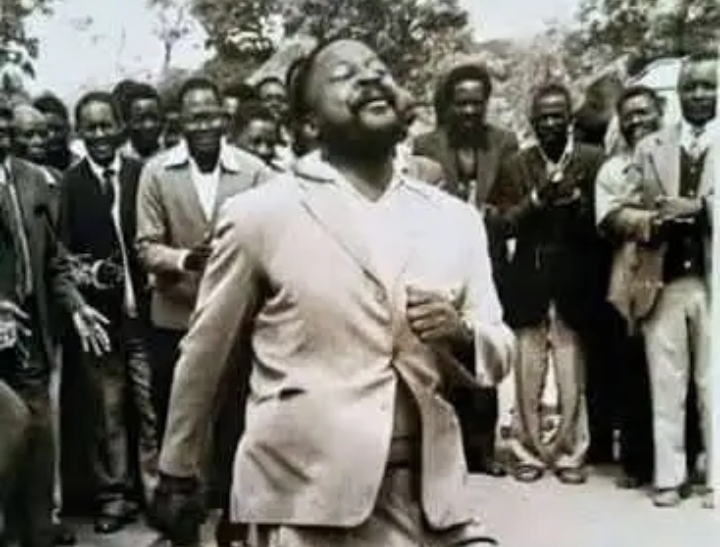
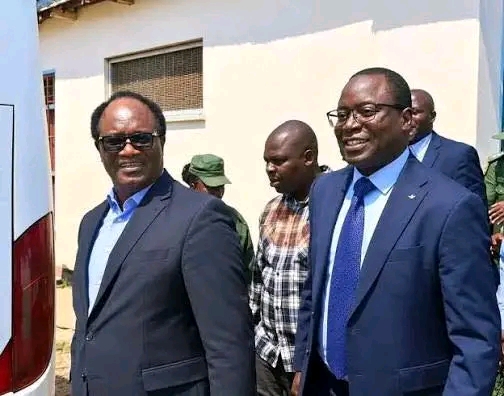
In the image, Chona’s legendary sense of humour on full display.

Community Feedback