
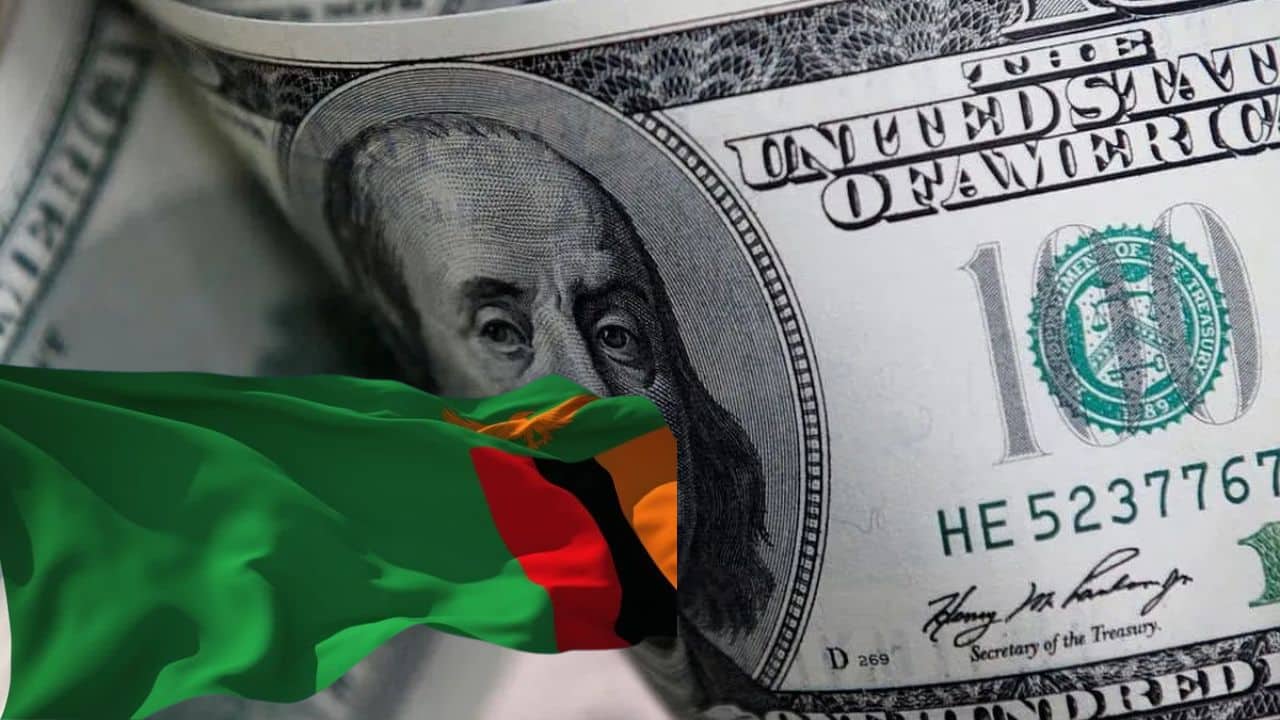
Kwacha drops nearly 1%, but bureau shrugs off impact

Breaking News Zambia
NewsThe Stockbrockers report, seen by the Zambian […]
The Stockbrockers report, seen by the Zambian Business Times-ZBT, indicates that the Zambian Kwacha depreciated against the US dollar by 0.79% for the market period ending on 2 October 2026.
Commenting on the matter in an interview with the Zambian Business Times—ZBT, the Association of Bureau De Change President Paul Kalumba indicated that the Bureau sector is only affected when the kwacha depreciates against the US dollar by a percentage above 1%.
Further, the report indicates that the kwacha depreciated against the following currencies: USD (0.79) and GBP (0.63%) and appreciated against ZAR by (1.1%) and EUR by (0.45%). A check by ZBT in the Bank of Zambia’s quarter three report shows that the kwacha exchange rate against the US dollar is reported to have depreciated by over 5%, and the current kwacha/US dollar FX rate sits in the range of K19/$.
ZBT research further shows that the depreciation of the Zambian kwacha affects exports by making them cheaper and more competitive for international buyers, though the overall benefits are limited because major exports like copper are priced in US dollars.
Some experts argue that any drop below 2% is considered to be a normal movement. “As you know, we are coming from an era where the currency could move 2-3% in a day, and that’s why a 0.5% movement is what is expected, as it is considered to be minimal,” said Kalumba. He added that Zambia’s benchmark currency in terms of foreign exchange is the US dollar, as over 90% of the Bureau trade happens in US dollars.
“Over 90% of the Bureau trade occurs in US dollars, so any other currency accounts for the remaining 10%; therefore, the depreciation observed will not significantly impact the Bureau Sector,” said Kalumba.
“When there is adverse movement on the US dollar, which is above 1%, the Bureau sector gets affected, because depreciation and appreciation normally occur, but if it happens below 1%, it’s considered to be normal, and the sector only begins to struggle if the percentage starts going above 2-3% movement in a day, as it becomes quite substantial,” said Kalumba.
Article by Justine Phiri





Community Feedback