
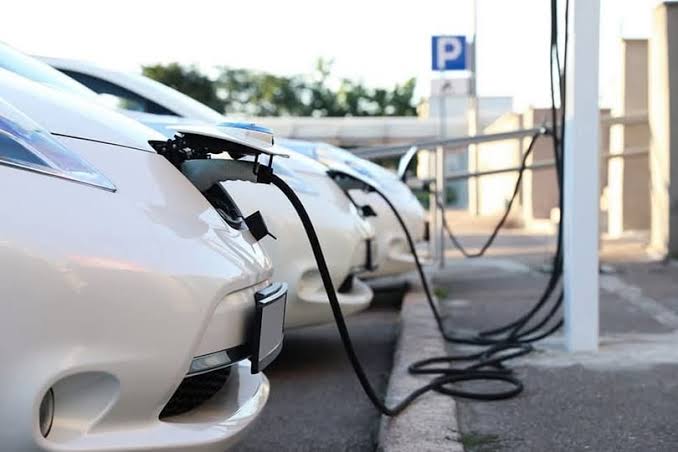
How you can spend K16,000 instead of K90,000 a year by switching to Electric Vehicles explained

Breaking News Zambia
NewsBICA Group has revealed that individuals and […]
BICA Group has revealed that individuals and companies can reduce annual vehicle energy costs from approximately K90,000 to K16,200 by switching from a petrol-powered vehicle to an electric vehicle (EV). In May 2026, Secretary to the Cabinet Patrick Kangwa disclosed that government spent about US$758 million on fuel for public institutions in 2025.
Speaking in an interview with Zambian Business Times-ZBT, BICA Group Chief Executive Officer, Howard Mwape said the economic case for electric vehicles should be assessed by comparing the cost of powering vehicles over the same distance, alongside the initial purchase price and other ownership expenses.
Mwape explained that a conventional vehicle travelling 30,000 kilometres annually and consuming 10 litres of petrol per 100 kilometres would use 3,000 litres of fuel, calculated by dividing 30,000 kilometres by 100 and multiplying the result by 10 litres.
“At an assumed petrol price of K30 per litre, annual fuel expenditure would amount to K90,000,” he said. not automatically make an electric vehicle the more affordable purchase, as buyers must also account for acquisition costs, insurance, servicing, battery degradation, charging equipment and eventual battery replacement.
Mwape indicated that for an electric vehicle travelling the same distance and consuming an estimated 0.18 kilowatt-hours per kilometre, annual electricity consumption will be 5,400 kilowatt-hours, calculated by multiplying 30,000 kilometres by 0.18 kilowatt-hours.
“At an assumed electricity tariff of K3 per kilowatt-hour, the annual electricity cost will be K16,200, excluding charging losses,” he said.
Mwape added that the difference between the two energy bills is K73,800 annually, calculated by subtracting K16,200 in electricity costs from K90,000 in petrol expenditure, representing an indicative energy-cost reduction of 82%, provided the assumed mileage, consumption rates and prices hold.
He told ZBT that the comparison shows why individuals, taxi operators, delivery companies and businesses with vehicles covering predictable daily distances can examine EVs as a way of reducing recurring energy costs, although actual savings would depend on driving patterns and charging arrangements.
However, Mwape cautioned that cheaper energy costs alone do “An electric vehicle that delivers substantial fuel savings may not necessarily represent the best investment if its acquisition cost is excessively high or its operational requirements cannot be met,” he said.
Mwape further explained that for a company operating 10 vehicles under the same assumptions, annual petrol expenditure will total K900,000, compared with K162,000 for electricity, producing indicative energy savings of K738,000 per year before charging losses and other costs are considered.
He added that charging access and electricity reliability are important considerations, particularly for businesses operating long-distance routes or working in areas where charging facilities are limited, while home or workplace charging can be practical for vehicles following predictable routes.
Article by Philip Sinkala





Community Feedback