

Govt hits back at EU observers, says report ignores history and security realities

Breaking News Zambia
Top StoriesGovernment has challenged key findings of the European Union Election Observation Mission’s final report on the 13 August elections, arguing that observers reached significant conclusions without hearing the State’s side. Chief Government Spokesperson and Minister of…
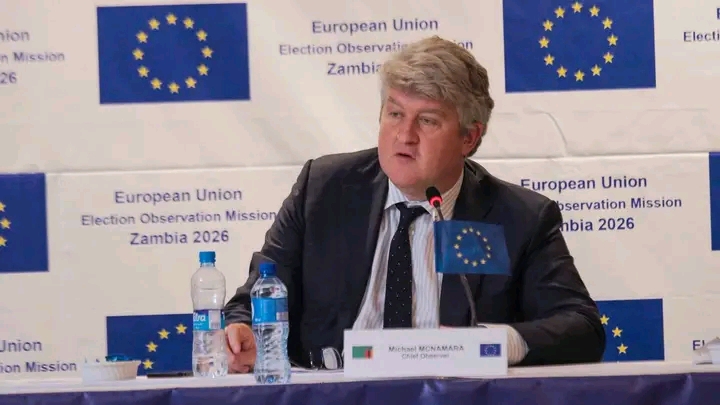
Government has challenged key findings of the European Union Election Observation Mission’s final report on the 13 August elections, arguing that observers reached significant conclusions without hearing the State’s side. Chief Government Spokesperson and Minister of Information and Media Elvis Nkandu said Government was not given sufficient opportunity to provide historical, institutional and security context. He said certain findings therefore risk presenting an incomplete picture of Zambia’s democratic journey. The statement, dated 3 November, was issued within hours of the mission presenting its report in Lusaka. Mr Nkandu nonetheless welcomed the mission’s acknowledgement that the elections offered a competitive choice and that the Electoral Commission of Zambia (ECZ) was well prepared.
Mr Nkandu took issue with the report’s concern over legal reforms enacted close to the polls. He said the report creates the impression that amending electoral laws in an election year is exceptional under President Hakainde Hichilema. He cited constitutional changes under Kenneth Kaunda ahead of the 1991 elections, the parentage clause introduced by Frederick Chiluba in 1996, and the 50 per cent plus one threshold and running mate clause adopted under Edgar Lungu in 2016. The 2026 reforms, he said, belong to the same tradition, and presenting them without that history risks a misleading impression.
On ZNBC, which the mission found gave 96.2 per cent of its television airtime to the ruling party, Mr Nkandu said the conclusion was reached without adequately engaging the broadcaster. He said ZNBC sells commercial airtime to all parties on equal terms, and that the extent to which the opposition used it is a matter of record. He argued that a sitting President is naturally the principal messenger of public policy. Coverage of presidential activities, he said, reflects Government business and has been a feature of the broadcaster under every administration.
On security, Mr Nkandu said observers can only assess what they directly see and do not have access to the intelligence, law enforcement investigations and national security assessments available to the State. He said some political actors and their supporters were subjects of investigations into serious criminal allegations that posed legitimate concerns for public order. He maintained that Zambia’s media environment remains vibrant and pluralistic, with criticism of Government freely expressed. He said Government remains committed to engaging the EU, political parties, civil society and the media in strengthening democratic processes.
The statement did not respond directly to the mission’s findings on irregularities at totalling centres, the non-publication of full presidential results, the six-hour suspension of counting or the closure of courts during the petition window.
Below is the full statement.
STATEMENT BY HON. ELVIS C. NKANDU, MP, MINISTER OF INFORMATION AND MEDIA AND CHIEF GOVERNMENT SPOKESPERSON, IN RESPONSE TO THE EUROPEAN UNION ELECTION OBSERVATION MISSION FINAL REPORT ON THE 2026 GENERAL ELECTIONS
The Government of the Republic of Zambia has taken note of the Final Report issued by the European Union Election Observation Mission regarding the 13 August 2026 General Elections. We appreciate the Mission’s acknowledgement that the elections provided Zambians with a competitive choice, that polling staff administered voting efficiently, that the legal framework provided a broadly adequate basis for democratic elections, and that the Electoral Commission of Zambia was well prepared for the electoral process.
As a democratic nation committed to constitutionalism, transparency and continuous improvement, Zambia welcomes constructive observations that contribute to strengthening our democratic institutions. However, Government wishes to place on record several concerns regarding some of the conclusions reached and recommendations advanced in the report.
First, the Government was not afforded sufficient opportunity to provide historical, institutional and security context regarding a number of issues upon which significant conclusions appear to have been based. As a result, certain findings risk presenting an incomplete picture of Zambia’s democratic journey. In a democracy, context matters as much as observation.
One such example relates to concerns raised regarding legal and electoral reforms undertaken in proximity to elections. The report creates the impression that amendments to electoral laws and constitutional provisions in an election year are exceptional developments under the administration of President Hakainde Hichilema. This portrayal is inconsistent with Zambia’s constitutional and political history.
Successive administrations have undertaken significant constitutional and electoral reforms during election years. Under President Kenneth Kaunda, constitutional changes were made to introduce a One-Party State and later to restore Multiparty Democracy ahead of the 1991 elections. President Frederick Chiluba introduced constitutional amendments, including the parentage clause, in 1996, which was itself an election year. President Edgar Lungu presided over major constitutional reforms in 2016 that introduced, among other provisions, the 50 percent plus one electoral threshold and the running mate clause. Similarly, President Hakainde Hichilema’s administration implemented constitutional reforms in 2026, including provisions relating to proportional representation.
The issue, therefore, is not whether electoral laws have historically been amended in election years. The historical record demonstrates that this has occurred under multiple administrations across different political eras. To present the 2026 reforms without this historical context risks creating a misleading impression that the current administration acted in a manner unprecedented in Zambia’s democratic development.
Secondly, Government is concerned that conclusions relating to the performance and conduct of the Zambia National Broadcasting Corporation (ZNBC) appear to have been reached without adequately engaging the institution itself. The report states that ZNBC was overwhelmingly biased toward the incumbent.
Such a conclusion would have benefited from direct engagement with the broadcaster regarding its statutory mandate, editorial obligations and operational practices.
It is important to state that ZNBC provides commercial airtime available to all political parties and stakeholders on equal commercial terms. During the electoral period, opposition political parties had the opportunity to purchase airtime for campaign messaging and political advertising. The extent to which parties elected to utilise that opportunity is a matter of record.
Furthermore, ZNBC, like public broadcasters across the world, carries a statutory responsibility to inform citizens about Government programmes, policies, public services and development interventions. By virtue of being Head of State and Government, a sitting President naturally becomes the principal messenger of public policy implementation. Coverage of presidential activities therefore reflects Government business and national governance responsibilities, rather than partisan preference.
Indeed, coverage of sitting Presidents by ZNBC is a historical feature that predates the current administration and has been evident under successive governments since the broadcaster’s establishment. Any assessment of media coverage must therefore be evaluated against historical patterns and institutional mandates rather than interpreted solely through the lens of contemporary political contestation.
Government also wishes to underscore that election observation missions can only provide an assessment of what they directly observe. They do not necessarily possess access to all intelligence, security information, law enforcement investigations or national security assessments available to sovereign state institutions.
In a number of cases during the electoral period, law enforcement agencies were dealing with conduct that went far beyond normal political activity. Some political actors and their supporters were subjects of investigations involving serious allegations of criminal conduct. Certain matters touched on activities prohibited under the laws of Zambia and posed legitimate concerns for public order and national security. Without structured engagement with relevant Government institutions, it would have been difficult for an observation mission to fully appreciate the circumstances surrounding some of the decisions and actions undertaken by state agencies.
This does not diminish the value of election observation. However, it highlights the importance of balanced consultation and a comprehensive understanding of local realities before definitive conclusions are reached.
On matters relating to freedom of expression and media freedom, the Government reiterates its unwavering commitment to the constitutional rights of all citizens. The media environment in Zambia remains vibrant, diverse and highly pluralistic, with public, private, community and online media platforms freely expressing a wide range of views, including criticism of Government. The very existence of robust and often intense public debate on national affairs demonstrates the vitality of democratic discourse in our country.
Ultimately, the Government of the Republic of Zambia remains committed to engaging all stakeholders, including the European Union, political parties, civil society organisations, media institutions and citizens, in strengthening Zambia’s democratic processes.
While we respect the observations and recommendations of the European Union Election Observation Mission, we believe that a fuller appreciation of Zambia’s constitutional history, institutional realities, media landscape and security environment would have yielded a more balanced assessment of the 2026 elections.
Zambia’s democratic journey is neither perfect nor complete. However, it is a journey characterised by peaceful political transitions, constitutional evolution, expanding political participation and a sustained commitment to democratic governance. It is against this broader historical context that any evaluation of our democracy should be undertaken.
Hon Elvis Nkandu, MP
MINISTER OF INFORMATION AND MEDIA AND CHIEF GOVERNMENT SPOKESPERSON


Community Feedback