
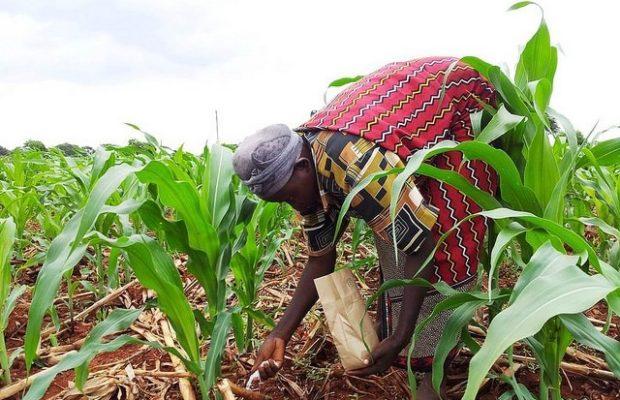
Farmers grabbed K725m SAFF loans & refused to pay back

Breaking News Zambia
NewsGovernment put all its eggs in the […]
Government put all its eggs in the farmers’ basket thinking the farmers would hatch them and return chicks, but the farmers fried the eggs and are now saying the basket was empty from the start.
According to official Government data, the Sustainable Agriculture Financing Facility (SAFF) is facing a near-total collapse in loan recovery, with only 9% of the money disbursed to farmers recovered by the end of 2025.
A review of the data by the Zambian Business Times (ZBT) indicates that during the 2024/2025 farming season, K793,459,553 was disbursed to 8,886 beneficiaries across all ten provinces Clause 5(xiii) of the SAFF agreement provides that financial institutions must deduct loan repayments from borrowers according to agreed terms, with the loans expected to be repaid within nine months.
However, as at 31 December 2025, only 363 beneficiaries had fully repaid their loans, with total recoveries standing at K68,336,518, leaving K725,123,035 outstanding.
A further check on the data revealed that Southern Province recorded the highest outstanding amount, with 1,723 of its 1,740 beneficiaries failing to repay K184,010,661, followed by Eastern Province with 1,227 defaulters owing K94,131,340 and Central Province with 688 defaulters owing K78,143,827.
Speaking in an interview with ZBT, economic expert, Salwindi Notulu said the recovery rate points to serious weaknesses in the management of public agricultural financing and raises concerns about whether SAFF is operating as a loan programme in practice.
“When you look at the K725 million outstanding from the K793 million disbursed, with only K68 million paid back, that is a 9% recovery rate and in private sector lending, an institution facing such figures would struggle to remain viable,” said Notulu.
He attributed the poor recovery partly to what he described as moral hazard, arguing that some borrowers may treat government-backed financing as public money they do not have to repay, particularly where enforcement is weak or political interference is perceived.
“When money comes from government, some people perceive it as the national cake, unlike borrowing from a bank where they know their collateral can be taken and if people believe nothing will happen when they fail to pay, that is the behaviour the system encourages,” said Notulu.
He also pointed to weaknesses in financial literacy and investment culture, warning that farmers who treat loans as income for household consumption instead of investing them in production can reach harvest time without generating enough money to repay their debts.
Notulu warned that widespread defaults can also damage the creditworthiness of the agricultural sector, making banks more reluctant to lend to genuine farmers or forcing them to charge higher interest rates to cover the risk of future losses.
He called for stronger loan recovery measures, including appropriate credit-reference reporting for verified defaulters and tighter links between financing, production, insurance and other support programmes, warning that without accountability, SAFF risks losing its ability to support farmers sustainably.
Article by Philip Sinkala





Community Feedback