
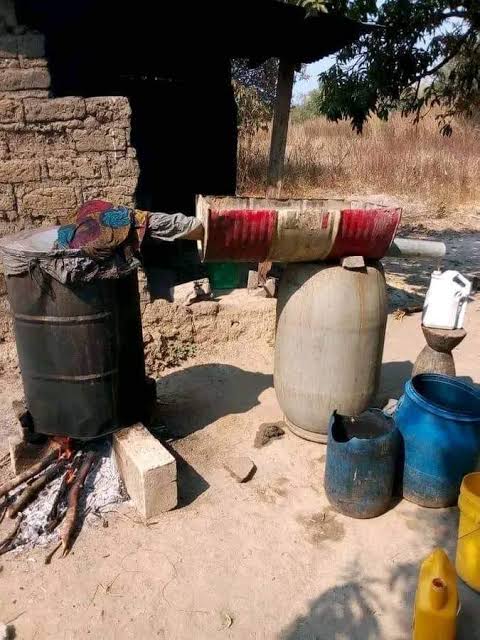
Did You Know: With controlled temperature, locals can brew safer Kachasu?

Breaking News Zambia
NewsTemperature regulation during kachasu production could help […]
Temperature regulation during kachasu production could help improve the consistency and safety of the locally brewed alcoholic beverage, according to a laboratory science expert. Kelvin Bwalya, Secretary General of the Zambia Association of Applied Science Laboratory Technologists, says small scale producers need appropriate equipment and guidance on controlling temperatures during distillation to improve production standards.
Speaking in an interview with Zambian Business Times (ZBT), Bwalya said the government should help local brewers adopt safer production methods instead of relying solely on confiscating brewing equipment.
“What we need is to formalize at what temperature the brewing should take place,” he said.
Bwalya said producers could use thermometers to monitor temperatures, while suitable heating equipment could offer greater control over the production process.
“If you put, let’s say, if you put a thermometer on top of the drum, you’ll be able to monitor the temperature is,” he said.
He added that electricity-powered heating equipment could help producers regulate temperatures, although access to electricity could be a challenge for some smallscale brewers. Bwalya said formalizing the sector would also help protect the livelihoods of people who depend on kachasu production for income.
“Whether you formalize or don’t formalize, still people will be taking. So the best is you formalize, and you put measures,” he said. He noted that some commercially produced spirits on the market use similar distillation methods but in a more standardized way, and the products are sold to members of the public.
He urged the government to engage smallscale producers and support them in adopting standardized production methods, alongside laboratory testing to establish the composition of their products.
However, temperature regulation alone cannot guarantee that kachasu is safe for consumption. Laboratory testing and appropriate quality controls are also necessary to identify potentially harmful substances, including methanol.
Article by Karen Ngulube




Community Feedback