
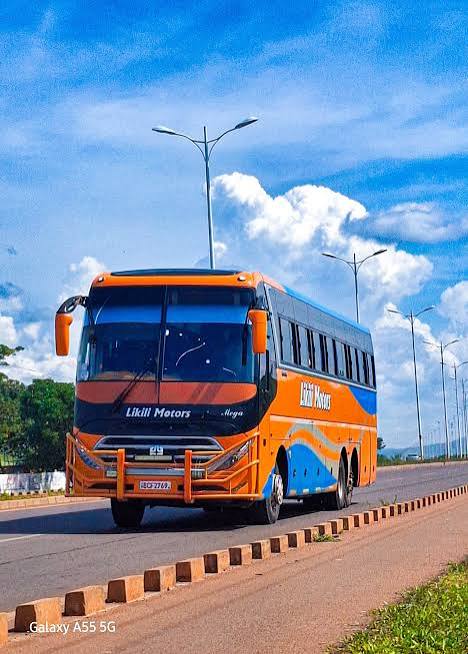
Bus fares jumps up by nearly K60 in Muchinga Province

Breaking News Zambia
NewsIsoka district residents in Muchinga Province have […]
Isoka district residents in Muchinga Province have raised concern over the sharp increase in transport fares from Isoka District to Nakonde, with the cost of travel rising by about 50% from the previous K90 to K100 range to as much as K150.
The development comes after the Energy Regulation Board (ERB) effected a significant increase in fuel prices for October 2026, with diesel rising from K26.86 per liter in September to K33.27 in October, an increase of K6.41, or 23.9%.
A check on the ERB press release by the Zambian Business Times-ZBT also revealed that petrol increased from K25.29 per litre to K31.46, while kerosene moved from K27.02 to K29.76 and Jet A-1 increased from K28.71 to K31.85 per litre.
According to the ERB, the fuel price increase followed the expiry of tax relief measures, which saw the government suspend excise duty and zero-rated VAT between April and September, while international oil prices also increased amid tensions in the Middle East and the kwacha weakened against the United States dollar.
Speaking in an interview with Zambian Business Times-ZBT, Isoka resident and driver who is a regular user of the Isoka-Nakonde route, Blessings Silengo, confirmed that fares have increased, with some transport operators charging K120 while the majority have moved to K150 for the 112-kilometer journey.
“The increase is painful because Isoka to Nakonde is an important route for business and access to services, and moving from around K100 to K150 at once puts a heavy burden on ordinary people who depend on this route,” said Silengo.
He indicated that the new fare was particularly difficult for people who regularly travel to Nakonde for business, as the additional transport cost was beginning to affect their ability to operate small businesses and meet other household needs.
“If you are someone who travels to Nakonde to buy goods for your business several times a week, the increase means you have to spend much more just on transport, and that extra cost can eventually affect the business itself,” said Silengo.
Meanwhile, he stated that passengers and drivers should find a middle ground, suggesting that a fare of around K120 to K130 could be more manageable for passengers while still helping operators deal with the higher cost of diesel.
“As a driver, I understand that we are also affected because diesel has gone up significantly, but K150 is too high for many passengers, so we would like to see the fare come down to around K120 or K130 while the government looks at ways of keeping fuel prices stable,” said Silengo.
Article by Philip Sinkala
Community Feedback