

“Africa’s newest dictator”: Leaders demand apology as Khama row over HH escalates

Breaking News Zambia
Top StoriesFormer Botswana President Ian Khama is facing a growing backlash in Zambia after describing President Hakainde Hichilema as “Africa’s newest dictator”. Members of Parliament, State House and governance experts have demanded that he withdraw the remark and apologise. They describe…
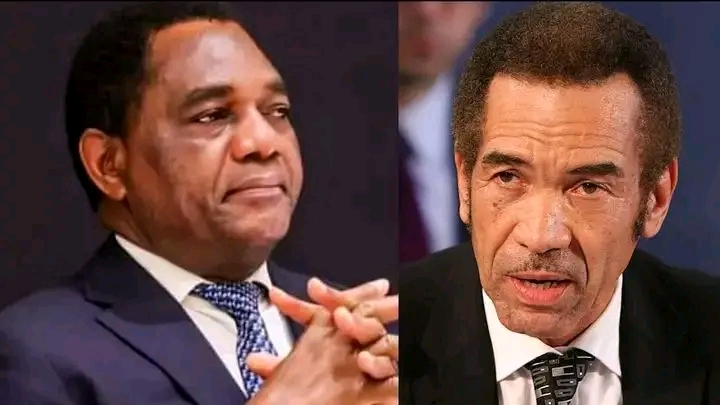
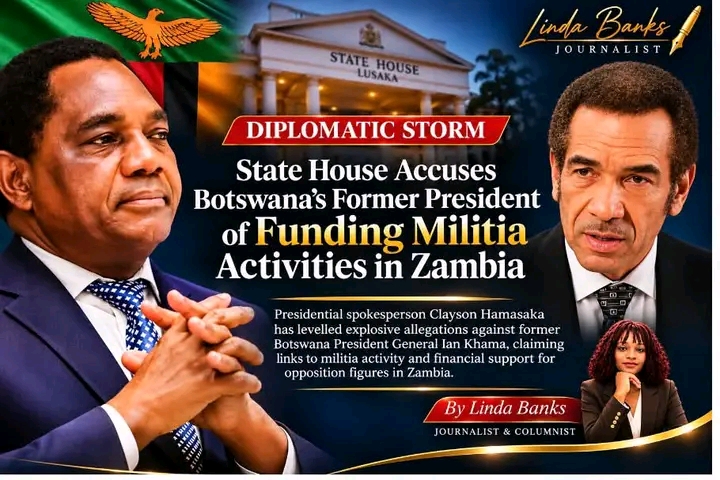
Former Botswana President Ian Khama is facing a growing backlash in Zambia after describing President Hakainde Hichilema as “Africa’s newest dictator”. Members of Parliament, State House and governance experts have demanded that he withdraw the remark and apologise. They describe his comments as careless, reckless and unfounded. The row has quickly grown into one of the most heated exchanges between Zambia and a former regional leader in recent years. It has also opened a debate at home, with some opposition voices saying the remarks should not be brushed aside.
The controversy began in Botswana’s Ntlo ya Dikgosi, the House of Chiefs, where Mr Khama sits as a traditional leader. During a session in Gaborone, he asked Botswana’s Minister of International Relations whether the government regretted sending a representative to President Hichilema’s inauguration. In framing the question, he labelled the Zambian leader “Africa’s newest dictator”. The Minister, Dr Phenyo Butale, defended Botswana’s attendance. He said Botswana must keep good neighbourly relations and cannot engage with other countries if it stays away.
Mr Khama did not back down. In a later media interview, he repeated his description of President Hichilema as a dictator. He went further, accusing the Zambian Government of manipulating elections, persecuting opposition politicians and abusing political activists. His comments come amid continuing political and legal disputes after Zambia’s general election on 13 August, including the detention of several opposition figures. The Zambian Government has rejected the characterisation of its record.
State House Communications Specialist Clayson Hamasaka was among the first to respond. He questioned Mr Khama’s conduct and pointed out that the former Botswana leader had previously visited State House and held talks with President Hichilema. Mr Hamasaka said he found it hard to understand how someone who had engaged the President in that way could now call him a dictator. UPND Lusaka Province Secretary James Sichomba described the remarks as misleading and hypocritical. He cited Zambia’s election to the United Nations Human Rights Council for 2027 to 2029, the abolition of the death penalty and the expansion of free education as evidence of the country’s democratic progress.
Member of Parliament Judith Kabemba has now called on Mr Khama to withdraw his remarks and offer an unreserved apology to President Hichilema and the people of Zambia. Ms Kabemba described the statements as unfortunate, reckless and unbecoming of a former head of state. She said leaders of Mr Khama’s standing are expected to champion diplomacy, statesmanship and respect for democratic institutions. She said President Hichilema’s political career has been defined by respect for constitutional processes and democratic principles. She pointed to his decision to pursue power through successive elections and lawful means over many years.
“Unlike the characterisation being advanced against our President, Mr Hichilema has consistently demonstrated his commitment to patriotism, democracy and constitutionalism,” Ms Kabemba said.
Governance expert and human rights advocate Wesley Miyanda has also condemned the remarks. He described them as unfortunate, misplaced and harmful to the strong political, social and economic ties between Zambia and Botswana. Mr Miyanda said Zambia has earned international recognition as one of Africa’s most peaceful and stable democracies. He said the country has an enviable record of conducting credible elections and facilitating peaceful transfers of power. That record, he said, should command respect across the region.
Livingstone MP Mr Mayangwa said Mr Khama should reflect on his own governance record before attacking President Hichilema. He described the President as a democratically elected leader whose administration is focused on economic recovery. He said the Government has worked to restore investor confidence and create opportunities for national development. He said the President’s record should be judged on those results. He said it should not be judged by commentary from across the border.
Not everyone has dismissed Mr Khama’s comments. Socialist Party president Fred M’membe said that while the language used by a foreign former head of state is a matter for regional reflection, the substance of the criticism should not be casually brushed off. He argued that the remarks reflect concerns his party has raised about the state of democracy in Zambia. His position puts him at odds with the ruling party and its allies. It also shows how quickly a diplomatic spat has become part of Zambia’s domestic political debate.
Mr Khama served as President of Botswana from 2008 to 2018 and remains an outspoken voice on regional politics. Zambia and Botswana share a border at Kazungula, where the two countries jointly built the Kazungula Bridge across the Zambezi River. Botswana’s current government has made clear through its minister that it values good relations with Lusaka. For now, Zambia’s leaders want one thing from Mr Khama: a withdrawal and an apology. Whether he responds will decide whether the row fades or deepens.

Community Feedback