
Zambia’s school meals programme attracts global attention

Breaking News Zambia
NewsBy Kasweka Sakaimbo According to the Consultative Group on International Agriculture Research (CGIAR), poor diets are the leading factor for diseases worldwide with almost 3 billion people not able to afford a healthy diet, more so a meal at all. Persistent malnutrition and other diet related illnesses are the result of such circumstances in the […]
By Kasweka Sakaimbo
According to the Consultative Group on International Agriculture Research (CGIAR), poor diets are the leading factor for diseases worldwide with almost 3 billion people not able to afford a healthy diet, more so a meal at all.
Persistent malnutrition and other diet related illnesses are the result of such circumstances in the community.
Good nutrition and healthy eating practices are essential to building an active and productive population. They also support children’s intellectual development, with lasting benefits for a nation’s social and economic progress.
As Zambia marked 62 years of independence, the country continues to take deliberate steps to improve better diets and nutrition to overcome these lasting impacts as well as meet its national goals.
With these strides, Zambia feeds into the Sustainable Development Goal (SDG) number two of achieving zero hunger by promoting improved nutrition for all.
For decades, Zambia has grappled with high levels of child stunting. However, figures reported this year 2026 by the NFNC show a recent improvement, with stunting declining from 35 percent to 32 percent.
Despite this progress, important questions remain, Can Zambia overcome its nutrition challenges, particularly those affecting young people?
The Government recognises that these challenges can hinder the country’s prosperity and is taking steps to achieve food security and improved nutrition one step at a time.
One such bold move was government targeting improved coordination among government ministries and development partners, by moving the National Food and Nutrition Commission (NFNC) from the Ministry of Health directly to the Office of the Vice President (OVP).
The move forms part of broader efforts to refresh national nutrition strategies and respond to changing nutrition challenges.
The Government’s Free Education Policy, alongside the Home-Grown School Meals Programme, also known as the School Feeding Programme, has become one of the country’s key initiatives.
According to the NFNC and the Ministry of Education, about 5.6 million learners receive school meals each day, a success story that Zambia should be proud of.
To ensure that School Meals are sustainable while improving learners nutrition in Schools, on June 5, 2026, President Hakainde Hichilema’s administration added an supplementary component to the School Meals programme by launching the Presidential Irrigation Initiative Programme (PIIP).
Government recognises that citizens are living in different times grappled by climate change and less or no rainfall, hence the initiative aims to improve learners’ nutrition while generating income through its produce to support school maintenance.
These undeniable successes in the Home Grown School Meals programme were difficult to miss as the world came to Zambia to foster learning and collaboration among governments, partners, industry, researchers as well as advocates.
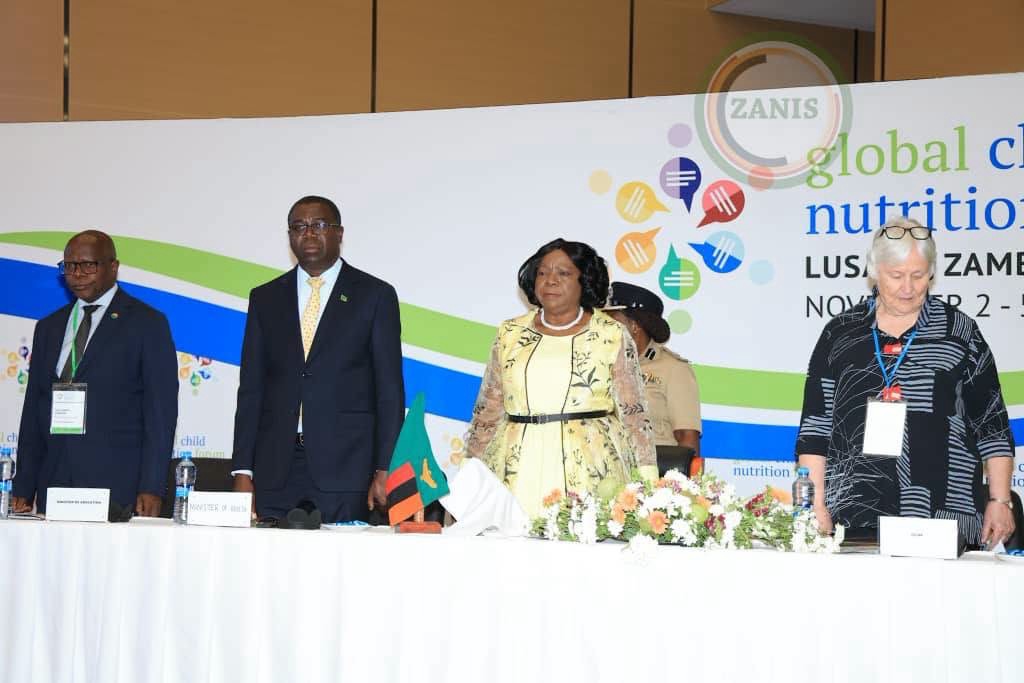
Zambia’s school meals programme was showcased at the 2026 Global Child Nutrition Forum, co-hosted by the Zambian Government and the Global Child Nutrition Foundation.
Participants came from countries including Kenya, Cameroon, Ukraine, the United Arab Emirates, the United Kingdom, Yemen, Nigeria, Togo, Sri Lanka, Sweden, Malawi, Zimbabwe, South Africa and Sudan.
The forum opened in Lusaka from November 2 – 4, 2026, with President Hichilema calling for stronger partnerships, greater investment and practical solutions to improve school meal programmes worldwide.
In a speech delivered on his behalf by Vice President Mutale Nalumango, Mr Hichilema described school feeding in Zambia as the government’s investment in education, nutrition, health, agriculture and national development.
Zambia’s Home Grown School Meals Programme reaches more than 5.6 million learners across all 116 districts.
By connecting schools with local agricultural production, the programme aims to provide nutritious meals while creating markets for farmers and supporting local economies.
Mr Hichilema said further progress would require investment in research and innovation, stronger supply chains, climate resilient approaches, clean cooking technologies and new financing mechanisms.
The Government is working with nutrition experts, agricultural stakeholders and development partners to diversify school menus and improve their nutritional value such as adding aquatic foods to School Meal diets.
More than 65 countries attended the 2026 forum, including countries affected by crises and displacement.
Ukraine’s First Lady, Olena Zelenska, said Zambia’s achievements in school feeding were recognised internationally and could serve as a point of reference.
Speaking virtually, she said about three million children in Ukraine currently benefit from school meals despite the ongoing war, and called for all children to have equal access to nutritious food.
Global Child Nutrition Foundation Executive Director Arlene Mitchell said Zambia continued to make progress despite global challenges.
She urged participants to remember that their decisions have consequences and to ensure that the actions of adults support children’s growth and health.
Education Minister Harry Kamboni said the forum offered Zambia and other countries an important opportunity to strengthen collaboration on sustainable school meal programmes.
Mr Kamboni also commended the Government’s positive reforms, including the Free Education Policy, which has enabled millions of children to enroll in school.
The World Food Programme (WFP) said Zambia was turning its school feeding vision into action by financing the programme through the Government, enabling millions of learners to receive meals.
Speaking on the sidelines of the forum, WFP Country Director Cissy Kabasuuga said Zambia had successfully scaled up the School Feeding Programme, which began with support from partners before transitioning to Government ownership.
“We believe that Zambia has taken a bold step by growing the programme. It is a very good example and model,” she said.
During a Zambian panel discussion, Ministry of Education Director of School Health and Nutrition Malalu Mulundika attributed the programme’s success to strong political commitment in Zambia.
She called for continued collaboration and engagement, and commended WFP for its support.
“Zambia has had a gradual progression with the School Feeding programme,” she said.
National Convenor for Food Systems in the Office of the Vice President, Victor Mbumwae, highlighted the importance of school meals and described local schools as anchors for economic growth.
Ministry of Agriculture Chief Food and Nutrition Officer Nancy Sakala explained that the ministry helps provide a market for Zambian farmers, who supply a variety of foods to learners across all 116 districts.
She said supporting farmers creates economic opportunities and contributes to the country’s development goals.
At the close of the forum, the Global Child Nutrition Forum (GCNF), brought together more than 70 countries in Lusaka to strengthen operational capacity and share technical knowledge, under the theme “Vision to Action: Achieving Ambitious School Meal Programme Objectives.”
Permanent Secretary for Administration in the Office of the Vice President Lillian Kapusana led coordination efforts alongside the NFNC and international organisations, including the Food and Agriculture Organisation of the United Nations (FAO).
Ms Kapusana said Zambia was exploring ways to include more fish and other aquatic foods in school meals, with the aim of improving nutrition and creating opportunities for local producers and suppliers.
Speaking at a forum side workshop dubbed “Making Fish Work in School Meals, From Policy Ambition to Practical Implementation,” Ms Kapusana said fish could provide high quality protein and essential micronutrients for children.
She encouraged participants from the private sector, research institutions and governments from various countries to share practical experiences and develop recommendations to strengthen supply chains and partnerships.
At a separate plenary session, Chairperson of the UN Food Systems Coordination Hub Scientific Advisory Committee Shakuntala Thilsted urged governments to take deliberate steps to include aquatic foods in school meal programmes.
Dr Thilsted, the 2021 World Food Prize laureate, also outlined actions to strengthen research into the use of diverse aquatic foods in school meals.
Through its school meals programme, Zambia is linking nutrition, education and agriculture. The challenge ahead will be to sustain this progress, address gaps in infrastructure and supply, and ensure that nutritious meals reach learners across the country for them to continue learning; and dream dreams that will make them leave a footprint in Zambia’s socio-economic journey.


Community Feedback