
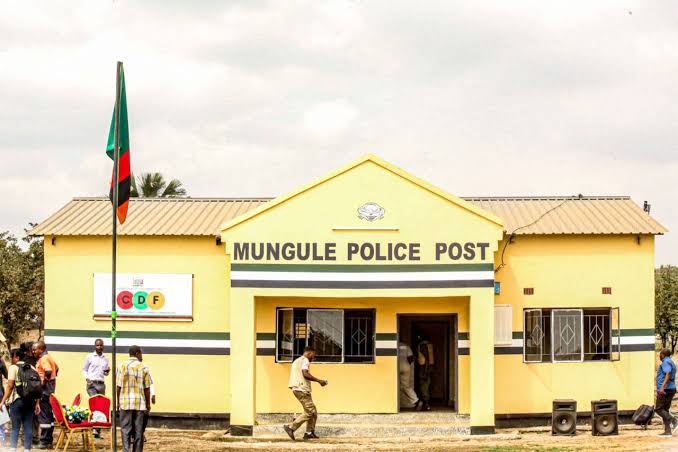
Unplanned settlements threaten to turn Mungule into Kanyama

Breaking News Zambia
NewsChibombo District Council has moved to address […]
Chibombo District Council has moved to address growing concerns over unplanned settlements in Mungule and surrounding areas, where increasing customary land transactions are raising questions about urban planning and infrastructure provision.
The situation has attracted attention from observers who warn that Mungule could gradually develop into another Kanyama if the growth of informal settlements is not properly managed.
The area has increasingly become a preferred destination for people seeking affordable customary land, raising concerns about the development of settlements without adequate provision for roads, drainage systems and other essential infrastructure.
Speaking in an interview with the Zambian Business Times-ZBT, Chibombo Council Chairperson, Newton Nyeleti disclosed that the local authority has developed an Integrated Development Plan (IDP) aimed at promoting orderly settlement development in collaboration with traditional leaders.
Nyeleti explained that the council is engaging traditional leaders because much of the land in Mungule and surrounding areas falls under customary tenure, making collaboration essential in addressing unplanned development.
“We have developed an Integrated Development Plan, an idea that we are selling to the traditional leaders because most of the land is customary,” he said.
“We are trying to see how the law can change so that there is adequate planning,” said Nyeleti.
He noted that one of the major challenges facing the council is that its planning authority often becomes more directly involved when landowners seek to convert customary land into statutory tenure by applying for title deeds.
According to Nyeleti, some property owners avoid this process and proceed with developments without following the necessary planning procedures, making it difficult for the council to coordinate infrastructure and service delivery.
“They only start controlling when people come to the council to convert customary land into statutory land and apply for title deeds, the planning process starts when people are building, but most people avoid that and would rather proceed without following the process,” he said.
Nyeleti added that the consequences of unplanned development become more apparent when residents later demand essential services such as roads and electricity from ZESCO, which can be difficult to provide in settlements that were not properly planned from the outset.
He stressed that the council intends to ensure that developments on customary land also comply with appropriate planning requirements, regardless of whether the land has been converted into statutory tenure.
“The Integrated Development Plan has been presented to three traditional leaders, namely Chiefs Mungule, Liteta and Chitanda, as part of efforts to secure their involvement in managing settlement growth,” said Nyeleti.
However, he identified issues surrounding perpetual succession as one of the challenges that could affect the implementation process.
On the implementation timeline, Nyeleti indicated that the duration of the plan will be linked to the tenure of the current council leadership, while expressing optimism that tangible progress could be achieved within one to two years.
By Samuel Mutale




Community Feedback