
Solar water purification gives lifeline to rural communities

Breaking News Zambia
NewsBy Chipili Makasa Diarrheal diseases in rural areas remain a major public health concern, disproportionately affecting children under five. In remote villages where clean water is scarce and sanitation infrastructure is minimal, these preventable illnesses continue to rob communities of their health and productivity. In 2023, Zambia recorded one of its worst cholera outbreaks in […]
By Chipili Makasa
Diarrheal diseases in rural areas remain a major public health concern, disproportionately affecting children under five. In remote villages where clean water is scarce and sanitation infrastructure is minimal, these preventable illnesses continue to rob communities of their health and productivity.
In 2023, Zambia recorded one of its worst cholera outbreaks in recent history, a crisis that rapidly spread to nine of the country’s ten provinces, with Lusaka, Central and Eastern Provinces bearing the heaviest burden. The sheer speed and scale of the transmission caught many off guard, overwhelming treatment centres and exposing deep systemic vulnerabilities in water and sanitation delivery. The World Health Organisation (WHO), in its 2023/2024 Annual Report, disclosed that by January 2024, over 10,800 cases and 432 deaths had been officially reported; grim statistics that underscored the urgent need for both emergency response and long-term preventive measures.
Public health experts later traced this devastating cholera outbreak to a confluence of factors, among them limited access to clean and safe drinking water, grossly inadequate sanitation infrastructure in densely populated urban settlements and persistently poor hygiene practices that facilitate faecal-oral transmission. In many high-density areas, shallow wells and unprotected water sources became breeding grounds for the Vibrio cholerae bacterium, turning everyday domestic routines into life-threatening risks.
In direct response to the escalating emergency, the World Health Organisation noted that the Ministry of Health, with robust backing from the WHO Country Office (WCO) and key partners including Gavi and UNICEF, swiftly launched a large-scale oral cholera vaccination campaign targeting 1.5 million people. To ensure the success of this initiative, over 1.7 million doses of vaccine were secured, enabling health workers to reach vulnerable populations even in hard-to-access neighbourhoods. This mass immunisation drive, while critical in halting the immediate spread, also highlighted the necessity of complementary interventions that address the root environmental causes of the disease.
A compelling study conducted by the Pan African Medical Journal in 2020, titled “Predictors of diarrhoea episodes and treatment-seeking behaviour in under-five children: a longitudinal study from rural communities in Zambia,” reinforces the gravity of the situation. The research indicates that, on a global scale, diarrhoea is the second leading cause of mortality in children aged below five years, responsible for killing approximately 760,000 children every year, a figure that rivals malaria and pneumonia in its devastating toll on young lives.
After rigorously analysing its longitudinal data from Zambian rural settings, the study concluded that there is an urgent need to reinforce preventive and control measures specifically aimed at reducing diarrhoea in under-five children. Crucially, the researchers emphasised that interventions should not adopt a one-size-fits-all approach; rather, they must take into account the different predictors of diarrhoea and the varying treatment-seeking behaviours observed in different settings, as vividly highlighted in the study’s findings. This evidence-based call to action has since guided many non-governmental organisations in tailoring their programmes to local realities.
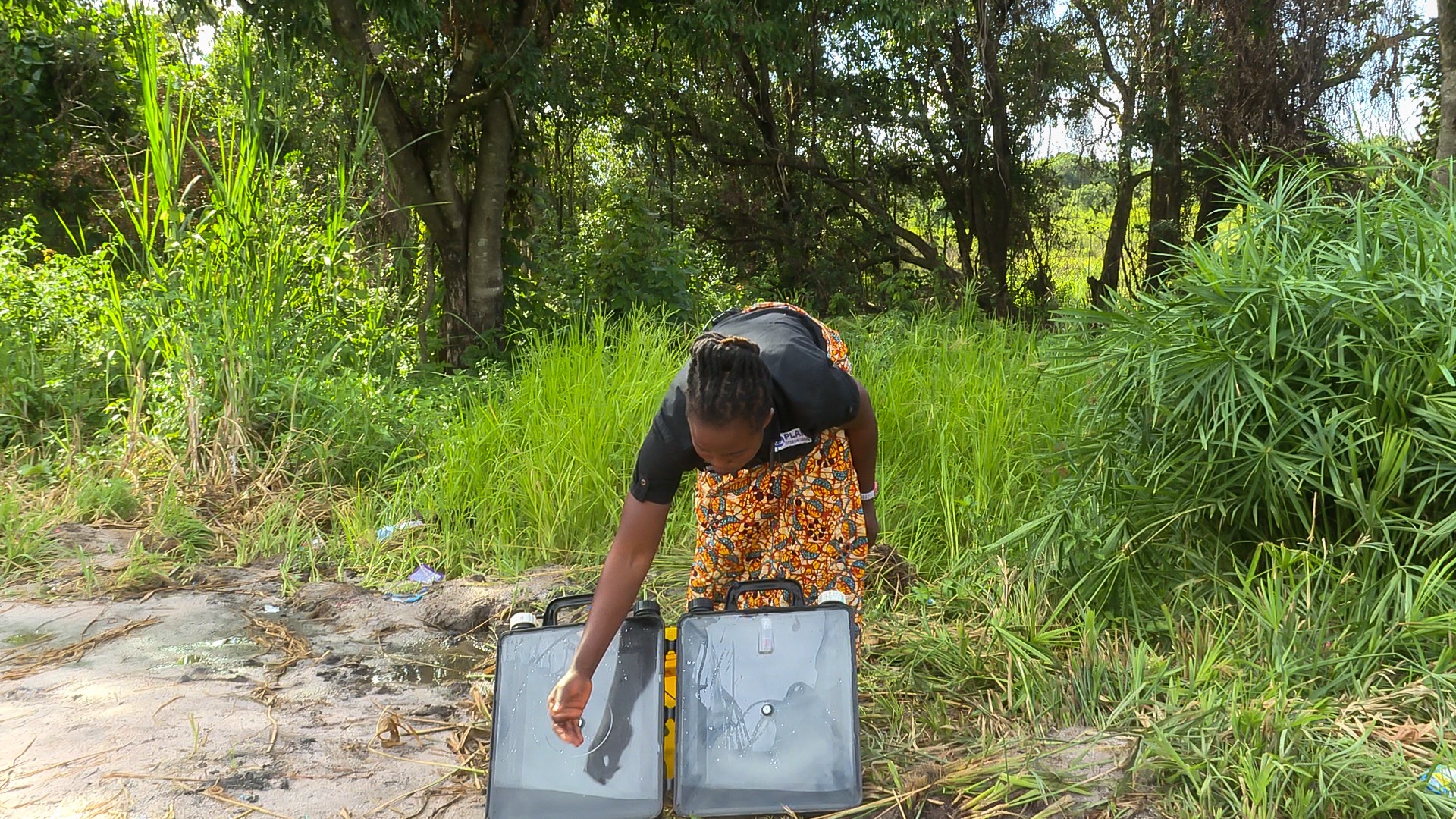
In Luapula province, one such sustainable solution, the Solvatten Solar Water Purification kits, is already making a tangible difference in preventing diarrheal diseases among rural communities such as Chilima Village in Chembe District. These portable, user-friendly devices harness the sun’s energy to heat and purify water, offering a lifeline to families who have long depended on unreliable and contaminated sources.
A beneficiary of the solar water purification kit, Ireen Chilufya, a mother of two, vividly describes the transformative benefit of the kit in protecting her household, particularly her school-going children, from recurrent waterborne infections. She recounts the daily anxieties she once faced, knowing that every sip of water carried the risk of sickness.
“In the previous years, we have had a lot of diarrheal cases in this community. My children would often get sick because our nearest water source is just an open shallow well where everyone draws water from, with no treatment or protection. But from the time we had this kit, we no longer experience such illnesses,” she said with relief.
Ms. Chilufya notes that the kit is remarkably easy to use, as it requires nothing more than sunlight to pasteurise the water and render it clean and safe for drinking, eliminating the need for costly fuel or complex filtration mechanisms.
Barely three years ago, in the aftermath of Zambia’s severe cholera outbreak, Plan International Zambia, in partnership with Solvatten, rolled out this portable water treatment and heating system specifically to serve households in remote areas without improved water sources, such as Chilima village. The initiative was designed not only as an emergency stopgap but also as a durable, climate-resilient intervention that communities could own and sustain over the long term.
Plan International Zambia Area Manager for Luapula Province, Dennis Machila, explains that many rural households in Luapula depend on borehole water for drinking and household use. However, one of the biggest operational challenges they face is the high iron content naturally found in the groundwater, which gives the water an unpleasant taste and odour. Additionally, the frequent breakdown of boreholes due to mechanical faults or depleted aquifers often forces households to resort to unsafe alternatives, such as unprotected shallow wells and streams, which are highly susceptible to contamination from human and animal waste.
”So, what we have done as Plan International is to supply these communities or households with point-of-use water purification solutions, which are the Solvatten Solar Water Purification kits. This is a very unique technology but simple enough for anyone to operate, enabling households to have access to clean drinking water without the use of any other chemicals, chlorine, or external energy sources,” Mr Machila noted.
Boiling water over an open fire to kill germs and make it safe for drinking is a common practice that many Zambian households still rely upon. However, for rural communities, firewood and charcoal are the closest and most accessible energy sources they use for this purpose, a method that is not only time-consuming and labour-intensive but also environmentally damaging.
Mr Machila further states that, due to the mounting pressures of human-induced climate change, the solar water purification kits are also strategically aimed at reducing the overall climate impact of daily domestic activities. This approach directly speaks to Sustainable Development Goal (SDG) number 13, which calls for urgent and accelerated action to combat climate change and its far-reaching effects on vulnerable populations.
“Boiling water is an option, but when we look at the issues of climate change, we want to use solutions that are environmentally friendly and sustainable. These kits allow households to have clean drinking water within a few hours by simply filling up water into the solar water container and exposing it to direct sunlight. Within a few hours, that water will be sufficiently heated and boiled, making it microbiologically safe for drinking, and the excess can be used for cooking and other household needs,” he elaborated.
Claudia Chilufya, another grateful beneficiary in Chilima village, observes that her household has significantly reduced its reliance on firewood and charcoal to boil water for drinking, cooking, and bathing. She points out that the financial and physical burden of procuring charcoal has eased considerably, allowing her family to redirect those resources towards other essential needs.
“I used to travel long distances just to pick firewood in the bush for boiling water, and charcoal also finishes very quickly after boiling large quantities of water, making my expenditure much greater just to buy extra plastics of charcoal. But with these kits, all I do is just put water in the container and let it boil naturally using the sun’s energy-no cost, no smoke, and no exhaustion,” Ms Chilufya said.
The Solvatten Solar Water Purification kits are not the only intervention being implemented in Luapula to improve access to basic water supply and sanitation. Complementary initiatives such as the Enhancing Access to WASH Services in Luapula Province have been running since 2020, designed to benefit approximately 200,000 people across six districts, namely Chienge, Chifunabuli, Kawambwa, Lunga, Mwansabombwe and Mwense. These broader programmes include borehole rehabilitation, hygiene promotion, and community-led total sanitation activities.
Numerous other interventions are still being rolled out in Luapula and across the rest of the country. However, sustainable, low-tech solutions such as the solar water purification kits deserve sustained support and scaling. Not only do they contribute tangibly to all 17 United Nations (UN) Sustainable Development Goals by improving health, reducing poverty, protecting the environment and promoting gender equality, but they also play a direct role in reducing the burden of diarrheal diseases.
In doing so, they empower communities to actively contribute to Zambia’s Vision 2030 of becoming a prosperous middle-income nation by the target year.
Community Feedback