

No one must rule over 10 years – VJ Mwaanga

Breaking News Zambia
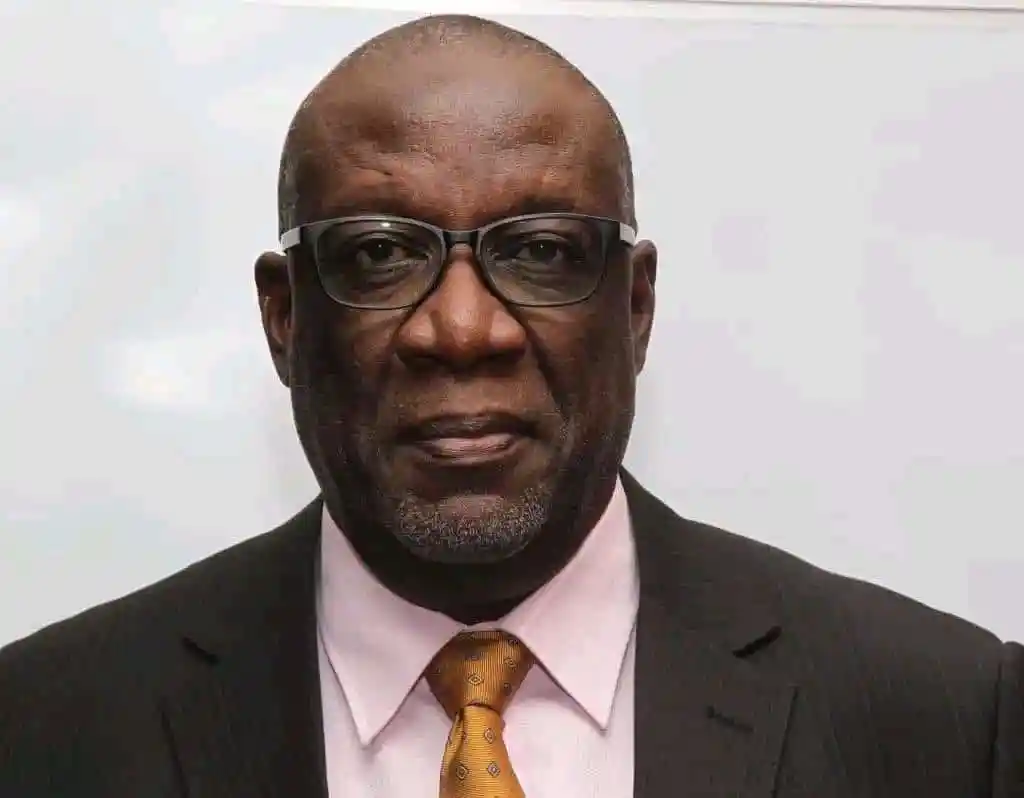
News‘THE ERA OF WAMUYAYA IS GONE’ – VJ WARNS AGAINST REMOVING PRESIDENTIAL TERM LIMITS Veteran politician Vernon Mwaanga, popularly known as VJ, has strongly cautioned against any attempt to remove Zambia's presidential term limits, declaring that the country must never return to an era where leaders seek to remain in power indefinitely. Mwaanga says no
‘THE ERA OF WAMUYAYA IS GONE’ – VJ WARNS AGAINST REMOVING PRESIDENTIAL TERM LIMITSVeteran politician Vernon Mwaanga, popularly known as VJ, has strongly cautioned against any attempt to remove Zambia’s presidential term limits, declaring that the country must never return to an era where leaders seek to remain in power indefinitely.
Mwaanga says no individual should serve as President for more than 10 years, arguing that the constitutional principle of two five-year terms, introduced after the end of Kenneth Kaunda’s long rule, must be protected.
“No person should serve more than 10 years. The era of wamuyaya is gone and never to come back,” Mwaanga who served both during Kaunda’s one-party-state and during multiparty said.
The retired politician was speaking during a podcast interview with seasoned radio presenter Ken Tonga, as debate over possible changes to presidential term limits gains momentum following calls by groups aligned to the ruling United Party for National Development (UPND) to amend the Constitution.
His remarks come a day after former Justice Minister Wynter Kabimba warned that attempts to remove presidential term limits could divide the UPND and weaken the ruling party, drawing parallels with the political fallout of former President Frederick Chiluba’s third-term campaign in 2001.
For Mwaanga, who played a prominent role in the Movement for Multiparty Democracy (MMD) and chaired the party’s election campaigns over four consecutive electoral cycles, the current debate is a familiar political battle Zambia has fought before.
VJ says he warned Chiluba against third term
Mwaanga recalled that he personally warned Chiluba in 2001 against pursuing a third presidential term, arguing that the campaign was unnecessary and would damage the MMD.
Chiluba, who had served two five-year terms after winning the 1991 and 1996 elections, faced growing resistance from within his own party and Government when supporters began pushing for constitutional changes to allow him to seek another term.
The campaign exposed deep divisions within the MMD, with then Vice-President Lieutenant General Christon Tembo and several senior party members opposing the proposal.
The resistance eventually resulted in the formation of breakaway political movements, most notably the Forum for Democracy and Development (FDD), led by Tembo, and the Heritage Party, led by former Vice-President Brigadier General Godfrey Miyanda.
Mwaanga said the third-term debate weakened the MMD at a critical moment and nearly cost it the 2001 elections.
Chiluba eventually announced that he would not seek a third term in May 2001, following mounting pressure from within the ruling party, opposition groups and civil society.
The MMD subsequently went into the December 2001 elections under Levy Mwanawasa, who narrowly won the presidency.
Historical accounts of the period confirm that opposition to Chiluba’s third-term ambitions fractured the MMD and contributed to the emergence of new political parties ahead of the 2001 elections.
‘We have seen this before’
Mwaanga’s warning is that Zambia should not repeat a political experience that previously created divisions within a ruling party and placed the country’s constitutional order under pressure.
The veteran politician’s intervention is particularly significant because he was part of the political establishment during the Chiluba years and says he cautioned against the third-term campaign before it reached its peak.
His argument is that the two-term limit was not introduced to disadvantage any particular leader, but to establish a constitutional safeguard against the concentration of power.
The 1991 transition ended Kaunda’s 27-year presidency and ushered in multiparty democracy under the MMD.
The principle of limiting presidential tenure to two five-year terms became an important feature of Zambia’s democratic framework.
Mwaanga’s position is that the country should not abandon that safeguard simply because a particular President or political group believes the incumbent should remain in office.
Term-limit debate puts Hichilema’s administration under scrutiny
The latest debate has emerged during President Hakainde Hichilema’s second term, following the August 2026 general election, whose outcome was disputed by opposition figures.
Groups aligned to the ruling party have been petitioning Parliament over proposals to remove or alter presidential term limits.
Some supporters have gone further, openly advocating for Hichilema to remain in office beyond the constitutionally permitted two terms, with some social media calls extending as far as 2090.
The debate has gained additional political significance because the UPND enjoys a parliamentary majority, raising questions about the possibility of constitutional amendments being advanced through Parliament.
On Friday, November 13, Justice Minister Jack Mwiimbu said Parliament was the appropriate institution to address the issue of presidential term limits following petitions presented to the House.
His statement has intensified discussion about whether the proposal could move beyond political commentary and become a formal constitutional process.
Article 106(3) of the Constitution currently provides that a person who has twice held office as President is not eligible for election as President.
Zambia’s history of presidential succession
Since independence in 1964, Zambia has had seven Presidents: Kenneth Kaunda, Frederick Chiluba, Levy Mwanawasa, Rupiah Banda, Michael Sata, Edgar Lungu and Hakainde Hichilema.
The country has experienced several changes of leadership through elections, as well as transitions following the deaths of two sitting Presidents.
Kaunda ruled for 27 years before losing the 1991 election to Chiluba, marking the return to multiparty democracy.
Chiluba served two five-year terms and retired from the presidency in 2002.
Mwanawasa succeeded him but died in office in August 2008 while serving his second term. His Vice-President Rupiah Banda assumed the presidency and subsequently won the 2008 election, but lost the 2011 election to Michael Sata.
Sata died in office in October 2014 during his first elected term, leading to a presidential by-election won by Edgar Lungu.
Lungu subsequently won the 2016 election but lost the 2021 election to Hichilema.
Hichilema’s 2026 re-election has brought the country into another term-limit debate, with the current constitutional provisions limiting a President to two terms.
The country’s experience demonstrates that leadership changes have taken place through different constitutional and electoral circumstances. Mwaanga’s argument is that the two-term principle should remain intact regardless of who occupies State House.
Unlike Chiluba, will UPND resist from within?
One of the important differences between the 2001 third-term controversy and the current debate is the apparent level of resistance within the ruling party.
During Chiluba’s time, opposition to the third-term campaign emerged from senior figures within the MMD, including the Vice-President and Cabinet ministers.
Their resistance eventually led to political breakaways and the formation of new parties.
In the current debate, there has not yet been a comparable public rebellion by senior UPND figures against the calls to change presidential term limits.
However, the absence of visible opposition does not necessarily mean that all members of the ruling party support the proposal.
Mwaanga’s intervention puts the responsibility on political leaders to consider the long-term consequences of constitutional changes rather than the immediate interests of individuals or parties.
His position also echoes Kabimba’s warning that a term-limit campaign could distract the UPND from its development agenda and create divisions within its ranks.
The question is bigger than Hichilema
The central issue raised by Mwaanga is whether constitutional safeguards should be altered to accommodate the ambitions or perceived performance of an individual President.
His argument is that the law must apply beyond the popularity of the person currently occupying the highest office.
The concern is that a constitutional change made for one leader could also determine the political future of the country under a different administration.
For Zambian Eye, the significance of VJ’s intervention lies in his experience of the 2001 third-term controversy. He was not simply commenting on a historical event; he says he warned against it while it was unfolding.
His message is unmistakable: Zambia should not reopen a political chapter that once weakened a ruling party and tested the country’s commitment to constitutional limits.
As Parliament faces growing pressure over the issue, the debate is no longer simply about whether Hichilema should seek another term. It is about whether Zambia wants to preserve a constitutional principle that applies to every President, regardless of political affiliation.
And as Mwaanga puts it, the era of wamuyaya should remain in the past.
Related posts:
- DRC protests raise a question Zambia cannot ignore: What happens when term limits become negotiable?
- “Two terms are not enough?” — Mwamba challenges growing calls for Hichilema to stay beyond 2031
- “There will NEVER be a third term” — UPND member warns as Hichilema term debate grows
- “I will be tough this term” – President Hichilema
Related coverage from breakingnewszambia.com
- God says Hichilema will rule for 15 years, claims Cosmas Chileshe
- I Had Been Waiting For A Major Financial Opportunity For Years, But One Unexpected Opportunity Changed Everything – Bwana Mkubwa Man Shares His Experience
- Four Years, Nine Provinces, One Vision, : Morgan Muunda’s Unwavering Loyalty To HH


Community Feedback