
Making pensions relevant to the old and young

Breaking News Zambia
NewsBy Fredrick Mwansa For many people in the world, pension funds serve as a main source of retirement income. A pension ensures financial security and dignity for workers after they retire. It converts years of earnings and contributions into a reliable source of income in old age. However, despite the importance of pensions in ensuring […]
By Fredrick Mwansa
For many people in the world, pension funds serve as a main source of retirement income.
A pension ensures financial security and dignity for workers after they retire.
It converts years of earnings and contributions into a reliable source of income in old age.
However, despite the importance of pensions in ensuring a secure retirement, many Zambians, particularly those working in the informal sector, remain excluded from formal pension schemes.
The scale of this challenge is reflected in Zambia’s 2022 Labour Force Survey Report, which estimated that the country has a population of 19.6 million, with 60 percent living in rural areas and 40 percent in urban areas.
The report further estimated Zambia’s employed population at 3,273,123, of whom approximately 76.3 percent were engaged in informal employment, leaving the majority without adequate access to formal social security systems and reliable retirement benefits.
Apart from coverage, concerns persist over the adequacy of pension benefits and the long-term sustainability of the pension system.
The problem is to build a pension system that safeguards members’ savings, provides adequate retirement income and supports individuals and their families in old age.
Recognising the importance of pensions to social protection and national development, the government has introduced reforms aimed at improving retirement benefits, including partial pension withdrawals and increased monthly payments to retirees.
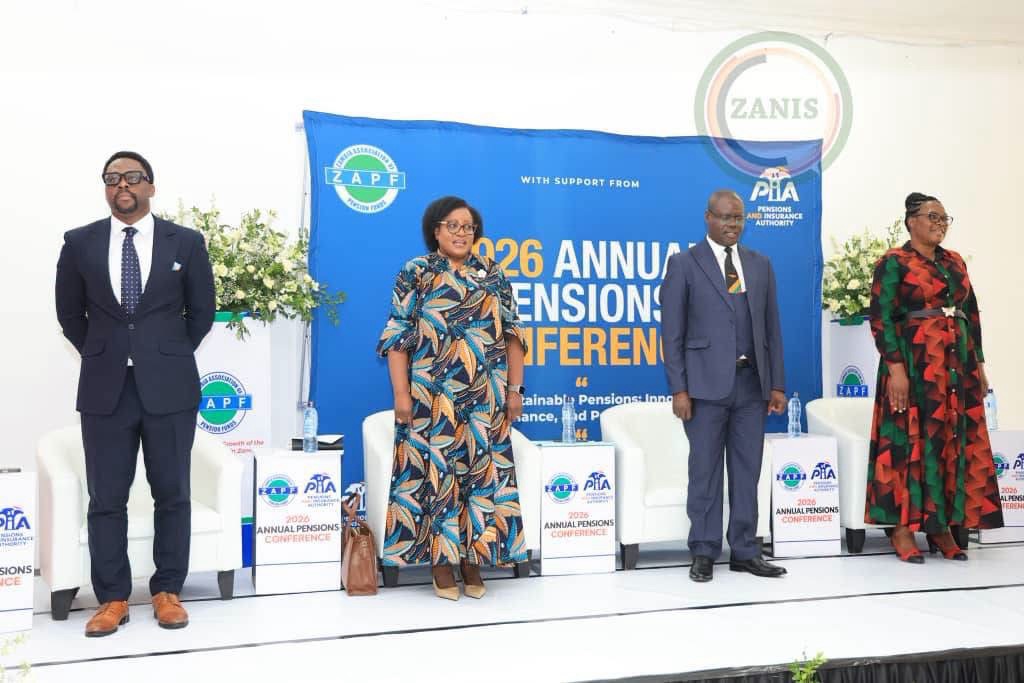
Recently, Zambia Association of Pension Funds (ZAPF) and the Pensions and Insurance Authority (PIA), the country’s pension sector regulator, recently hosted a five-day 2026 Annual Pension Conference themed “Building Sustainable Pension, Innovation, Governance and Policy Reform.”
The conference provided a platform for stakeholders to discuss policy, governance, investment strategies and technological innovations that could strengthen Zambia’s pension industry.
In a keynote address, Ministry of Labour and social security Permanent Zachariah Muhanga reaffirmed government’s commitment to reforming Zambia’s pension system to expand coverage, strengthen regulatory oversight and improve retirement income security, particularly for workers in the informal sector.
Mr Muhanga said pension reforms were critical to protecting workers’ contributions, improving benefits and positioning pension funds to support national economic development.
He noted that pension funds should be viewed not merely as financial institutions but as essential components of the country’s social protection system.
The PS stated that the Government remained committed to building a sustainable pension system that protects members’ savings, provides adequate retirement income and supports families in old age.
Beyond providing members’ savings, Mr Muhanga said pension funds could also contribute to economic development by directing capital towards productive sectors, including infrastructure, housing and capital markets.
On this point he commended NAPSA for investing in infrastructure such as the Ndola -Lusaka dual carriage way saying this contributes to economic development.
The PS said the growth of pension assets was encouraging but should not be the only measure of success.
“The true measure of success is when the system protects members, provides adequate retirement benefits and reaches those who need it most,” Mr Muhanga said.
He cited pension industry figures showing that assets had reached K26.7 billion as of December 1, 2025, representing growth of about 29 per cent compared with December 1, 2024.
However, he cautioned that asset growth must translate into tangible benefits for members, including improved retirement security and wider access to pension services.
The PS highlighted Government’s ongoing efforts to improve the pension system through legislative reforms, noting that the proposed Pension Scheme Bill was intended to respond to developments in the industry and strengthen the regulatory framework.
“The proposed legislation is expected to enhance the regulation and supervision of pension schemes, strengthen member protection, promote innovation and provide for the establishment of a pension protection fund” he said.
He pointed out that the reforms were also intended to create an environment in which pension service providers could introduce new products and improve the delivery of services.
He noted that digital technology was an important tool for modernising pension administration, reducing operational costs and improving access to information.
He said digital platforms and automated processes could make it easier for members, including those in remote areas, to access information about their pension contributions and benefits.
However, he warned that technological advancement must be accompanied by strong data management, cybersecurity safeguards and adequate protection of members’ personal information.
He reiterated the government’s commitment to expanding pension coverage, particularly among workers in the informal sector, many of whom remain outside formal pension arrangements.
He emphasised that broader coverage was necessary to ensure that more Zambians could access financial protection in retirement and reduce their vulnerability in old age.
For Pensions and Insurance Authority (PIA), governance and wider coverage was key to building a sustainable pension system.
PIA Registrar and Chief Executive Officer Namakau Ntini called for stronger governance, greater transparency and expanded pension coverage to ensure a sustainable retirement system capable of protecting contributors and supporting national economic development.
The Registrar noted that the industry was undergoing significant economic and technological changes, creating new expectations for transparency, accountability and improved service delivery.
She said pension administrators must adapt to changing demographic realities and embrace innovative approaches to expand coverage and make retirement arrangements more accessible to a wider population.
“Pension systems could no longer rely on traditional approaches alone, particularly as demographic changes increase, there is a need for sustainable retirement planning.” She said.
She emphasised the importance of competence, accountability, effective risk management and transparent investment decisions in protecting contributors’ savings and maintaining public confidence in pension institutions.
She stressed that strengthening governance structures was essential to addressing weaknesses in pension administration and ensuring that the interests of contributors and retirees remained central to industry operations.
She indicated that Insurance institutions can play a pivotal role in the Grow Zambia Agenda by investing in agriculture, energy, infrastructure and industrial development which could support economic growth, stimulate employment and create opportunities for private-sector expansion, provided such investments are consistent with pension funds’ obligations to their members.
As for ZAPF, innovation and stronger member engagement was key to ensure long-term sustainability.
ZAPF Chairperson Collina Halwampa urged insurance institutions to embrace innovation, strengthen member engagement and promote policy dialogue to ensure the long-term sustainability of pension schemes amid changing membership demographics.
Ms Halwampa pointed to changes in membership demographics as an important consideration in addressing the future of pension schemes, emphasising the need for greater transparency and innovative approaches to managing members’ expectations.
Meanwhile Pan African Fund Managers Association (PAFMA) Program Manager Oguche Aguda called for sustainable investments and greater youth participation.
Aguda, a Nigerian insurance expert, proposed reforms in pension systems to ensure retirement income security, promote sustainable contributions and channel pension funds into investments capable of driving economic growth.
He said pension administrators and regulators must strike a balance between innovation, investment security and the long-term sustainability of retirement savings.
“Demographic changes, the adequacy of pension benefits and the security of pension assets are critical issues that must shape pension policy. Pension systems must be designed to meet the needs of an ageing population” He emphasised.
He noted that demographic changes could place additional pressure on pension arrangements, making it necessary for countries to develop systems that can accommodate changing population structures while ensuring that retirees receive adequate benefits.
“Pension benefits should provide retirees with a decent standard of living, including the ability to meet essential expenses such as transportation, healthcare and medication” he said.
Mr Aguda questioned the adequacy of retirement benefits in the face of inflation, noting that the value of savings accumulated over decades of employment could be eroded by rising living costs.
On the role of pension investments in economic development, Mr Aguda argued that retirement savings could help finance productive sectors, including energy, housing and infrastructure.
“Pension investment strategies should be linked to broader economic objectives, investments capable of generating sustainable returns could also support business expansion, job creation and future pension contributions” he said.
He maintained that economic development and pension sustainability should not be treated as competing objectives, as a stronger economy could create employment opportunities and expand the pool of contributors to pension schemes.
He also urged stakeholders to pay greater attention to younger workers, saying pension systems must become more relevant and understandable to younger generations to encourage early and consistent contributions.





Community Feedback