
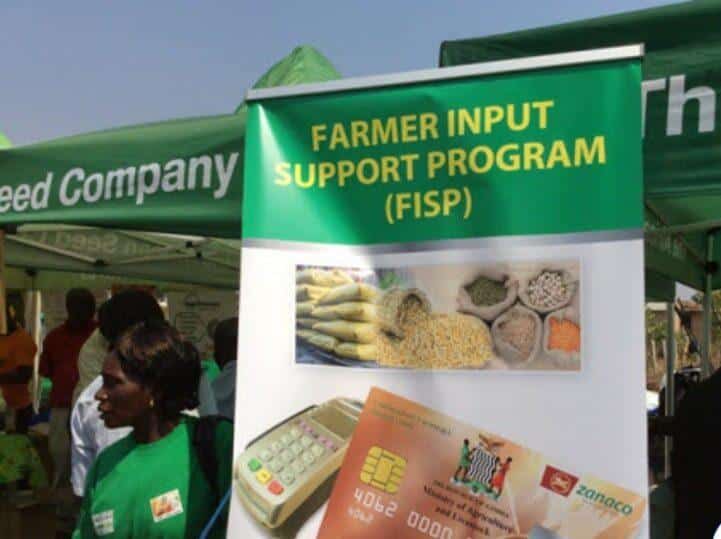
Local farmers will quit maize production if FISP loans don’t favour them

Breaking News Zambia
NewsThe Minister of Finance and National Planning, […]
The Minister of Finance and National Planning, Dr Situmbeko Musokotwane, has replaced a programme designed to provide inputs with a financing model whose conditions may prove more favourable to the lender than to the farmer.
Such a reform raises legitimate concern that maize production may become an increasingly unattractive undertaking for the very farmers upon whom the nation depends.
Speaking in an interview, Agriculture expert and Sustainable Farming Advocate, Clever Munsunge has warned that farmers may abandon maize production if the planned transition of the Farmer Input Support Programme (FISP) into a loan scheme does not offer financing conditions that favour their participation.
Munsunge said the shift can undermine Zambia’s ambition of producing 10 million metric tonnes of maize by 2031 if farmers find the new loan arrangement difficult to access or repay.
He said the country must carefully consider how the proposed financing model will affect farmers’ willingness to grow maize, particularly those who have depended on government-supported inputs to sustain production.
“If the loan scheme does not favour farmers, we are most likely to see a reduction in the number of people participating in maize production, and that can affect our efforts to reach the 10 million metric tonnes target,” said Munsunge.
He added that Government must ensure that farmers understand how the loans will operate, including the eligibility requirements, repayment conditions and whether collateral will be demanded before they access farming inputs.
The expert warned that if the new arrangement becomes too costly or difficult to manage, farmers may shift towards other crops such as sunflower, groundnuts and sweet potatoes, reducing the land allocated to maize.
“Farmers may decide to move away from maize and concentrate on other crops if they discover that the loans are not helping them, and Government must take that possibility seriously,” he said.
Munsunge said the Ministry of Agriculture and other stakeholders should engage farmers early and ensure the financing model supports their production capacity instead of creating additional barriers to participation.
He further explained that the transition must therefore be designed around farmers’ realities, warning that failure to provide favourable loan conditions can weaken maize production and make the 10 million metric tonnes ambition more difficult to achieve.
Article by Philip Sinkala





Community Feedback