
HH Champions COMESA growth

Breaking News Zambia
NewsBy Runiah Sakala In December 1981, a treaty aimed at promoting sustainable growth and development through trade and other economic activities among Eastern and Southern African countries was signed in Lusaka. The treaty established the Preferential Trade Area (PTA) and was signed by nine Heads of State, including those of Comoros, Djibouti, Ethiopia, […]
By Runiah Sakala
In December 1981, a treaty aimed at promoting sustainable growth and development through trade and other economic activities among Eastern and Southern African countries was signed in Lusaka.
The treaty established the Preferential Trade Area (PTA) and was signed by nine Heads of State, including those of Comoros, Djibouti, Ethiopia, Kenya, Malawi, Mauritius, Somalia, Uganda, and Zambia.
According to the African Union, the initiative was driven by Pan-Africanism, inspired by post-independence solidarity, with most African countries collectively seeking self-reliance.
Under the PTA Treaty, member states envisioned the establishment of a common market for Eastern and Southern Africa.
In 1993, the Preferential Trade Area transitioned into the Common Market. In this vein, the Treaty establishing the Common Market for Eastern and Southern Africa (COMESA) was signed on November 5, 1993, by 15 countries in Kampala, Uganda, and ratified the following year in Lilongwe, Malawi, on December 8, 1994 by 21 countries.
COMESA Member States set out clear objectives aimed at deepening regional integration and cooperation. Central to these was the creation of a full free trade area to ensure the free movement of goods and services produced within the bloc, alongside the removal of tariffs and non‑tariff barriers.
They also agreed to establish a customs union, applying a single Common External Tariff on imports from non‑COMESA countries to harmonize trade policy.
To foster investment, the region seeks to promote the free movement of capital through a common investment area designed to create a favorable climate for investors.
Financial integration is another priority, with plans for a payment union that will gradually evolve into a common monetary union and shared currency.
Member States are also committed to relaxing visa requirements, paving the way for the eventual free movement of persons, labor, services, and the right of establishment and residence.
Today, COMESA is made up of 21 Member States, with its headquarters in Lusaka, Zambia, headed by Secretary General Chileshe Kapwepwe.
The Authority serves as COMESA’s highest policy‑making body, charged with setting the overall direction of the organization and overseeing the execution of its executive functions.
Leadership of the Authority rests with a Chairperson elected by Member States, usually the host of the annual COMESA Summit.
Zambia has held the chairmanship twice: first under President Frederick Chiluba from 1997 to 1999, and later under President Hakainde Hichilema, who assumed the position in 2023 when Zambia hosted the 22nd COMESA Summit.
The 25th COMESA Summit of Heads of State and Government was held in Harare, Zimbabwe, on October 22, 2026, under the theme “One Market, One Future: Advancing Inclusive Industrialisation, Investment and Regional Integration in COMESA.”
President Hichilema was among leaders from 21 countries who attended the meeting.
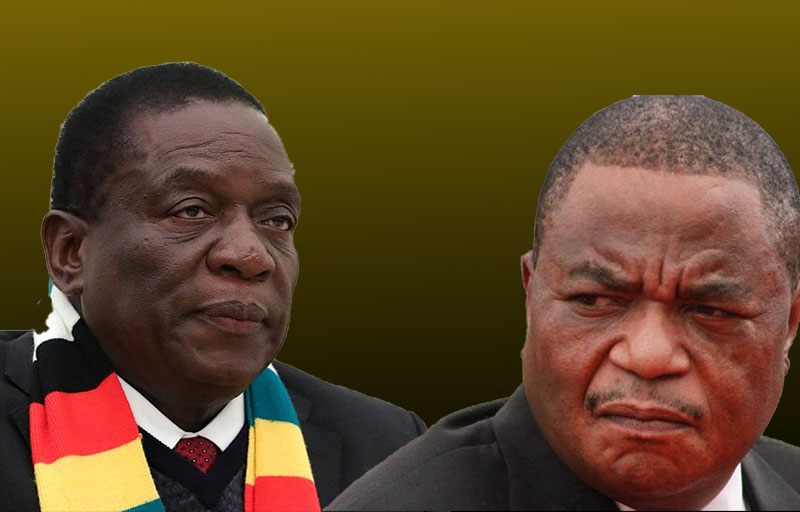
During the Summit, President Hichilema was elected Vice Chairperson of the COMESA Authority, following the handover of the Chairmanship from Kenyan President William Ruto to Zimbabwean President Emmerson Mnangagwa.
In his acceptance remarks, President Hichilema urged Member States to take deliberate steps towards joint investment, regional value chains, and intra-African trade, stressing that no external actors would develop the region unless Africans themselves led the way.
He highlighted Zambia’s progress in fertiliser production as part of food security and value addition, linking the Grow Zambia Agenda to COMESA’s broader growth strategy.
The President noted that Zambia is thriving in the manufacture of fertilizer, adding that this can in turn boost the regional transport sector through the movement of the commodity to other countries.
Zambia is one of the major exporters of mealie-meal and fertilizer to countries within Southern Africa and the COMESA region and beyond.
President Hichilema stressed that individual national growth is not isolated from regional development as it serves as a building block.
Mr Hichilema emphasised that COMESA’s vast resource endowments must be harnessed through practical collaboration for effective economic benefits.
He cited the example of producing electric vehicles within the bloc, with batteries, harnesses, and components manufactured across different Member States, as a model for shared industrialisation.
The Head of State noted that countries like Zambia are endowed with minerals such as copper, gold, lithium, and manganese, critical for use in electric vehicle manufacturing, and other products.
He expressed concern that countries in the region still import electric cars and wondered why COMESA member states could not work deliberately together in such ventures.
President Hichilema suggested that one country more advanced in the motor vehicle industry could produce vehicles collectively owned by the region, while another manufactured electric batteries using local lithium and other materials.
He pointed out that this would not only boost regional integration but also increase demand for skills, thereby creating jobs for the youth and contributing to regional prosperity.
The Zambian Head of State further noted that while intra-COMESA trade figures show progress, the region still does the least business with itself compared to other global partners.
“We must do more with ourselves. We can grow that ticket a lot more than we have done, but this has to be conscious, deliberate, almost on a daily basis,” he said.
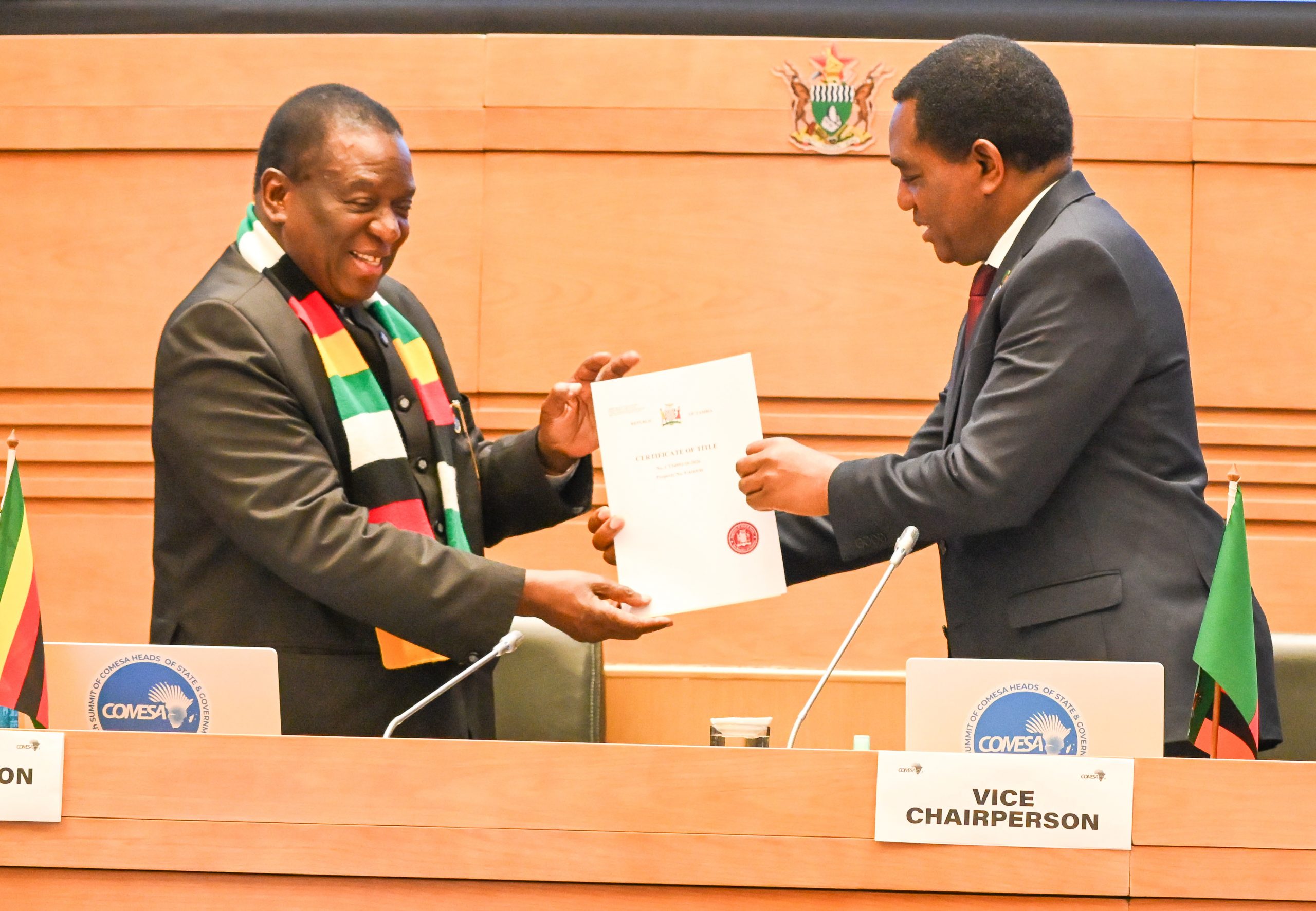
President Hichilema also handed over a Title Deed to COMESA for 14 hectares of land meant for the construction of its new secretariat in Lusaka.
According to Foreign Affairs Minister Mulambo Haimbe, the land, situated along Lusaka Airport Road and valued at more than 7 million United States dollars, is expected to accommodate the new COMESA headquarters, a 200-room hotel, and a 100-capacity conference facility.
This follows the signing of a 140 million US dollar framework agreement between the COMESA Secretariat and a Chinese firm for the financing and construction of the new headquarters.
“As host of the COMESA Secretariat, Zambia has increased the land allocated for the new headquarters from the initial 10 acres to 14 hectares,” Mr Haimbe noted.
President Mnangagwa, who assumed chairmanship of the regional bloc, pledged to work with all Member States for the prosperity of the region.
He noted that since the establishment of the COMESA Free Trade Area in 2000, intra-COMESA exports had grown from around 2 billion US dollars to over 14 billion US dollars in 2025.
“The success of our region depends on all of us, member states, individually and collectively playing our part. I exhort us, therefore, to accelerate ongoing programmes to increase industrial production and productivity, enhance quality and standards, address transportation bottlenecks, and rationalise pricing,” he said.
During the Summit, the COMESA Medium-Term Strategic Plan (2026–2030) was launched, alongside the 2025 Progress Report. The Strategic Plan provides a framework for COMESA’s work over the next five years, including consolidation of the regional market, addressing infrastructure and connectivity, scaling up productive integration, and ensuring inclusion through a focus on gender, youth, and social affairs.
Outgoing Chairperson President of Kenya, William Ruto cautioned that despite the region’s combined GDP of one trillion US dollars, intra-COMESA trade remains below desirable levels.
Dr Ruto explained that the region’s total export to the world rose by 6 bpercent to 212 billion US, while exports within increased by 10.5 percent, to dollars 14. 7 billion US dollars between 2020 and 2025.
He attributed the growth to improved intra-trade, stressing the importance of regional integration.
COMESA Secretary General Chileshe Kapwepwe observed that the bloc’s 21 member states collectively represent a market of more than 680 million people.
“The challenge for us is to translate the scale of the market into greater intra-regional trade, investment, industrial production, and employment,” she said.
Ms Kapwepwe further commended President Hichilema’s gesture of availing land for the construction of a new secretariat.
“The handover marks a significant milestone towards the development of a modern, fit-for-purpose headquarters for COMESA and reaffirm Zambia’s longstanding commitment as host country to supporting the Secretariat in the effective discharge of its regional integration mandate,” she stated.
The 25th COMESA Summit provided an opportunity for President Hichilema to highlight Zambia’s commitment to regional economic integration and the Grow Zambia Agenda, which seeks to drive economic growth, trade, and investment opportunities for citizens and businesses
Community Feedback