
Farmers who burnt their fields will cry during the dry spell – NUSFAZ

Breaking News Zambia
NewsThe National Union for Small-Scale Farmers in […]
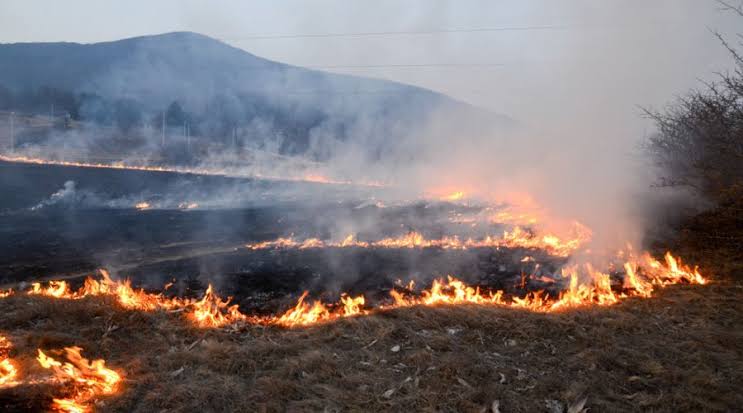
The National Union for Small-Scale Farmers in Zambia (NUSFAZ) has questioned the logic behind the burning of crop residues after harvesting, warning that farmers who cleared their fields through burning will struggle to protect their crops when dry spells persist.
Speaking in an interview with the Zambian Business Times-ZBT, NUSFAZ Secretary General, Ebony Lolozhi stated that farmers who burnt all their crop residues have lost a natural way of retaining moisture in their fields and building resilience against changing weather conditions.
Lolozhi said farmers should not panic over unpredictable rainfall patterns but instead prepare for possible dry spells by adopting farming methods that reduce the risk of losing their investments.
He added that the Meteorological Department has continued providing seasonal forecasts and updates, which farmers should use to guide their decisions and prepare for changing rainfall conditions.
“Even amidst the weather that is unpredictable, you need to understand that there are certain ways in which you can build resilience so that at the end of the day you do not lose whatever investment you put into the farming season,” said Lolozhi.
He advised farmers to diversify into drought-tolerant crops such as sorghum, millet, cassava, sweet potatoes and legumes, while those planting maize should consider early-maturing varieties, including suitable options from SeedCo’s 400 series.
Lolozhi also urged farmers to move away from conventional land preparation methods that involve extensive ploughing and instead consider potholing, basin planting and ripping, which minimise soil disturbance and help retain moisture.
“Those who preserved the plant residues in their fields, kudos to them, because those are going to help capture moisture in the soil, but for those who burnt them, that was a very big mistake,” he said.
Meanwhile, he said crop insurance should become part of farmers’ preparation for climate-related risks, as it can provide some financial protection when rainfall fails or falls below levels required to sustain production.
Lolozhi told ZBT that building resilience requires farmers to take advantage of weather information, adopt suitable crops and conserve soil moisture rather than wait for a dry spell to expose weaknesses in their farming practices.
By Philip Sinkala





Community Feedback