
El Niño likely to disrupt 2026/2027 rainy season – ZMD

Breaking News Zambia
NewsTHE Zambia Meteorological Department (ZMD) has warned that the El Niño weather phenomenon could disrupt the 2026/2027 rainy season with prolonged dry spells and poor rainfall distribution in several parts of the country. ZMD Senior Meteorologist, Vincent Bupe, says the seasonal forecast indicates a high likelihood of prolonged dry spells, particularly between December and February, […]
THE Zambia Meteorological Department (ZMD) has warned that the El Niño weather phenomenon could disrupt the 2026/2027 rainy season with prolonged dry spells and poor rainfall distribution in several parts of the country.
ZMD Senior Meteorologist, Vincent Bupe, says the seasonal forecast indicates a high likelihood of prolonged dry spells, particularly between December and February, a development that could affect farming activities and agricultural production.
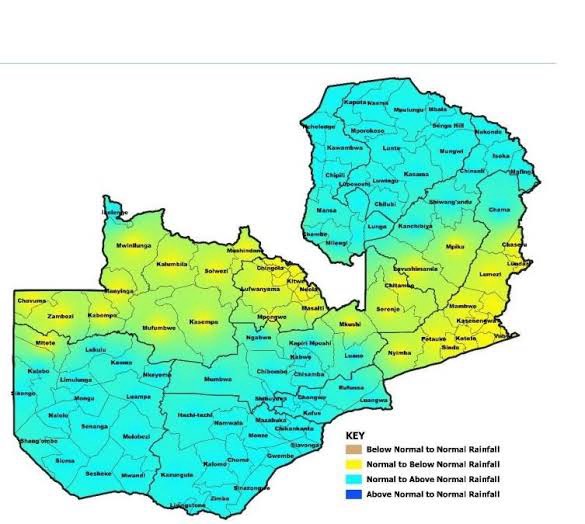
Mr Bupe cited Western, Southern, Lusaka, Central, parts of Eastern, Copperbelt and North-Western Provinces as areas likely to experience below-normal rainfall.
He said the forecast points to elevated temperatures and variations in rainfall distribution which indicates that some areas could receive heavy rainfall while others experience very little.
Mr Bupe noted that the northern parts of the country are, however, expected to experience wetter conditions, with possible flash floods and flooding in areas including Luapula, Northern, Muchinga and parts of Eastern Province.
He has since advised farmers to plant when the soil has received adequate moisture and when there are indications of rainfall in the coming days.
“Make it a mandate that you follow daily weather updates from the ZMD,” he stressed.
Meanwhile, Conservation Farming Unit Projects and Communication Lead, Oliver Bulaya has advised to adopt climate-smart and conservation farming practices to minimise the effects of prolonged dry spells and changing rainfall patterns.
Mr Bulaya said farmers should move from conventional tillage to minimum tillage which helps conserve soil moisture and nutrients, while incorporating crop rotation and legumes to improve soil fertility.




Community Feedback