

Dr Sishuwa Sishuwa Wins 2026 Stellenbosch University Social Impact Award

Breaking News Zambia
NewsZambian historian Dr Sishuwa Sishuwa wins Stellenbosch University's 2026 Social Impact Award for his work on democracy, human rights and accountability.
A Zambian academic whose journey began in rural Senanga has received one of Stellenbosch University’s highest honours for social impact, earning international recognition for his contributions to public engagement, human rights and democratic accountability.
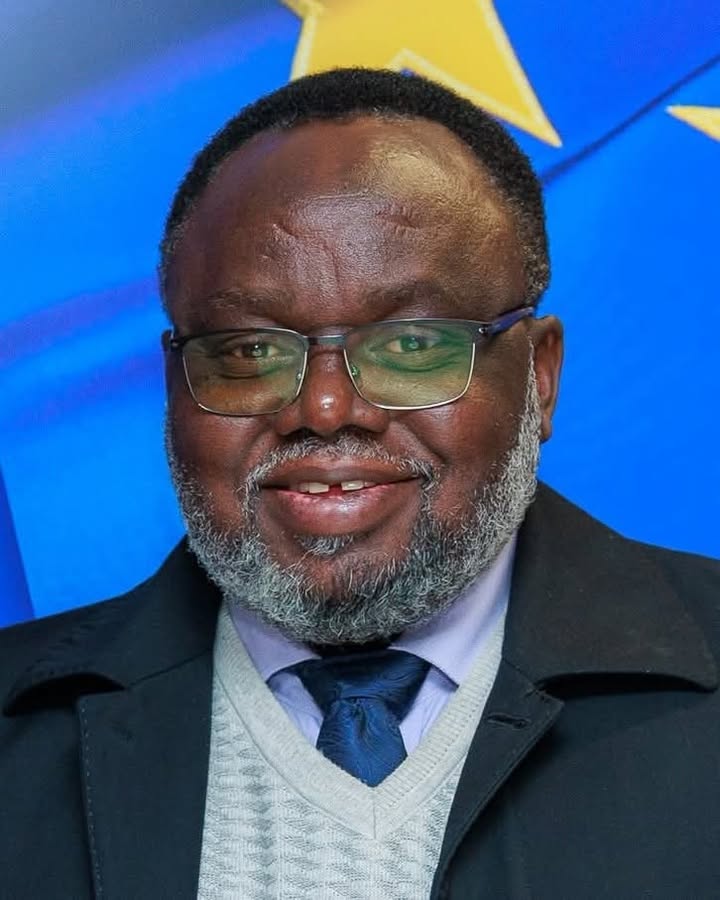
Dr Sishuwa Sishuwa, a historian and Senior Lecturer at Stellenbosch University in South Africa, has been awarded the 2026 Stellenbosch University Social Impact Award.
He announced the achievement in a statement shared on his social media account, describing the recognition as a deeply humbling moment and an affirmation of his sustained efforts to advance democracy, justice and human dignity in Zambia and across the region.
The award recognises his public engagement and contributions to promoting public accountability, advancing democracy and protecting human rights.
For Zambia, the recognition is another example of a citizen whose academic journey and professional contributions have reached international institutions while remaining closely connected to issues affecting his home country.
An award with institutional significance
Stellenbosch University is one of South Africa’s leading research-intensive universities, with a strong international academic profile and a significant contribution to research and scholarship on the African continent.
Its Social Impact Award is a distinguished institutional honour recognising staff members whose work contributes to meaningful social change through engagement with communities, partnerships and society.
The University’s official regulations describe the Social Impact Award as the highest form of honour granted by the University community to staff for achievements relating to social impact.
The award recognises sustained contributions and the extent to which academic and professional work produces meaningful engagement and measurable benefits for society.
It is presented in categories that recognise collaborative social impact initiatives and the contributions of university staff and external partners.
Sishuwa’s recognition is particularly notable because his work extends beyond conventional academic research and teaching. His public scholarship engages with questions of democratic accountability, human rights, political leadership and governance in Zambia and the wider Southern African region.
In his announcement, he said:
“I am overwhelmed with joy and gratitude. This recognition is a remarkable way to close what has been a particularly dramatic year. I see this award as an affirmation that the personal sacrifices, difficult choices, and sustained efforts to fight for democracy, justice and human dignity are worthwhile.”
He added that he received the honour with humility and renewed determination to continue his work.
From rural Senanga to Oxford University
Behind the international recognition is a journey that began in Senanga District in Zambia’s Western Province.
Sishuwa attended primary school at Luandui and Mukoko before proceeding to Malengwa Basic School and later Kambule Secondary School.
He subsequently enrolled at the University of Zambia, where he studied History and graduated with distinction in 2009.
His academic performance earned him a prestigious Rhodes Scholarship, taking him to the University of Oxford in the United Kingdom for postgraduate studies.
At Oxford, he obtained a Master’s degree in African Studies and a Doctor of Philosophy in Modern History.
The journey from rural Zambia to one of the world’s recognised centres of academic excellence would become the foundation of a career focused on understanding African political history and the challenges facing democracy and governance.
Returning home before taking his scholarship abroad
After completing his studies at Oxford, Sishuwa returned to Zambia and joined his alma mater, the University of Zambia, where he worked as a lecturer in African History from 2016 until early 2023.
During his academic career, he also undertook a Postdoctoral Research Fellowship at the University of Cape Town in South Africa, conducting research on elections and political parties in Southern and Eastern Africa.
In July 2023, he took up an appointment as Senior Lecturer in the Department of History at Stellenbosch University.
His academic journey continued to expand internationally when, in January 2026, he was appointed a Visiting Scholar at Harvard University in the United States for a semester through a collaboration between Harvard and the Stellenbosch Institute for Advanced Study.
The appointment provided another platform for his research and engagement with international scholars working on African politics and history.
Building an international academic reputation
Sishuwa’s research focuses on the political history of Southern Africa, particularly elections, political leadership, ethnicity, historical biography, populism, civil society, nationalism and democracy.
According to his Harvard University academic profile, he has authored more than 20 peer-reviewed academic publications and edited three special issues of academic journals.
His published book, Party Politics and Populism in Zambia, released by James Currey in 2024, examines the country’s political parties and populist politics.
He is also involved in the development of The Cambridge History of Democracy in Africa, a major academic publication that he is co-editing with other scholars.
His work has appeared in international academic journals, while his public commentary on African politics has featured in international media organisations, including the BBC and The Washington Post.
He is also associated with academic bodies such as the Southern African Historical Society, the American Historical Association and the Royal Historical Society in the United Kingdom, and serves on the editorial boards of international academic journals.
Why he believes intellectuals must speak out
Beyond his academic publications, Sishuwa has become a prominent public commentator on political developments in Zambia.
He has regularly explained that his public engagement is shaped by his rural upbringing and what he considers the social responsibility of intellectuals.
In a recent statement on X seen by Zambian Eye, he explained the personal motivation behind his public commentary:
“I engage in public scholarship, focusing on highlighting human rights violations and governance concerns, to fulfil the social responsibility of intellectuals and in protest against the degrading conditions in which many ordinary people continue to live and from which I narrowly escaped by chance.
“Having managed to bootstrap my way from an impoverished childhood in the bush in rural Zambia to a BA at the University of Zambia, a Rhodes Scholarship, and a DPhil from Oxford, I consider it my responsibility to hold to account governments that implement policies that undermine the common good and violate human rights.”
He said he had carried out the activism peacefully since 2009 and without financial, material or political interest or benefit.
His public engagement has made him a recognisable voice in discussions about Zambia’s political direction, democratic institutions, elections and the protection of civil liberties.
The award comes amid controversy over his Zambian passport
The latest recognition also comes against the backdrop of a controversy involving the cancellation of Sishuwa’s Zambian passport in September 2026.
His passport was among six revoked through Government Gazette Notice No. 1421 of 2026, with the notice citing security reasons.
The other affected individuals included former Zambian Ambassador to Ethiopia Emmanuel Mwamba, former Members of Parliament Binwell Mpundu and Emmanuel Jay Banda, former State House Special Assistant Kaizer Zulu, and blogger Lillian Mutambo.
The decision attracted criticism from international human rights and academic organisations.
Amnesty International raised concerns over the cancellation of the passports, arguing that the use of administrative powers in such circumstances could violate freedom of movement and affect the rights of government critics.
Scholars at Risk also called on the Zambian authorities to reinstate Sishuwa’s passport, describing the action as a threat to academic freedom and freedom of expression.
The University of Cape Town’s Institute for Democracy, Citizenship and Public Policy in Africa reported that close to 2,000 scholars had signed a petition expressing concern over the cancellation and calling for respect for academic freedom and critical voices.
Sishuwa was in the United Kingdom on academic business when the cancellation occurred. He was subsequently assisted by the South African Government, following intervention by Stellenbosch University, to return to South Africa.
In a statement published on November 26, he thanked the institutions and individuals who supported him during the difficult period, including Stellenbosch University, the South African authorities, Amnesty International, Scholars at Risk and academics from around the world.
The Government’s stated reason for the passport cancellation was national security. The concerns raised by international organisations have centred on the implications for freedom of movement, academic freedom and freedom of expression.
A recognition beyond the individual
The 2026 Stellenbosch University Social Impact Award adds another distinction to Sishuwa’s academic career, but its significance also extends to the wider question of the contribution of Zambians living and working abroad.
His journey from rural Senanga to the University of Zambia, Oxford, Cape Town, Stellenbosch and Harvard illustrates the opportunities that education, academic excellence and international engagement can create.
It also demonstrates how Zambians in the diaspora can contribute to discussions and research that influence how their country and the wider African region are understood.
For the Zambia & Diaspora platform of Zambian Eye, stories such as Sishuwa’s are important because they document not only professional achievements but also the journeys, ideas and contributions of Zambians making an impact beyond the country’s borders.
His latest award recognises his public engagement and sustained work on issues of democracy, accountability and human rights.
And, as he has indicated, he sees the recognition not as a conclusion, but as renewed motivation to continue.
For a young person growing up in rural Zambia and aspiring to make a contribution on the international stage, Dr Sishuwa Sishuwa’s journey offers a powerful reminder of how far education, determination and a commitment to one’s convictions can take an individual.
Related posts:
- Dr Sishuwa Continues to Soar as Zambian-Born Historian Re-elected to Stellenbosch University Council
- Lundu Mazoka recounts challenges of being openly gay in Zambia
- Press advocacy bodies condemn the attacks on media houses
- Government committed to the promotion of human rights- Lungu



Community Feedback