
Closing the Learning Gap: Giving Zambia’s Children a Stronger Start in Education

Breaking News Zambia
NewsBy Sylvester Chishimba For a child struggling to read a simple sentence or understand basic mathematical concepts, the classroom can quickly become a place of frustration rather than discovery. When such difficulties persist, they can affect a learner’s confidence, participation and ability to understand other subjects as they progress through school. In Zambia, efforts to […]
By Sylvester Chishimba
For a child struggling to read a simple sentence or understand basic mathematical concepts, the classroom can quickly become a place of frustration rather than discovery.
When such difficulties persist, they can affect a learner’s confidence, participation and ability to understand other subjects as they progress through school.
In Zambia, efforts to address these challenges are increasingly focusing on the early grades, where children begin to develop the foundational skills needed for successful learning hence, the Closing the Learning Gap (CLG pilot project being implemented in Chipata and Vubwi districts.
The CLG pilot project with the financial support more than One Million Dollars ($1,000,000)(total support of $1,790,499.07) from the Hempel Foundation in Belgium began its implementation started in September,2024 and is expected to end in February, 2028.
In Chipata District, the CLG pilot project is providing an opportunity to strengthen literacy and numeracy among young learners through improved teaching methods and greater attention to individual learning needs.
The target audience for the programme comprises Grade Two learners and teachers in Chipata and Vubwi districts.
In total, the programme covers 135 schools, 186 teachers, 270 school leaders, 135 mentors and 17 Zone In-Service Coordinators across the two districts.
The initiative, supported by a Belgium based organisation – Education for Development (VVOB) in partnership with the Ministry of Education, is targeting Grade Two learners, with the aim of helping them acquire essential skills before moving into higher grades.
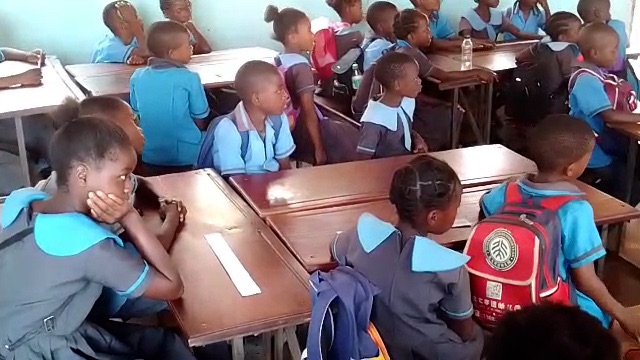
At Katopola Primary School in Chipata, the approach has attracted the attention of senior education officials, who say the teaching methods and learner participation demonstrate the potential to improve foundational learning.
Ministry of Education Permanent Secretary for Education Services Kelvin Mambwe is among those encouraged by the progress observed during classroom lessons.
Dr Mambwe says the practical exercises and the manner in which teachers deliver literacy and numeracy lessons show promise in transforming teaching and learning at the early-grade level.
For Dr Mambwe the importance of the programme extends beyond helping children read, write and count.
Strong foundational skills are essential because they enable learners to understand other subjects, including mathematics, science and social studies.
Without these basic competencies, learners may find it increasingly difficult to keep pace with the demands of the school curriculum.
The CLG intervention therefore seeks to address learning difficulties early, rather than allowing them to persist until children reach higher grades.
Addressing learning difficulties at an early stage
Acting VVOB Zambia Country Programme Manager Miranda Moolenaar says the organisation is working with the Ministry of Education to support Zambia’s education system by strengthening literacy and numeracy skills for Grade Two learners.
She explains that the intervention builds on efforts to support remedial learning, including the catch-up programme, which VVOB has supported for about 10 years.
However, experience with remedial learning has highlighted the challenges of addressing learning difficulties when large numbers of learners require additional support in the classroom.
This has strengthened the case for improving foundational learning before children progress to higher grades.
Ms. Moolenaar says the current intervention is intended to reduce the number of learners requiring remedial support in Grades Three, Four and Five by strengthening their skills earlier.
The approach places emphasis on structured pedagogy, in which teachers guide learners through organised lessons supported by teaching materials and practical activities.
Rather than relying solely on conventional classroom instruction, teachers use activities designed to encourage participation and help learners understand concepts.
During the visit to Katopola Primary School, Ms. Moolenaar expressed satisfaction with the level of learner engagement observed in the classrooms.
The approach recognises that children learn at different paces and that effective teaching must respond to their individual needs.
Teachers at the centre of change
While learning materials and teaching approaches are important, the success of any classroom intervention depends heavily on the teacher.
Chipata District Education Board Secretary Philip Zulu says the CLG pilot project is helping learners improve their reading and writing skills while strengthening their understanding of numeracy concepts.
He says the programme is also encouraging teachers to pay particular attention to learners who experience difficulties keeping up with lessons.
This targeted support can help teachers identify learning challenges and provide the assistance learners need to develop essential skills.
Mr. Zulu says the initiative also encourages teachers to prepare adequately for lessons, particularly under the competence-based curriculum.
He describes the programme as a promising approach based on observations and monitoring undertaken so far.
Mr. Zulu says the benefits are evident in the programme’s focus on enabling learners to read, write and apply mathematical concepts.
He has called for the expansion of the pilot project to other districts to help improve literacy and numeracy standards.
His appeal reflects the need to extend effective learning interventions beyond the schools and districts where they are initially tested.
Education as an equaliser
The importance of strengthening foundational learning also resonates with Eastern Province .
Acting Permanent Secretary Matthews Ng’ambi, who says education remains a powerful tool for creating equal opportunities.
Dr. Ng’ambi acknowledges President Hakainde Hichilema’s focus on education, noting that children from disadvantaged backgrounds can achieve their ambitions when given access to appropriate educational opportunities.
However, he said Government has a responsibility to create an enabling environment in which children can access quality education and develop the skills needed for their future.
For him, the formative years are particularly important because learning difficulties that are not addressed early can become increasingly difficult to overcome.
Dr. Ng’ambi therefore calls for stronger monitoring and evaluation frameworks to help education officials assess whether interventions are producing the desired results.
He said education officers at district and provincial levels need clear indicators that can be routinely monitored to track progress in schools.
Such frameworks would enable officials to identify areas requiring attention, measure improvements and make informed decisions about interventions intended to improve learning outcomes.
The call highlights an important dimension of education reform: introducing a promising programme is only one part of the process; tracking its effectiveness is equally important.
Taking the lessons beyond Chipata
The Grade Two foundational learning pilot is currently being implemented in Chipata and Vubwi districts in Eastern Province.
VVOB is also supporting a complementary early-grade numeracy pilot in Kafue District in Lusaka Province.
These initiatives are intended to help the Ministry of Education explore effective approaches to strengthening foundational literacy and numeracy across the country.
The hope is that lessons drawn from the pilot interventions will inform efforts to improve teaching practices and learning outcomes more widely.
For learners, the desired outcome is straightforward: being able to read with greater confidence, write effectively and understand basic mathematical concepts.
For teachers, it means having the appropriate methods, materials and preparation to respond to different learning needs.
For education officials, it means having reliable indicators to establish whether the interventions are making a meaningful difference.
And for the education system, it means giving children a stronger foundation before they encounter the more demanding subjects and concepts in higher grades.
The call by Chipata DEBS Philip Zulu to expand the CLG pilot project to other districts underscores the interest in extending its potential benefits to more learners.
However, wider implementation will require careful assessment of the results and sustained attention to the quality of teaching and learning.
Ultimately, the success of the Closing the Learning Gap initiative will be measured not simply by the number of schools participating, but by whether more children acquire the foundational skills they need to progress confidently through school.
Katopola Primary School in Chipata District has recorded positive progress in improving foundational literacy and numeracy skills among learners through the Closing the Learning Gap (CLG) pilot project.
The initiative, being implemented in Chipata and Vubwi districts of Eastern Province, seeks to improve early-grade learning outcomes through structured teaching approaches and strengthened support for teachers and school leaders.
The project focuses on developing structured teaching and learning materials for Grade Two while equipping teachers with practical skills to identify and address learning difficulties among pupils.
Katopola Primary School Grade 2C teacher Zangiwe Phiri says the project has improved teaching practices by helping teachers deliver more organised and effective literacy and numeracy lessons.
Ms. Phiri says remedial teaching strategies are now being integrated into ordinary classroom activities, giving learners who are lagging behind additional attention.
She adds that the project is also helping learners develop essential literacy, numeracy and basic science skills through structured classroom activities.
Katopola Primary School currently has 285 learners benefiting from the programme, comprising 148 boys and 137 girls.
The CLG pilot project also strengthens Ministry of Education support systems at provincial, district, zonal and school levels through training and mentoring of school leaders, school-based mentors and teachers.
In the classroom, the ability to read a sentence, write a word or solve a basic mathematical problem may appear to be a small achievement.
But for a child who previously struggled with these tasks, it can represent a significant step towards greater confidence, improved learning and a wider range of opportunities in life.



Community Feedback