
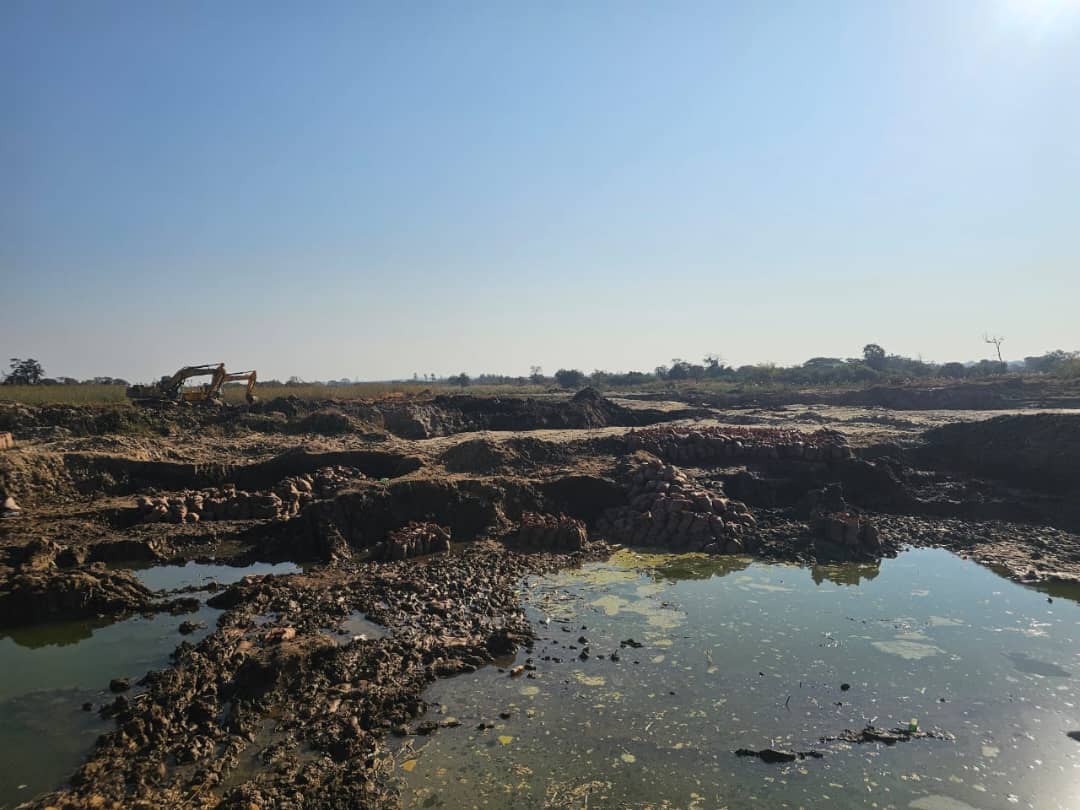
Chinese-Firms accused of polluting a streem linked to the Kafue River in Chingola

Breaking News Zambia
NewsPART ONE: Residents near Mushishima Stream are […]
PART ONE: Residents near Mushishima Stream are calling for an urgent investigation into suspected tailings-mining activities, warning that excavation, waste handling and damaged drainage could pose risks to the stream and the wider Kafue River system.
For roughly three years, residents, farmers and local businesses in Chingola District say they have seen increased tailings-related activity resulting in the alleged pollution, heavy truck traffic and excavation around Mushishima Stream, which flows towards the Kafue River, with the confluence reportedly approximately 3–4 kilometres downstream of the affected area.
According to some residents whose names have been withheld due to the sensitivity of the matter, the location is of concern because the receiving river system is linked to water abstraction infrastructure serving Chingola and Chililabombwe through Mulonga Water Supply and Sanitation Company; the exact relationship of the confluence and abstraction points should be verified by the authorities.
They say uncontrolled excavation and tailings dumping could cause sediment discharge, elevated suspended solids, mobilisation of metals and other contaminants, and disruption of natural water flow. During heavy rainfall, exposed tailings and disturbed streambeds could increase the movement of contaminated sediment into downstream waterways.
They also report that parts of the stream have been disturbed or obstructed and that mine waste has accumulated in the area.
The concerns come as damage to a nearby community road and bridge raises fears about the approaching rainy season. Residents say frequent heavy tipper trucks carrying tailings have contributed to deterioration of the route, while protective structures beside the bridge have been damaged or have collapsed. The reported condition of the bridge and the causes of the damage have not been independently confirmed.
Residents estimate that nearly 100 or more truck movements may occur on busy days. They are also concerned that blocked drainage passages could increase erosion or flooding and further damage the crossing, potentially disrupting access for households, schools, clinics, farmers and businesses.
The environmental impact remains unclear. No independent water-quality results or official findings were available for this report to establish whether pollution has occurred, its source, or whether the Kafue River has been affected. The reported proximity and connection between local waterways make a prompt assessment important, but any claim of contamination should be supported by sampling and published findings from qualified authorities.
Residents say they have raised complaints with local officials, including the District Commissioner and Town Clerk, but have not received a satisfactory explanation or lasting solution. They are asking authorities to inspect the stream, drainage channels, bridge and road, and to clarify whether the activities are authorised and compliant with environmental requirements.
They believe that a thorough investigation could establish the scale and ownership of the operations, the permits and safeguards in place, the condition of the infrastructure, and whether water or soil has been affected. “The relevant authorities should publish their findings and any required corrective measures.”
Operators linked to the activities, local authorities and environmental and mining regulators should be given an opportunity to respond. Until independent inspections and environmental testing are completed, residents’ accounts remain allegations rather than confirmed findings. Stay tuned for part two on this.


Community Feedback