
Chilanga Cement Shares Slide as CFO Blames Investor Sentiment

Breaking News Zambia
NewsChilanga Cement Plc, one of Zambia’s building […]
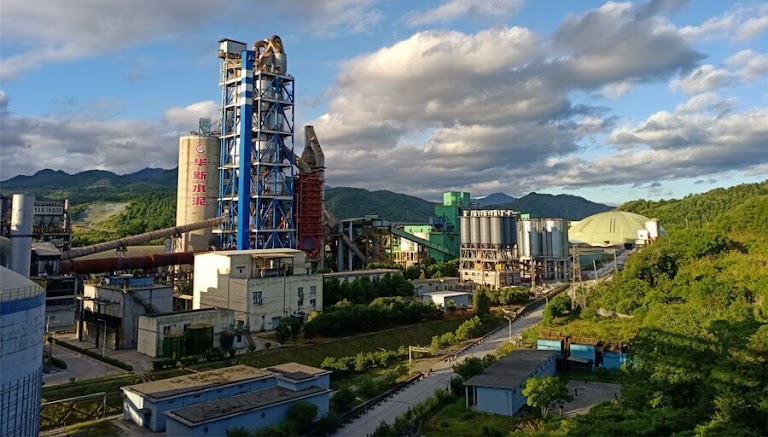
Chilanga Cement Plc, one of Zambia’s building materials manufacturers operating as a subsidiary of China’s Huaxin Building Material Group, has continued to record a decline in its share price on the Lusaka Securities Exchange LuSE.
Information contained in the Stockbrokers Zambia Weekly Equity and Economic Report for the market period ended 6 November 2026, seen by the Zambian Business Times-ZBT, has revealed that Chilanga Cement was among the stocks that recorded a decline in share price during the period under review.
According to the report, Chilanga Cement recorded a 13.78% drop in its share price, with the stock settling at K50 per share.
Despite the decline in its share price, the company was among the top contributors to market turnover on the exchange during the same period. The stock recorded a trading volume of 4,271 shares, valued at K226,861 (approximately US$11,155).
A further review by ZBT shows that the decline has persisted for two consecutive market periods, with the period ended 30 October 2026 recording a 3% drop in the share price, which settled at K57 per share.
ZBT reached out to Chilanga Cement Chief Financial Officer (CFO), Ezron Lesa, to establish the factors driving the consecutive decline in the company’s share price.
Lesa attributed the continued decline to investor sentiment rather than the company’s operational performance.
Speaking in an exclusive interview with ZBT, Lesa said the decline reflected market activity and shareholders’ responses, which he noted were not necessarily aligned with the company’s underlying financial performance.
He pointed to the company’s positive half-year financial results, which showed increased revenue and profits, adding that Chilanga Cement had also declared a dividend last month.
“I don’t know how the fundamentals are playing out on the market, but if you focus on the company’s operations, which are moving in the opposite direction to the share price on the exchange, our half-year financials show positivity, with increased revenue and profit, and the company was able to declare a dividend last month,” said Lesa.
He added that the dividend declaration was not merely an announcement but was backed by the company’s industrial performance.
“It’s so surprising that our market performance is contradicting the company’s operations because all indicators are positive on the company’s side, with various expansion projects yielding positive results,” Lesa said.
Lesa further suggested that broader macroeconomic developments, particularly movements in the exchange rate and monetary policy, could also be contributing to the decline in the company’s share price.
He cited the Bank of Zambia’s decision to reduce the monetary policy rate, noting that the move could have implications for returns on government securities, such as Treasury bills and bonds, potentially influencing how investors, particularly foreign investors, assess investment risks and returns in the stock market.
“The Bank of Zambia announced a drop in the monetary policy rate, which obviously impacted on things like bonds and Treasury bills. This might have an impact on the overall picture of how investors, especially foreign investors, are viewing the economy, focusing on the risk versus the interest, which is not matching, and this also has an impact on the stock market,” Lesa said.





Community Feedback