
CDF: Beyond the Budget Cuts

Breaking News Zambia
News🇿🇲 EXPLAINER | CDF: Beyond the Budget Cuts Zambia’s Constituency Development Fund (CDF) has undergone a remarkable expansion since the United Party for National Development (UPND) assumed office in August 2021. Five years later, the government is considering reducing its planned 2027 allocation, raising questions about Treasury affordability, Zambia’s expanding constituency map and the effectiveness […]
🇿🇲 EXPLAINER | CDF: Beyond the Budget Cuts
Zambia’s Constituency Development Fund (CDF) has undergone a remarkable expansion since the United Party for National Development (UPND) assumed office in August 2021. Five years later, the government is considering reducing its planned 2027 allocation, raising questions about Treasury affordability, Zambia’s expanding constituency map and the effectiveness of public spending.
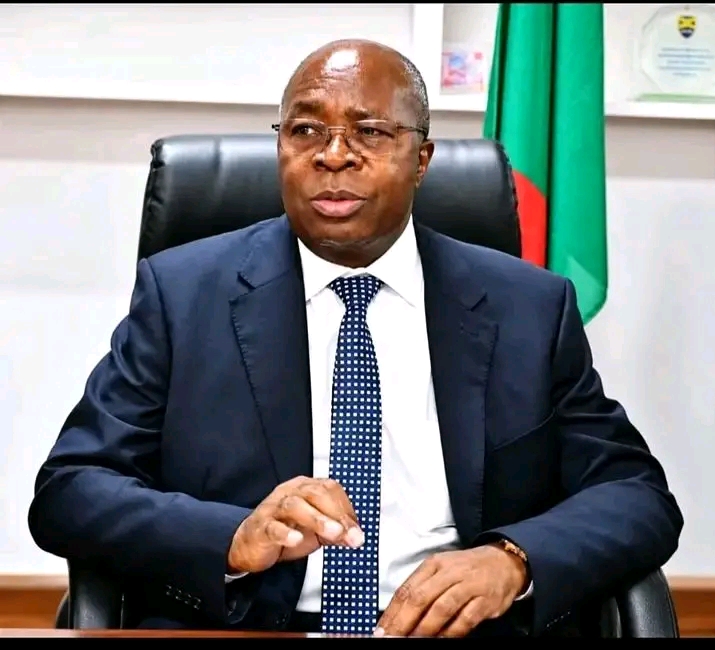
On October 9, 2026, Finance and National Planning Minister Situmbeko Musokotwane warned that revenue pressures would affect CDF financing. “The CDF will be lower than what we had budgeted for,” he said, explaining that councils would be informed of revised allocations to prevent excessive procurement commitments and the accumulation of arrears. The government has not announced a specific percentage reduction.
The announcement marks a possible departure from five years of successive increases. CDF rose from K1.6 million per constituency in 2021 to K25.7 million in 2022, K28.3 million in 2023, K30.6 million in 2024, K36.1 million in 2025 and K40 million in 2026. The expansion has made CDF a major instrument for financing classrooms, health facilities, boreholes, bursaries, skills development and community empowerment programmes.
In February 2026, President Hakainde Hichilema told Parliament that CDF had reached K40 million and indicated that the allocation would increase again in 2027.
However, the financial equation has changed. On April 16, 2026, the Electoral Commission of Zambia confirmed the creation of 70 additional constituencies, increasing the total from 156 to 226 following constitutional amendments. Maintaining K40 million across all 226 constituencies would require K9.04 billion annually, compared with K6.24 billion for the previous 156. The difference of K2.8 billion illustrates the additional financial commitment involved, although it does not represent an approved 2027 allocation.
The proposed adjustment also comes amid efforts to strengthen Zambia’s public finances. The Ministry of Finance’s 2027–2029 Green Paper provides the medium-term framework for managing expenditure and competing budget priorities.
Meanwhile, in its January 27, 2026, assessment, the International Monetary Fund projected public debt declining from 87.6% of gross domestic product in 2025 to 78.3% in 2026 and 68.5% in 2027. These are projections rather than confirmed outcomes, and declining debt ratios do not eliminate the government’s immediate financing obligations.
But affordability is only one side of the CDF debate. The Auditor General’s 2024 CDF findings identified approximately K771.4 million in unspent resources out of K5.12 billion available. The audit also reported K1.51 million in empowerment grants misappropriated by beneficiaries and raised concerns over school desks paid for but not delivered. These findings point to different weaknesses, including delayed utilisation, improper expenditure and shortcomings in project implementation.
Parliament has subjected these matters to scrutiny through its Committee on Local Government Accounts. On August 1, 2025, parliamentary discussions highlighted both the development benefits of CDF and weaknesses in financial management, including concerns over misappropriation. Such oversight is important because increased allocations must be accompanied by effective procurement, financial controls and accountability for public resources.
Three distinctions deserve attention. Underutilisation occurs when allocated resources remain unspent, sometimes because of delayed disbursements, lengthy approval procedures or inadequate administrative capacity. Overspending involves expenditure beyond authorised resources or commitments. Misuse concerns funds improperly applied or inadequately accounted for. An unspent allocation does not automatically indicate corruption, just as full expenditure does not necessarily demonstrate successful development.
For communities awaiting classrooms, clinics, boreholes and education support, the concern is whether promised projects will be completed. For councils, the challenge is implementing approved programmes without accumulating arrears. For the Treasury, it is balancing local development commitments against revenue constraints, debt obligations and other national priorities.
The CDF debate, therefore, extends beyond whether government should allocate more or less money. Zambia must also examine how efficiently funds are released, how responsibly they are spent and whether completed projects deliver measurable benefits. Ultimately, the value of CDF cannot be judged by the size of its allocation alone, but by what public money achieves for the communities it is intended to serve.
© The People’s Brief | Ollus R. Ndomu; Francine Lilu
October 13, 2026

Community Feedback