
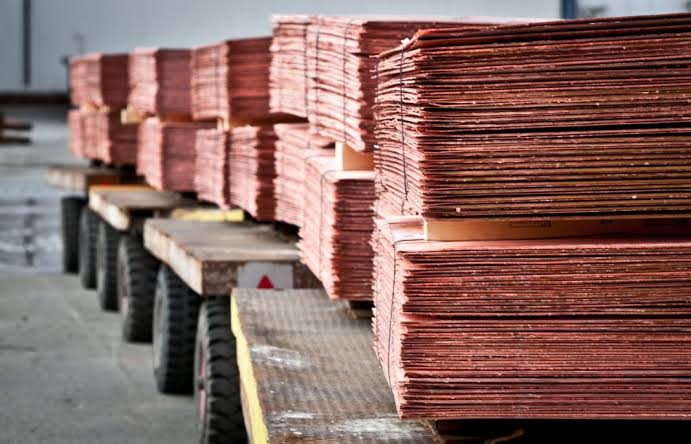
After cutting copper target to 930k tonnes in 2026, is 3m still viable?

Breaking News Zambia
NewsZambia’s ambition to produce 3 million tonnes […]
Zambia’s ambition to produce 3 million tonnes of copper annually by 2031 remains possible, but achieving it will depend on sustained growth and investment across individual mines, according to mining expert Professor Peter Chileshe.
The outlook follows the Government’s decision to lower its 2026 copper production target to 930,000 tonnes from the initial 1 million tonnes announced during the presentation of the 2026 national budget by Finance and National Planning Minister Situmbeko Musokotwane in 2025.
In an interview with Zambian Business Times-ZBT, Professor Chileshe, a mining expert and lecturer at Copperbelt University said the revised target is not, on its own, a reason for alarm.
He said a stable output level of between 850,000 and 1 million tonnes will represent meaningful progress, particularly as mines work to recover from years of stagnation and operational challenges.
“I’d be very happy if Zambia achieved 900,000 or even 850,000 tonnes, given some of the problems facing some of the mines because ramping up after many years of stagnation or decline is not easy,” said Chileshe.
He said the more significant concern would be a sharp reversal in production, rather than short-term fluctuations within that range.
The professor noted that Zambia’s annual output had fallen to about 690,000 tonnes several years ago, while production was approximately 225,000 tonnes in 2000, when new investors began returning to the sector.
He attributed differences between national targets and actual output largely to challenges at individual mines.
Government targets, he said, set the strategic direction, while mine operators must manage their own operational and investment decisions.
Asked whether the Government’s minority stakes in some major mining companies could affect the country’s ability to meet its targets, Chileshe said ownership is not the central issue.
He pointed to Kalumbila, where the Government does not hold an ownership stake, as an example of a mine that nevertheless contributes to national production.
The key, Chileshe said, is whether mining companies’ plans align with Zambia’s broader objective of increasing copper output.
Companies benefit from producing and selling copper, while production also contributes to the national economy through taxation and other economic activity, even where the State has no shareholding.
Chileshe said the list of mines cited in the 2026 budget can help observers assess where future production is expected to come from.
He urged a mine-by-mine review of whether those operations are increasing output, remaining static or falling behind expectations.
On the 3 million-tonne target for 2031, Chileshe said the potential contribution of new projects will be important, but that announced capacity should not be confused with near-term production.
He cited the proposed Mingomba mine in the Konkola area, whose developers have publicly discussed eventual annual production of up to 450,000 tonnes.
The project remains in development, and it will take time to reach full production. Chileshe also noted that public production estimates can vary.
Companies may revise projections as projects advance, and their disclosures are made to shareholders rather than through Government.
For that reason, he said, progress should be judged by whether production and company expectations are moving upward over time. Chileshe said the next several years will provide a clearer indication of whether the mines named in the budget are progressing toward their expected contributions.
If major producers continue expanding output and new projects come on stream, the 2031 ambition may remain within reach, while a decline in production will make it harder to achieve.
He did not provide a specific annual growth rate required to reach 3 million tonnes.
Instead, he emphasised the need to monitor actual mine performance and the pace at which planned projects move from development into production.
By Tyndale Muchiya




Community Feedback