

A mother at the counter, a widow at the door: Zambia must not grow used to this

Breaking News Zambia
Local NewsA mother at the counter, a widow at the door: Zambia must not grow used to this Somewhere in Lusaka this week, a mother is waiting for a piece of paper. She is Grace Nampokolwe Banda. Since 14 October, when her son Emmanuel, the man the country knows as Jay Jay, was taken in…
A mother at the counter, a widow at the door: Zambia must not grow used to this
Somewhere in Lusaka this week, a mother is waiting for a piece of paper.
She is Grace Nampokolwe Banda. Since 14 October, when her son Emmanuel, the man the country knows as Jay Jay, was taken in Mozambique, she has not seen his face. In her sworn affidavit she describes going from police station to police station, asking the same question at counter after counter, and leaving each time without an answer.
On Wednesday she finally had a court order in her hand. The State was told to bring her son before a judge. Morning came, and he did not appear. The judge gave the State until the afternoon, and still he did not appear. The State said he was too ill to be moved from a military hospital.
So now she waits for a doctor’s report. Not for her son, not for his voice, not for his hand, but for a document describing a body she is not allowed to see.
Let that sit for a moment. A mother in a constitutional democracy has had to hire lawyers and go to the High Court simply to establish that her child is alive, and on what terms the State is keeping him. The best the country could offer her on Wednesday was the promise of paperwork on Friday.
Whatever Jay Jay Banda is accused of, and he faces serious charges from 2024 that he must answer, his mother has done nothing wrong. Her only demand is the oldest one in law: show me my son.
Across town lives another woman whose wait has already ended in the worst way.
On 14 August, the day after Zambians voted, a security operation went into a house in Kabulonga. When it was over, former Minister of Transport Mutotwe Kafwaya was dead. For days his family did not know. His wife went to court seeking habeas corpus, asking the State to produce a husband who, it would later be confirmed, was already gone. That confirmation came on 19 August, five days after he was shot.
Read that again. A wife petitioned a court to bring her husband back, and the State’s answer was a death.
Three months later, Dinis Ng’andu Kafwaya and her children still do not know how he died. A postmortem was carried out, but its findings have never been published. The family says it was not allowed to have its own pathologist in the room. No officer has been named. No inquest has opened, though the law says one must be held into every violent death “as soon as is practicable”.
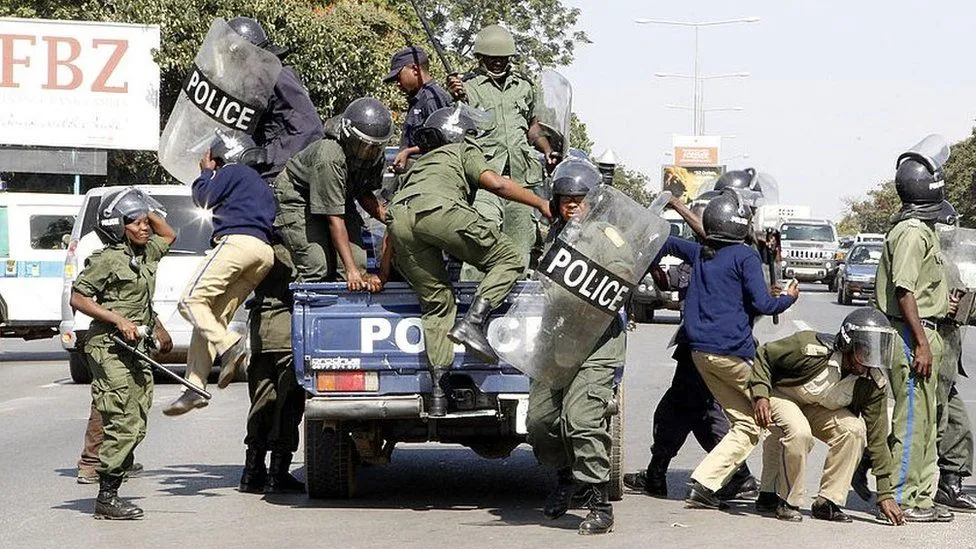
In those same three months, the machinery of the State has moved with remarkable speed against almost everyone else. Within two days of Mr Kafwaya’s death, eleven people from that house had been arrested and told they would face charges. Opposition leader Brian Mundubile, his running mate Makebi Zulu and 16 others have been held since August on charges that include treason.
A former ambassador, Martha Mwitumwa, has been charged with treason. Her daughter Esther was granted release by the High Court and then re-arrested by police inside the court building itself. The doors of justice opened for her, and then they closed again before she reached the street.
This is what should catch in every Zambian throat. It is not that the State is enforcing the law; that is its duty, and it must do it. It is that the law seems to run at two speeds. For the accused it is swift, certain and relentless. For the dead and the disappeared it is slow, silent and still “under investigation”.
Watch what happened in two courtrooms on the same Wednesday. In the High Court, the State raised yet another objection to the bail application of the 18 detainees, this time to strike out paragraphs about video footage of the raid on Mr Zulu’s home. A day earlier, the judges had thrown out its last objection. The application was filed on 14 October. It has still not been heard on its merits.
In the magistrate’s court, defence lawyers asked for time to take instructions. The DPP called it “deliberate machinations”. The lawyers withdrew, and two men who have been in custody for three months stood in the dock alone, arguing for their own right to be prepared.
When the accused ask for time, it is called a game. When the State takes three months and opens no inquest, it is called process.
The State has its case, and fairness demands that it be heard. It says the Kabulonga operation uncovered an insurrection plot and military-grade weapons. It says the accused are a flight risk and too influential to be released safely. It says being in the opposition puts no one beyond the reach of the law, and that the courts are open to anyone who wishes to test its conduct.
If all of that is true, the State has nothing to fear from the light. Let the postmortem be published. Let the ballistic report go to the family. Let a coroner sit in open court and hear how a former minister came to be shot dead in a house in Kabulonga. Let Jay Jay Banda be seen, on a stretcher if necessary, so that his mother knows he is breathing.
A government confident of its account does not hide the evidence that would prove it right.
The world has noticed, even if we have tried not to. The European Parliament voted 562 to one for an independent investigation into Mr Kafwaya’s death. Britain says it is watching the detention of UNIP leader Bishop Trevor Mwamba, whose family announced him missing and spent 48 hours not knowing whether he was alive. United Nations human rights officials have spoken. The Government calls this premature, and China’s ambassador says democracy should be judged by a country’s own people.
He is right about that last point. This is not a matter for Brussels or London. It is a matter for us. And the question every Zambian must answer honestly is this: are we comfortable with what we are becoming?
This is the country that buried a one-party state without a civil war. It handed over power peacefully at the ballot box more than once. Its citizens learned to say, with pride, that Zambia is a peaceful nation. A nation is not peaceful because it is quiet. It is peaceful because when a mother asks where her son is, she gets an answer. It is peaceful because when a husband is killed, his widow is not left to read about his death in a police statement.
Peace without answers is not peace. It is silence. And silence, as Fred M’membe warned this week, is not the same thing as contentment.
On Friday, the courts will sit again. A doctor’s report will be read. A ruling on a flash disk will be delivered. Somewhere in the National Prosecution Authority, a letter asking for an inquest is waiting for a reply.
And on Saturday, three months will have passed since Mutotwe Kafwaya left home and never came back.
His children will mark that day without a grave they understand. Jay Jay Banda’s mother will mark it without having seen her son. Eighteen families will mark it with a loved one behind bars, still waiting for a bail hearing that keeps receding like the horizon.
We can look away. Many already have. But a country is measured not by how it treats the powerful on their best days, but by how it treats the powerless on their worst. A mother at a police counter. A widow at the door. A family waiting for a body to be explained.
They are asking for nothing more than the truth. If we cannot give them that, we should at least have the decency not to call this normal.
By the newsroom Political Desk


Community Feedback